English
 中文简体
中文简体 Deutsch





Content
- 1 What Is a Plate Flange?
- 2 The Main Standards That Govern Plate Flanges
- 3 Plate Flange Types You Will Meet in Practice
- 4 Plate Flange vs Forged Flange
- 5 Dimensional, Surface and Tolerance Considerations
- 6 Material Requirements and Traceability
- 7 A Practical Checklist for Specifying Plate Flanges
- 8 Conclusion
Two pipe spools arrive at the same project site. One is tagged "Plate Flange, NPS 6, Class 150"; the other reads "Plate Flange, DN150, PN16". Visually they look similar, but their dimensions, bolt patterns and pressure ratings come from different standard families. A plate flange standard is not a paperwork detail; it is a complete agreement on material, dimensions, facing, tolerances and pressure rating that decides whether a joint will seal and continue to seal. Specify the wrong standard, and the flange will misalign, leak during a hydrostatic test, or fail once the line goes into service.
What Is a Plate Flange?
A plate flange is a flat, disc-shaped flange cut from plate stock and machined to final dimensions. Unlike a weld-neck or lap-joint flange, it has no protruding hub. The bore is machined through the center, the bolt holes are drilled on the pitch circle, and the sealing face is machined to the specified surface finish.
Manufacturers produce plate flanges by cutting a circular profile from flat carbon steel or stainless steel plate that meets an applicable standard, typically ASTM A36 for carbon steel and ASTM A240 for stainless steel. The blank is then CNC-machined, drilled and faced. For most low-pressure and utility services, a standard plate flange product range covers the required sizes and pressure ratings without the cost of a forged hub.
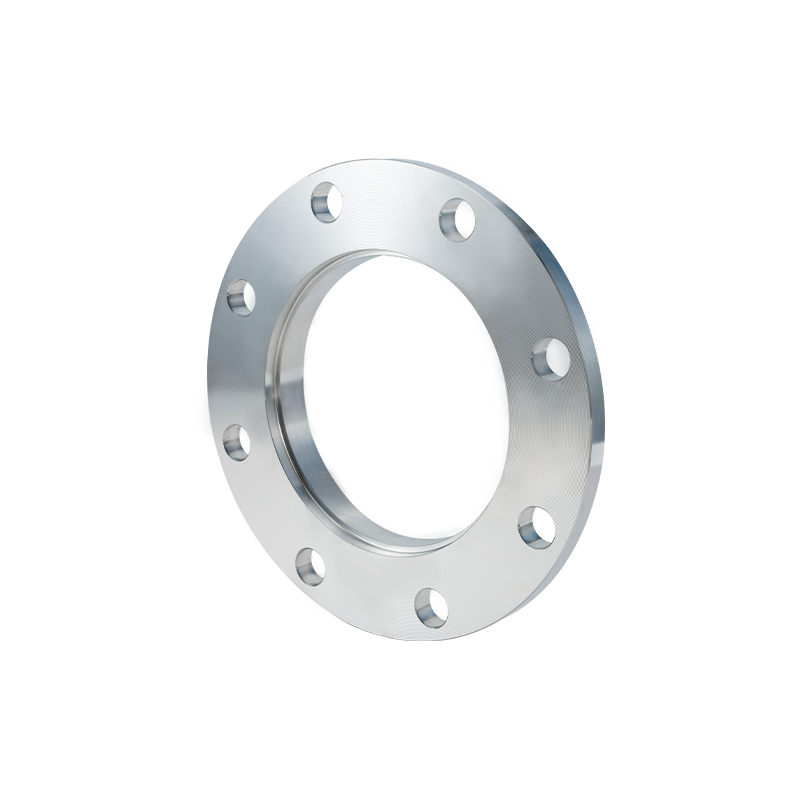 Custom Plate Flange Manufacturers, FactoryJiangyin Zhonghai Precision Machinery Co., Ltd. Is China Plate Flange Manufacturers, Factory, We Custom & Standard Flanges (GB/ASME/JIS/E...View Product →
Because of this simple construction, plate flanges are widely used in cooling water, air, fire-protection and low-pressure steam lines, and in structural or ducting connections where the weight and cost of a weld-neck flange are not justified.
The Main Standards That Govern Plate Flanges
Each flange standard defines a specific geometry: outside diameter, bolt circle, number and size of bolt holes, bore diameter, face thickness and facing requirements. The same nominal size can differ between standards, so flanges can never be treated as interchangeable.
ASME B16.5
ASME B16.5 governs steel pipe flanges and flanged fittings from NPS 1/2 through NPS 24, in pressure classes 150, 300, 400, 600, 900, 1500 and 2500. Within this standard, the slip-on plate flange is a flat disc without a hub, effectively a blind flange drilled with a bore to accept the pipe. It is joined with a fillet weld on the back side, and usually a second fillet weld on the face side. For nominal sizes larger than NPS 24, designers must move to ASME B16.47 or to custom manufactured flanges.
EN 1092-1
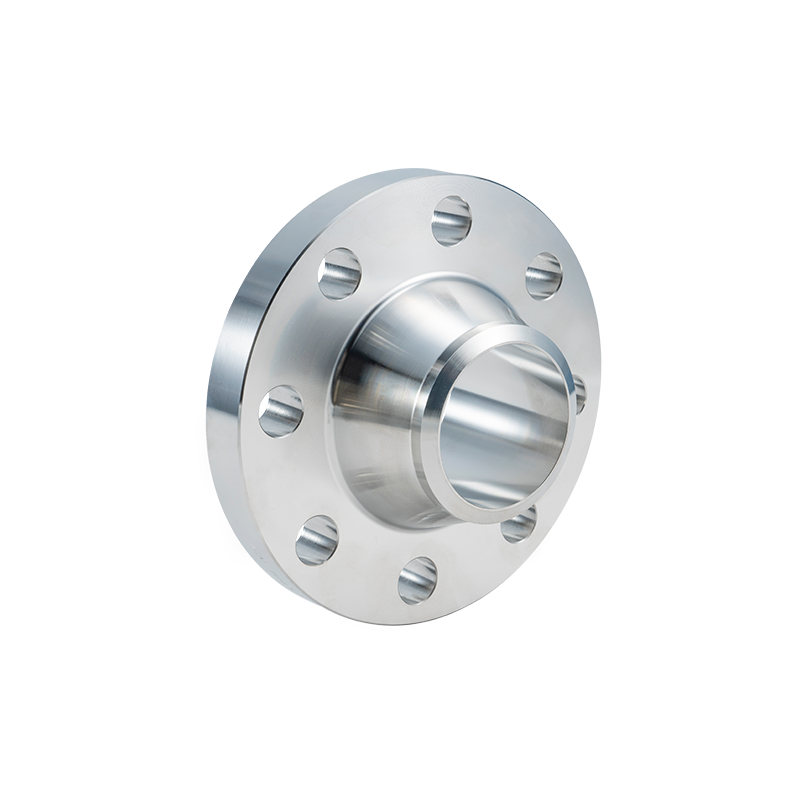
European flange specifications follow EN 1092-1, which groups flanges by type number and PN rating. Type 01 is the plate flange for welding: a flat or raised-faced disc designed to be fillet-welded to the pipe. The most common ratings for plate flanges are PN 10 and PN 16, with PN 6 and PN 25 also frequently encountered in water and utility systems. A project specifying PN 16 cannot substitute a Class 150 flange without rechecking the complete pressure-temperature tables and the face dimensions.
For European-standard projects, our EN 1092-1 Type 01 plate flange is manufactured to the exact PN dimensions and facing requirements called for on the datasheet.
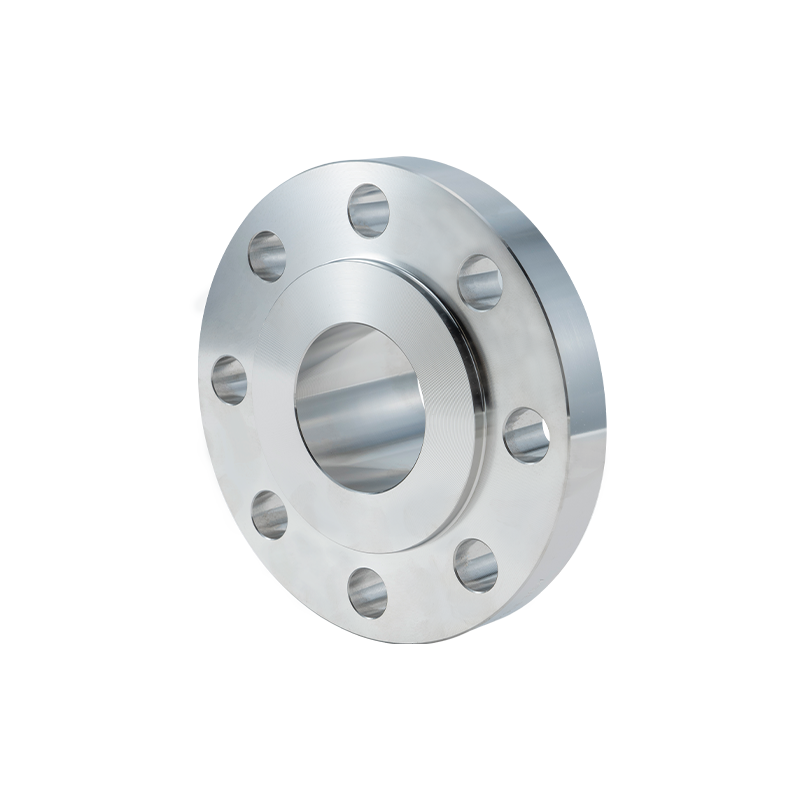 Custom EN1092-1 Type 01 Flange Manufacturers, FactoryJiangyin Zhonghai Precision Machinery Co., Ltd. Is China EN1092-1 Type 01 Flange Manufacturers, Factory, We Custom & Standard Flanges (GB...View Product →
JIS B2220
Japanese-standard flanges are defined by JIS B2220, with pressure ratings expressed as 5K, 10K, 16K and 20K. The 10K plate flange is the default choice for general utility piping across Asia, used extensively in water, air and low-pressure steam services.
GB/T 9119
For projects executed to the Chinese national standard, GB/T 9119 covers plate flanges across PN 2.5 through PN 40. Procurement packages in Asia regularly reference this standard, so a manufacturer that can produce the same flange to GB, ASME, EN and JIS geometries in one facility saves the buyer significant coordination and rework.
Plate Flange Types You Will Meet in Practice
The plate flange family includes several practical variations, each with a distinct function.
- Slip-on plate flange – the standard flat disc bored to fit the pipe and fillet-welded in place; the most economical choice for low to moderate pressures.
- Blind plate flange – a plate flange without a bore, used to close the end of a line, vessel or pump nozzle; it must be selected for the same class and facing as the line it seals.
- Reducing plate flange – a flat flange with a bore smaller than the standard bore, creating a transition while keeping the outer bolting dimensions.
- Lightweight and exhaust flanges – thinner flat rings used in ducting, engine exhaust and ventilation systems where code-rated pressure is not the governing factor.
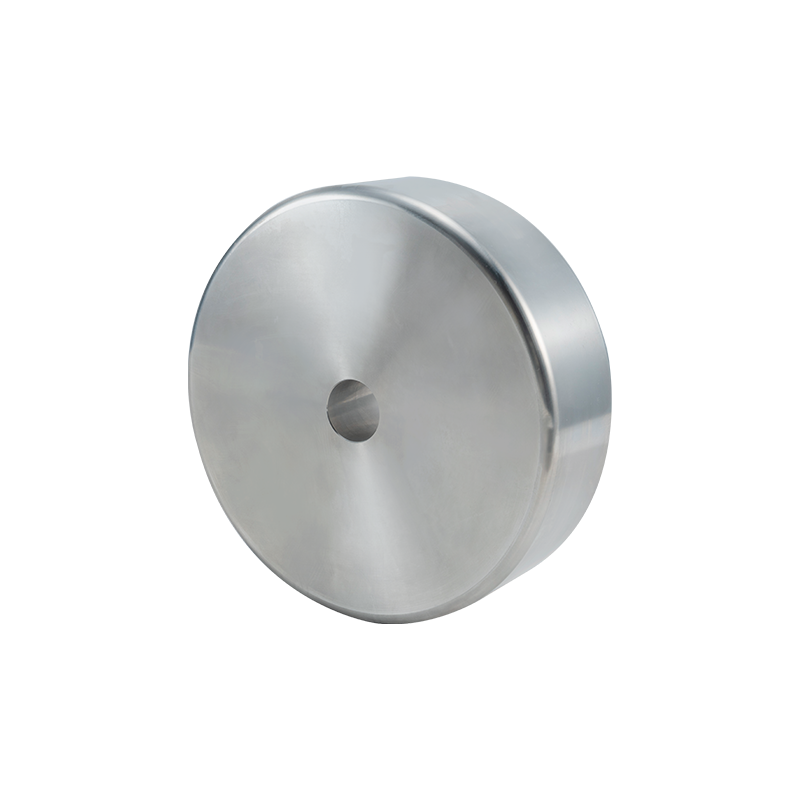
When a line must be isolated temporarily, or permanently terminated, a machined blind flange provides a flat, code-conforming closure with the same bolt pattern as the adjacent standard flange.
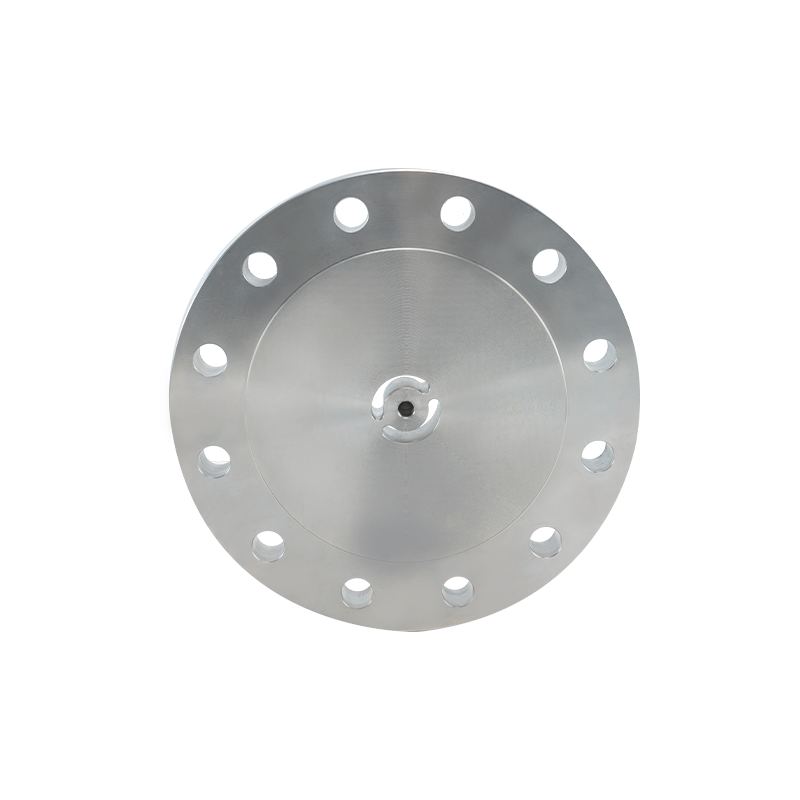 Stainless Steel Plate Flanges, SS Blind Flange ManufacturersJiangyin Zhonghai Precision Machinery Co., Ltd. Is China Stainless Steel Plate Flanges, SS Blind Flange Manufacturers, Factory, We Offer ...View Product →
Plate Flange vs Forged Flange
The most common specification error is treating plate flanges and forged flanges as equivalent. Both appear in the same piping classes, but they are manufactured differently and perform differently in demanding services.
| Attribute | Plate Flange | Forged Flange |
|---|---|---|
| Starting material | Flat plate (ASTM A36, A240) | Billet or bar upset in a die |
| Grain structure | As-rolled plate, no directional flow | Grain follows the flange contour |
| Typical pressure range | Low to moderate (Classes 150–300, PN 6–25) | Up to Class 2500 and PN 400 |
| Welding detail | Fillet welds, no neck | Weld-neck or hubbed designs |
| Relative cost | Lower for standard sizes | Higher, justified by service |
| Common services | Water, air, low-pressure steam | High temperature, cyclic and corrosive lines |
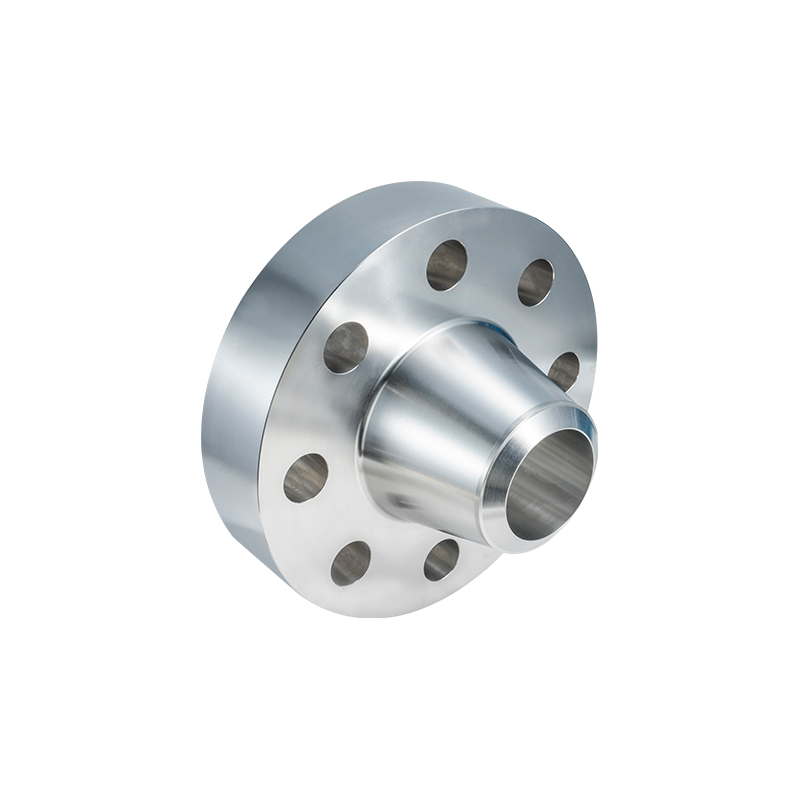
Use a plate flange where loads are steady, temperatures are moderate and pressure is within the standard rating. Specify a forged flange for high temperature, cyclic loading, high-pressure process lines and aggressive media. When a project requires non-standard sizes beyond the reach of standard plate products, a forged or custom machined flange is the safer path.
Dimensional, Surface and Tolerance Considerations
The standard defines more than the outline of the flange. Facing finish, flatness and bolt-hole accuracy all determine whether the joint will seal under operating conditions.
For raised-face flanges, ASME B16.5 specifies a serrated finish with a roughness of roughly 125 to 250 microinches Ra (3.2 to 6.3 µm). EN 1092-1 sets similar requirements for machined faces. A flange that matches the bolt circle but has the wrong facing finish will not hold a standard gasket at the rated pressure.
Plate flanges cut from thin plate can distort when fillet welds are applied. That is why flatness matters more than many buyers assume: plate flange flatness directly influences gasket blowout risk in service. Reliable suppliers control flatness before delivery and machine the faces after any required heat treatment.
Material Requirements and Traceability
Material selection is part of the standard. Carbon steel plate flanges are commonly produced from ASTM A36 or A516 plate, while stainless steel plate flanges are cut from ASTM A240 plate in grades such as 304/304L and 316/316L. For highly corrosive duties, duplex and higher-alloy grades are specified, and the material certificate must be traceable to the heat used to produce the plate.
For stainless systems, the grade determines corrosion resistance, allowable stress and weldability. A detailed guide to stainless steel plate flanges covers the grade-to-application mapping in more depth. Whichever grade is selected, the flange manufacturer should provide mill test certificates that trace the plate back to the original heat.
A Practical Checklist for Specifying Plate Flanges
To avoid ordering the wrong flange, confirm every point below before the purchase order is issued.
- Identify the governing standard and the exact type designation, not just the nominal size.
- Confirm the pressure rating: Class for ASME, PN for EN and GB, K rating for JIS.
- Specify the material grade and require heat traceability with mill certificates.
- Define the facing type and finish, including the roughness requirement.
- Check whether a plate construction is suitable for the temperature, pressure and cyclic loads of the service.
For a broader decision framework, the steps in selecting the right steel flange for a piping system apply equally to plate flanges and help clarify when a forged alternative is necessary.
Conclusion
A plate flange standard is the contract between designer, manufacturer and inspector. It fixes the geometry, rating, facing, material and tolerances that make a flange safe to install and reliable in operation. Buyers who verify the standard system, pressure class and material traceability avoid the most expensive mistakes in pipe fitting procurement.
Manufacturers that combine plate cutting, CNC machining, drilling and inspection in one facility can deliver plate flanges to ASME, EN, JIS and GB standards without the risk of shifting responsibility between sub-suppliers. When the standard is clearly specified, the supplier's job is straightforward: deliver a flange that matches it exactly.
 Previous