English
 中文简体
中文简体 Deutsch





Content
- 1 What Is a Steel Flange and Why Does Specification Matter?
- 2 Essential Technical Documents: Stainless Steel Flange Dimensions PDF
- 3 Comparative Analysis: Weld Neck Flange vs Slip On
- 4 Understanding Pressure Ratings: ANSI B16.5 Flange Pressure Rating Chart
- 5 Sourcing for Heavy Industries: Large Diameter Flange Suppliers for Oil and Gas
- 6 Special Applications: Blind Flange Types and Applications
- 7 Conclusion: Making Informed Flange Decisions
- 8 Frequently Asked Questions (FAQ)
- 8.1 1. What is the difference between ASME B16.5 and ASME B16.47?
- 8.2 2. Can I use a stainless steel flange with a carbon steel pipe?
- 8.3 3. How do I determine the correct pressure class for my application?
- 8.4 4. What are the advantages of a forged flange over a plate-cut flange?
- 8.5 5. What does "RTJ" facing mean on a blind flange?
- 9 References
Selecting the correct Steel Flange is a critical engineering decision that affects the safety, longevity, and performance of any piping system. For procurement specialists and project engineers, understanding the technical nuances of flange types, materials, pressure ratings, and manufacturing standards is essential. This guide provides a detailed, engineer-level analysis to help you make informed decisions for both standard and complex applications.
What Is a Steel Flange and Why Does Specification Matter?
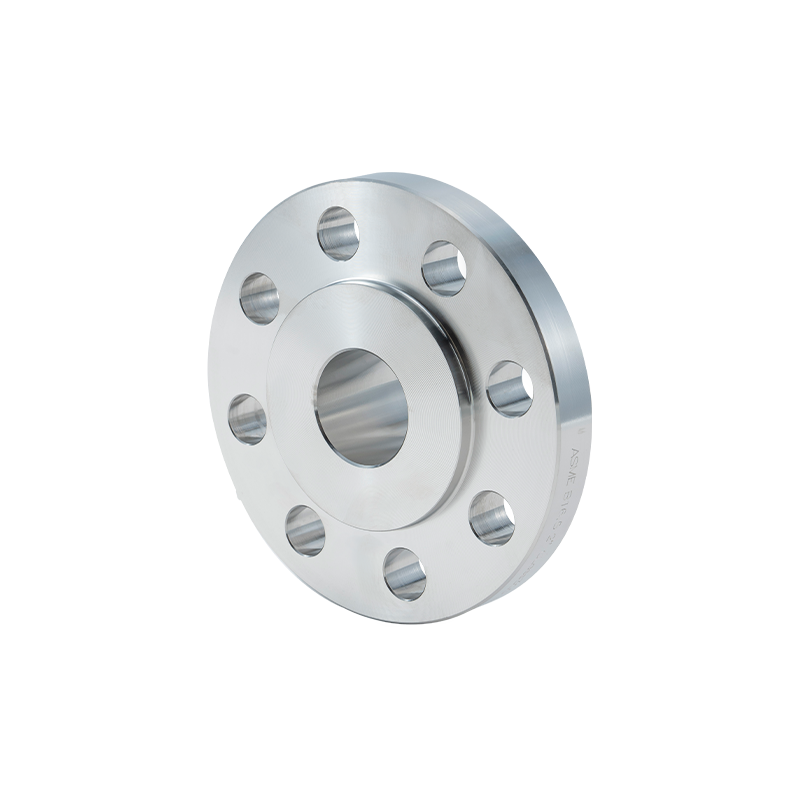
A Steel Flange is a mechanical component used to connect pipes, valves, pumps, and other equipment to form a piping system. It provides easy access for cleaning, inspection, or modification. The specification of a flange dictates its mechanical strength, corrosion resistance, and sealing capability under specific operating conditions. Incorrect selection can lead to catastrophic system failures, making precision in specification non-negotiable.
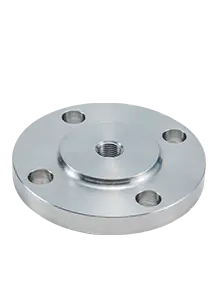
Key Parameters for Flange Selection
Engineers must evaluate several critical parameters when specifying a flange. These parameters are interdependent and directly influence the flange's suitability for a given environment.
- Material Grade: Determines corrosion resistance and temperature limits. Common materials include carbon steel (e.g., ASTM A105) for general service and stainless steel (e.g., ASTM A182 F304/F316) for corrosive environments.
- Facing Type: The sealing surface. Raised Face (RF) is common for general applications, Flat Face (FF) is used with flat-faced cast iron components, and Ring Type Joint (RTJ) is specified for high-pressure, high-temperature services.
- Pressure Class: Defines the maximum allowable pressure at a given temperature, as defined by standards like ASME B16.5.
Essential Technical Documents: Stainless Steel Flange Dimensions PDF
Why Engineers Rely on Dimensional Standards
Standardization is the foundation of industrial interchangeability. Engineers rely on dimensional standards to ensure that flanges from different manufacturers mate correctly with piping components and bolting. Without precise dimensions, a flange is useless, regardless of its material strength. A stainless steel flange dimensions PDF provides the exact measurements for bolt circle diameter, hub length, thickness, and bore size, ensuring design accuracy and preventing costly field modifications.
The most widely adopted standards are from ASME. ASME B16.5 covers pipe flanges and flanged fittings for sizes from NPS 1/2 through NPS 24. For larger diameters, ASME B16.47 (which includes Series A and Series B flanges) governs sizes from NPS 26 through NPS 60. These standards define all critical dimensions and pressure-temperature ratings. When you download a stainless steel flange dimensions PDF, it must reference these standards to be considered an authoritative design document.
Comparative Analysis: Weld Neck Flange vs Slip On
The choice between a weld neck and a slip on flange is a frequent point of technical debate. Each design offers distinct mechanical advantages and limitations. The decision impacts the piping system's ability to handle stress, vibration, and pressure fluctuations.
Design Characteristics of Weld Neck Flanges
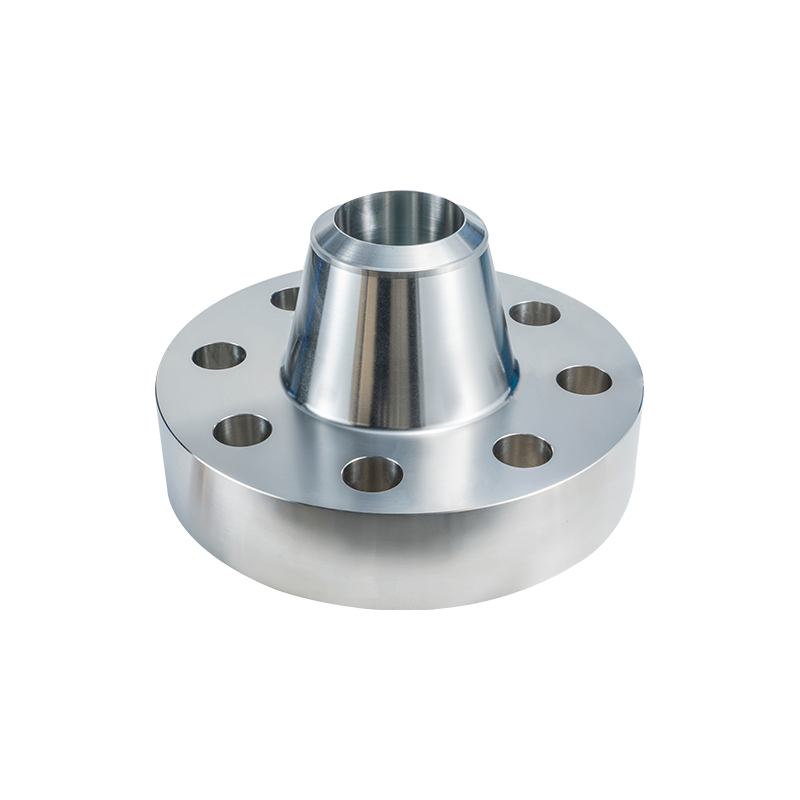
A weld neck flange is distinguished by its long, tapered hub. This geometry gradually transfers stress from the flange face into the pipe wall, making it ideal for high-stress applications.
- Stress Distribution: The tapered hub provides reinforcement, reducing stress concentration at the base of the flange.
- Typical Applications: High-pressure, high-temperature, and cyclic loading conditions (e.g., oil and gas pipelines, power generation).
Design Characteristics of Slip On Flanges
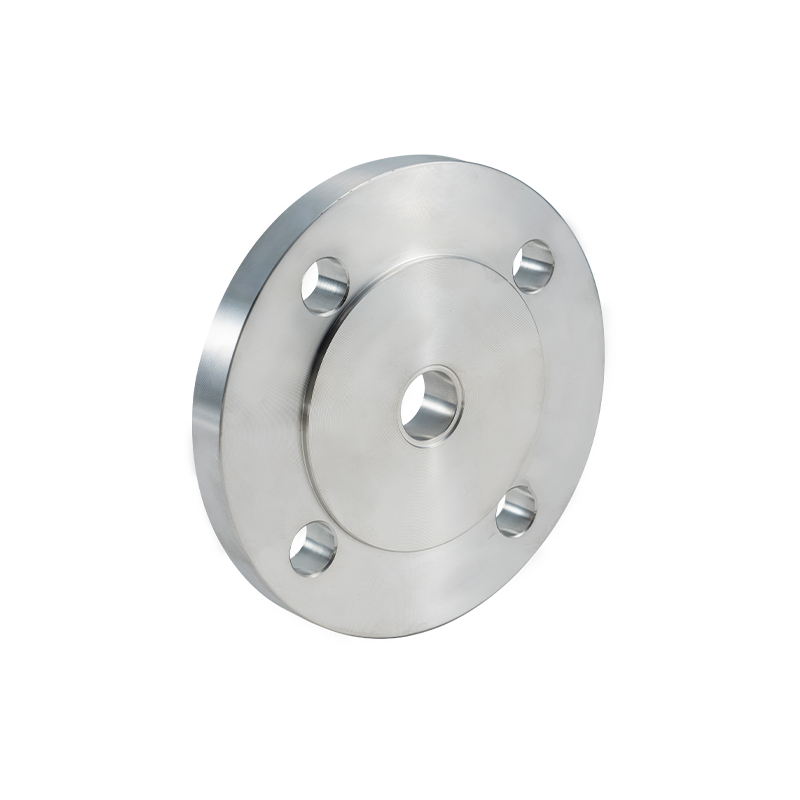
A slip on flange slides over the pipe and is then welded both inside and outside. It offers greater installation flexibility but has different mechanical properties.
- Ease of Alignment: The slip-on design allows for easier bolt hole alignment during installation, saving labor time.
- Limitations in Cyclic Service: The lack of a tapered hub means it has lower fatigue resistance compared to a weld neck flange, making it less suitable for severe service conditions.
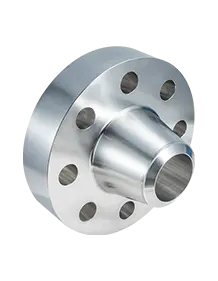
Technical Comparison: Weld Neck Flange vs Slip On
| Feature | Weld Neck Flange | Slip On Flange |
|---|---|---|
| Hub Design | Long, tapered hub for stress dissipation | Short hub or no hub; pipe slips inside |
| Welding Requirements | Single, full-penetration bevel weld | Two fillet welds (inside and outside) |
| Fatigue Resistance | Excellent (suitable for cyclic loads) | Moderate (not recommended for high fatigue) |
| Cost & Installation | Higher material cost; precise alignment needed | Lower cost; easier bolt hole alignment |
| Typical Application | Critical services, high pressure/temperature | General utility, cooling water, low-pressure lines |
Understanding Pressure Ratings: ANSI B16.5 Flange Pressure Rating Chart
What Does a Pressure Rating Mean?
The pressure rating, often denoted as Class 150, 300, 600, etc., defines the maximum allowable working pressure of a flange at a specific temperature. These ratings are not arbitrary; they are calculated based on the material's mechanical properties and are standardized. An ANSI B16.5 flange pressure rating chart is the definitive reference for these values. For example, a Class 150 carbon steel flange has a pressure rating of 285 psi at ambient temperature, but this rating decreases as the temperature rises.
How Temperature Affects Pressure Ratings
Material strength degrades with increasing temperature. Therefore, the pressure rating must be derated accordingly. Consulting the ANSI B16.5 flange pressure rating chart is mandatory for any design involving elevated temperatures. The chart provides de-rating factors for various material groups (carbon steel, stainless steel series 300, etc.) across a temperature range up to 1000°F (538°C) for some materials. Using a flange beyond its rated pressure-temperature envelope is a primary cause of gasket failure and flange leakage.
Sourcing for Heavy Industries: Large Diameter Flange Suppliers for Oil and Gas
The Unique Demands of the Oil and Gas Sector
The oil and gas industry operates under extreme conditions, requiring flanges that meet rigorous quality and safety standards. Specifications often demand full material traceability, impact testing, and compliance with NACE MR0175 for sour service. When evaluating large diameter flange suppliers for oil and gas, their certifications and in-house capabilities are the primary differentiators.
Capabilities Required for Large Diameter Flange Production
Producing flanges up to 60 inches or more requires significant industrial infrastructure. Suppliers must demonstrate control over the entire manufacturing chain to ensure quality.
- In-House Forging and Heat Treatment: Ensures consistent grain structure and mechanical properties.
- Large-Capacity CNC Machining: Necessary for achieving precision tolerances on large workpieces.
- Comprehensive Inspection Lines: Verifies dimensional accuracy and material integrity through ultrasonic testing and PMI (Positive Material Identification).
Profile: A Partner with Proven Capabilities
Jiangyin Zhonghai Precision Machinery Co., Ltd. is an ISO 9001–certified manufacturer with PED / TUV / TS qualifications, specializing in precision flanges and forgings. We produce pipe flanges, forged flanges, machined flanges, and related components according to GB, ASME, ASTM, JIS, EN, DIN standards, and support fully customized, drawing-based manufacturing. Our range covers 1/2'' to 60'', single-piece weights up to 10 tons, and maximum dimensions of 4 meters, providing reliable solutions for both standard and non-standard applications. With complete in-house forging, heating, CNC turning, drilling, and inspection lines, we handle both volume production and complex machined parts. This level of integration is what serious large diameter flange suppliers for oil and gas must offer to ensure project success.
Special Applications: Blind Flange Types and Applications
What Is a Blind Flange and Why Is It Used?
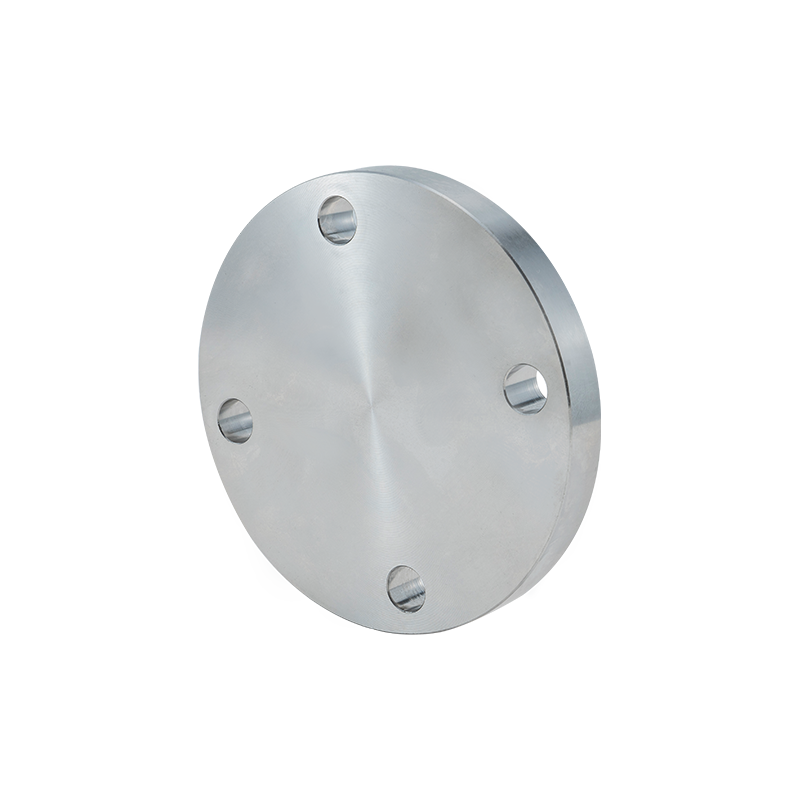
A blind flange is a solid disk used to seal the end of a piping system or a pressure vessel opening. Unlike other flanges, it has no bore. This design allows it to withstand high internal pressure, making it essential for pressure testing, future tie-ins, or permanently closing a line. Understanding blind flange types and applications is crucial for system design and maintenance planning.
Different Types of Blind Flanges
While the standard blind flange is the most common, several variations exist for specific operational needs.
- Standard Blind Flanges: Used for permanent or temporary sealing of pipe ends.
- Figure-8 Blanks (Spectacle Blinds): A combination of a blank and a spacer ring, allowing for quick line closure or opening by flipping the device.
- Custom Thickness Blinds: Designed for extremely high-pressure services where standard thicknesses are insufficient. These are often custom-calculated and manufactured to specific code requirements.
Application Case Studies
In a refinery, blind flange types and applications are critical. Standard blind flanges are installed for pressure testing newly assembled piping sections. Figure-8 blanks are used in piping manifolds to isolate equipment for maintenance while allowing other lines to remain in service. For high-pressure injection lines, custom thick blind flanges are required to safely withstand the extreme forces.
Conclusion: Making Informed Flange Decisions
Summary of Selection Criteria
The selection of a Steel Flange is a multi-faceted engineering process. It involves reviewing dimensional data from a stainless steel flange dimensions PDF, analyzing the mechanical differences in a weld neck flange vs slip on comparison, consulting an ANSI B16.5 flange pressure rating chart, and verifying the capabilities of large diameter flange suppliers for oil and gas. Furthermore, knowledge of blind flange types and applications ensures system integrity and operational flexibility.
For your next project, partner with a manufacturer that combines deep technical expertise with comprehensive in-house production. Contact Jiangyin Zhonghai Precision Machinery Co., Ltd. to discuss your specific flange requirements and benefit from our certified quality and engineering support.
Frequently Asked Questions (FAQ)
1. What is the difference between ASME B16.5 and ASME B16.47?
ASME B16.5 covers pipe flanges and flanged fittings for sizes from NPS 1/2 through NPS 24. ASME B16.47 covers larger diameter flanges from NPS 26 through NPS 60. B16.47 includes two series: Series A (MSS SP-44) and Series B (API 605), which have different dimensional profiles and bolt patterns.
2. Can I use a stainless steel flange with a carbon steel pipe?
Directly connecting a stainless steel flange to a carbon steel pipe is not recommended without proper isolation. The dissimilar metals can cause galvanic corrosion in the presence of an electrolyte. If necessary, a transition gasket or a lined flange should be used to isolate the metals electrically.
3. How do I determine the correct pressure class for my application?
You must determine your system's design pressure and design temperature. Then, refer to the ANSI B16.5 flange pressure rating chart for your chosen material. Find the class where the rated pressure at your design temperature meets or exceeds your system's design pressure. Always apply a safety factor as required by your project specifications.
4. What are the advantages of a forged flange over a plate-cut flange?
Forged flanges have a superior grain structure that is oriented to follow the shape of the flange, resulting in higher strength, better resistance to shock loading, and improved integrity compared to flanges cut from a steel plate. For critical applications, forged flanges are mandatory as per most engineering codes.
5. What does "RTJ" facing mean on a blind flange?
RTJ stands for Ring Type Joint. An RTJ facing features a machined groove on the flange face that holds a metal ring gasket. When the flange bolts are tightened, the gasket is compressed into the groove, creating a highly effective metal-to-metal seal. This facing type is used for high-pressure and high-temperature services, such as in oil and gas wellheads.
References
- ASME B16.5-2021: Pipe Flanges and Flanged Fittings: NPS 1/2 through NPS 24 Metric/Inch Standard. The American Society of Mechanical Engineers.
- ASME B16.47-2020: Large Diameter Steel Flanges: NPS 26 through NPS 60 Metric/Inch Standard. The American Society of Mechanical Engineers.
- ASTM A182 / A182M-21: Standard Specification for Forged or Rolled Alloy and Stainless Steel Pipe Flanges, Forged Fittings, and Valves and Parts for High-Temperature Service. ASTM International.
- Marks' Standard Handbook for Mechanical Engineers. (12th Edition). Chapter 8: Piping and Pressure Vessels. McGraw-Hill Education.
- NACE MR0175/ISO 15156: Petroleum and natural gas industries—Materials for use in H2S-containing environments in oil and gas production. NACE International.
 Previous