English
 中文简体
中文简体 Deutsch





Content
A piping engineer reviewing flange options for a wet chlorine line, a hot sulfuric acid circuit, or a seawater injection system usually finds that 316L stainless steel is not enough. Pitting appears on the gasket face within months, crevice corrosion develops under the bolt holes, and the joint starts leaking long before the next maintenance shutdown. The practical conclusion is that a nickel-based alloy flange is the right answer whenever chloride stress-corrosion cracking, reducing acids, or sustained high temperatures rule out standard stainless steel. The selection decision, however, depends on four factors: the alloy family, the flange standard, the pressure class, and the forging quality behind the finished part.
For services that are aggressive but not extreme, working through a stainless steel flange selection guide first is a useful check before moving up to a nickel alloy. Where the duty clearly exceeds stainless steel capability, the points below explain what to specify and what to verify when ordering.
Why Nickel-Based Alloy Flanges Are Specified
Nickel-based alloys keep a stable face-centered cubic austenitic structure from cryogenic temperatures to above 1000°C. That structure is the reason they resist the failure modes that disable 300-series stainless steel flanges:
- Chloride pitting and crevice corrosion resistance, usually corresponding to a pitting resistance equivalent number (PREN) above 40, compared with about 25 for 316L.
- Resistance to chloride stress-corrosion cracking, a frequent cause of leaks in stainless steel flanges on insulated or intermittently wet lines.
- High-temperature oxidation and creep strength, which keeps bolted joints tight in furnace piping, heat exchangers, and exhaust systems.
- Sour-service compatibility for oil and gas components that must meet NACE MR0175/ISO 15156 limits.
These properties explain why nickel-based alloy flanges are standard practice in chemical processing, offshore production, flue-gas desulfurization, and pharmaceutical plants where corrosion allowances are kept deliberately low. They are not a low-cost option on the purchase order, but on a life-cycle basis they routinely beat repeated replacement of cheaper flanges.
Main Alloy Families for Nickel-Based Alloy Flanges
Nickel-based alloy flanges are grouped by their principal alloying elements. Procurement specifications should always name a UNS number or an equivalent standard designation, because commercial trade names alone leave room for ambiguity across suppliers. The families that appear most often in flange applications are summarized below.
| Alloy family | Typical UNS numbers | Typical service conditions |
|---|---|---|
| Nickel-chromium | N06600, N06601 | High-temperature oxidation, furnace and heat-treatment piping |
| Nickel-chromium-molybdenum | N06625 | Seawater, sour gas, offshore and marine service |
| Nickel-molybdenum-chromium | N10276, N06455 | Wet chlorine, hydrochloric acid, aggressive chemical service |
| Nickel-copper | N04400 | Hydrofluoric acid, alkaline environments, seawater |
| Nickel-iron-chromium | N08800, N08825 | High-temperature process piping, medium-acid environments |
| Age-hardenable nickel alloy | N07718 | High-strength bolted connections at elevated temperature |
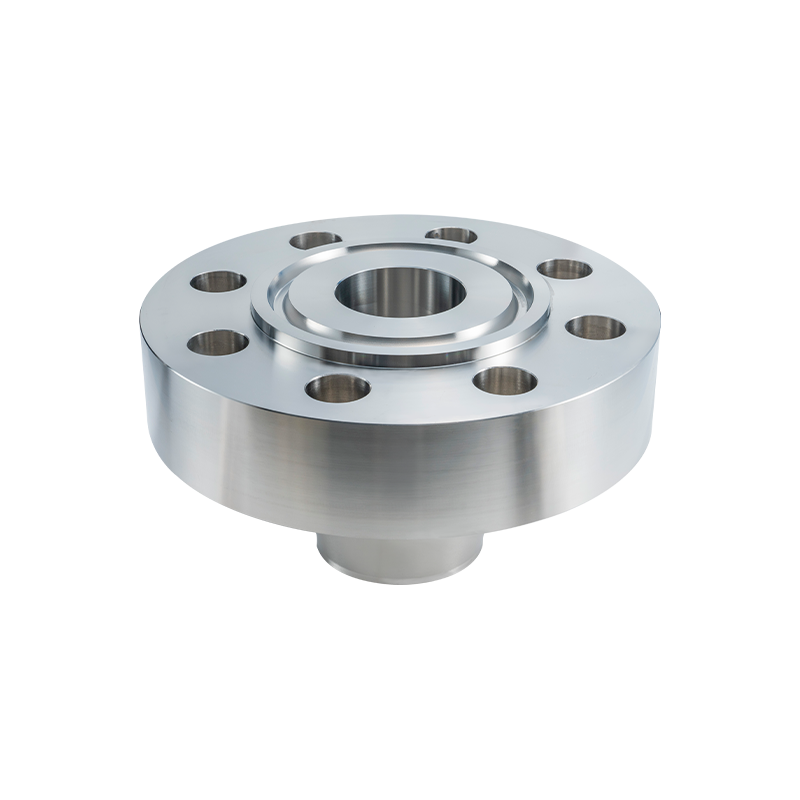
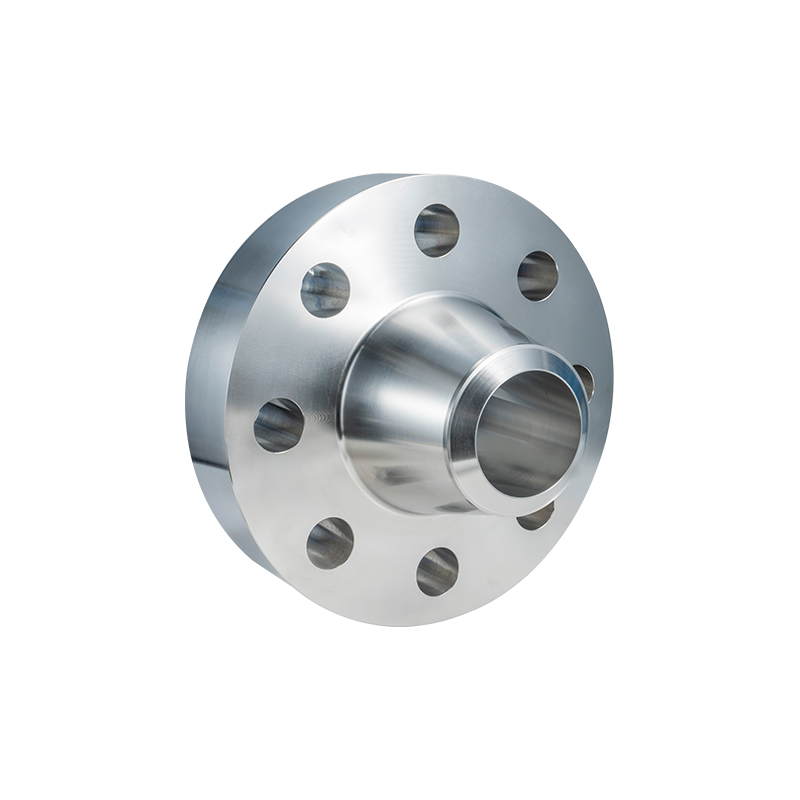
Within these families, the nickel-molybdenum-chromium grades such as N10276, often ordered under the commercial designation Hastelloy C-276, are the benchmark for the most aggressive chemical services. A dedicated Hastelloy alloy flange line covers this segment. For general corrosive and high-temperature duties, the broader nickel-based alloy flange range is specified more frequently because it balances corrosion performance, weldability, and cost.
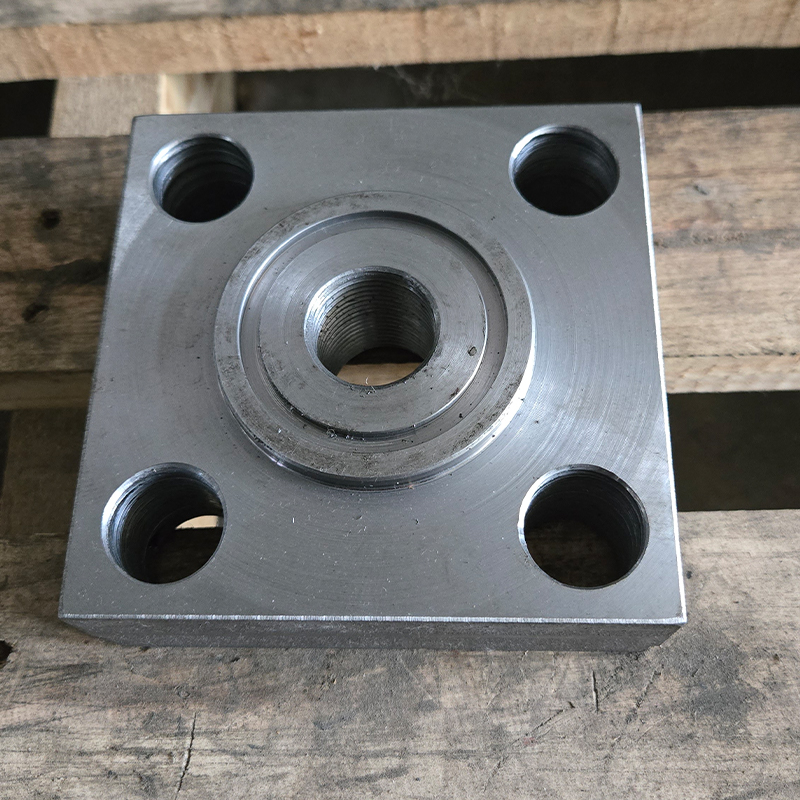 Custom Nickel Alloy Flange Manufacturers, FactoryJiangyin Zhonghai Precision Machinery Co., Ltd. Is China Nickel Alloy Flange Manufacturers, Factory, We Offer Custom Nickel Alloy Flange ...View Product →Custom Hastelloy Flange Manufacturers, FactoryJiangyin Zhonghai Precision Machinery Co., Ltd. Is China Hastelloy Flange Manufacturers, Factory, We Custom & Standard Flanges (GB/ASME/J...View Product →
Standards, Pressure Classes, and Material Specifications
Nickel-based alloy flanges follow the same dimensional standards as flanges in other materials. What changes is the material specification and, in some cases, the pressure-temperature ratings published for each alloy.
Dimensional standards and pressure ratings
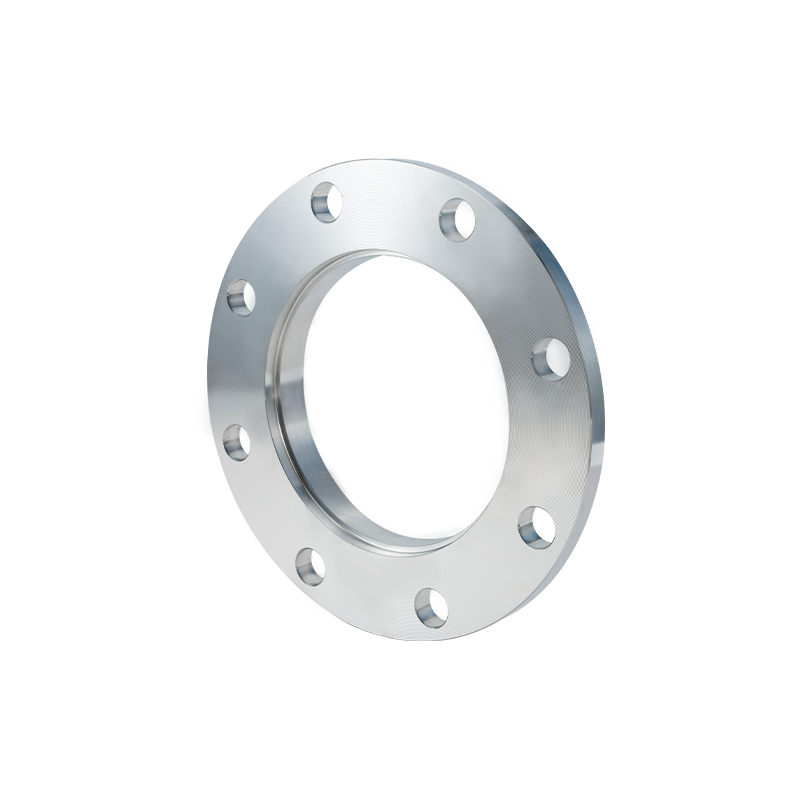
ASME B16.5 covers nickel-based alloy flanges from NPS 1/2 to NPS 24 in pressure classes from 150 to 2500. Larger diameters fall under ASME B16.47. European projects commonly reference EN 1092-1 flange types, while Japanese-spec projects use JIS B2220. A manufacturer that supports ANSI flange class selection for North American projects and also produces EN 1092-1, JIS B2220, GB, and DIN flanges simplifies procurement when one supplier must serve multiple plant codes.
Forging and material standards
Nickel-based alloy flanges are normally specified as forgings to ASTM B564, which covers the principal nickel and nickel-cobalt alloy grades. Related product specifications such as ASTM B160, B166, B425, and B462 apply to specific alloy systems. When a flange is machined from plate instead of forged, the grain structure and through-thickness properties are not equivalent. For pressure-retaining flanges in demanding service, forged construction is the safer choice because grain flow follows the flange contour and the risk of through-thickness defects is reduced.
Manufacturing Factors That Determine Flange Performance
The alloy grade alone does not guarantee a reliable flange. The manufacturing route decides whether the material’s corrosion resistance survives in the finished part.
Forging and grain flow
Nickel-based alloys have a narrow hot-working temperature range. Overheating causes grain growth and loss of corrosion resistance; underheating produces cracks and incomplete filling of the die. Controlled reduction and proper die design create grain flow that follows the hub and flange face, improving fatigue life and sealing performance. The relationship between grain flow and fatigue resistance in forged flanges is well documented, and it is the main reason forged construction is preferred for critical nickel alloy connections.
Heat treatment
Most nickel-based alloy flanges are supplied in the solution-annealed condition. Annealing dissolves precipitated phases and restores the homogeneous austenitic structure on which corrosion resistance depends. The annealing temperature and cooling rate must match the alloy family; a standard stainless steel heat-treatment cycle is not acceptable.
Machining and inspection
Nickel-based alloys work-harden quickly and tear rather than cut cleanly under light cuts. Rigid CNC turning, positive-feed tooling, and adequate coolant are needed to hold gasket-face finish and dimensional tolerances. On the inspection side, positive material identification (PMI) should be performed on every heat, and dimensional checks should verify flange face flatness, bolt-circle accuracy, and surface finish. An in-house line that combines forging, heat treatment, CNC machining, and inspection, as operated by Jiangyin Zhonghai Precision Machinery, gives the buyer a single chain of accountability from billet to finished flange.
Procurement Considerations for Nickel-Based Alloy Flanges
Nickel-based alloy flanges are priced primarily by raw material content. Nickel market prices move substantially, so quotations are often valid for only a short period, and large orders should include a price-adjustment clause. Beyond price, three points deserve attention.
Certification and documentation
For European pressure equipment, flanges must be supplied with an EN 10204 Type 3.1 certificate, and the manufacturer should hold ISO 9001 certification as well as PED/TUV/TS approval. For North American projects, the material test report must trace the heat number to the forging and confirm chemical composition, mechanical properties, and heat-treatment parameters.
Custom sizes and non-standard configurations
Standard tables cover most requirements, but large diameters, special bores, and odd bolt circles call for a custom forging. The boundary between a feasible custom part and an impractical one is set by the forge and machining capacity. A non-standard forged flange program that handles diameters up to 60 inches, single-piece weights up to 10 tons, and overall dimensions up to 4 meters covers the majority of specialty requests.
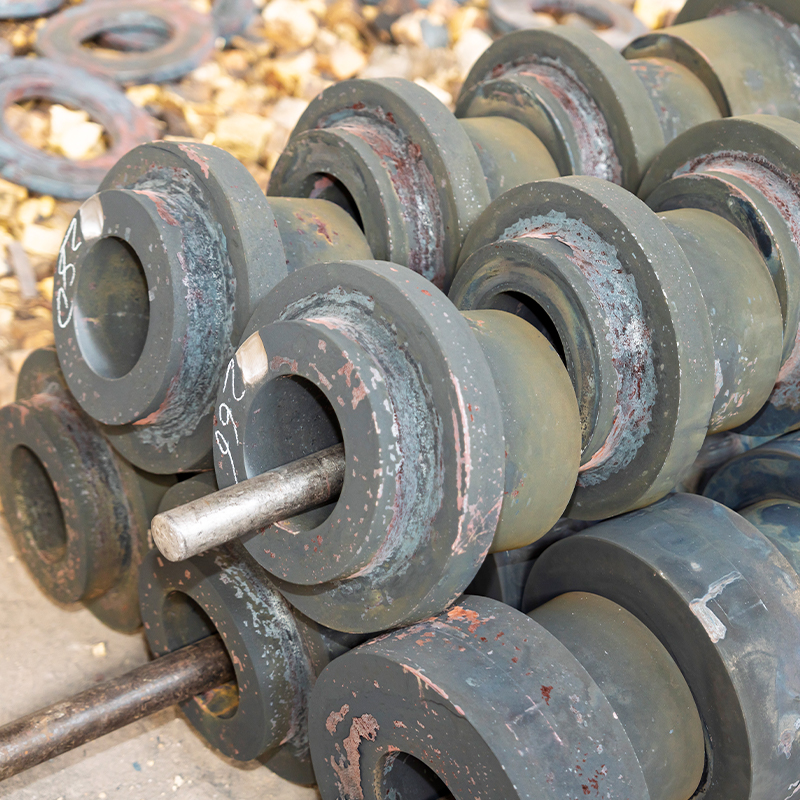 Wholesale Non-Standard Flanges Suppliers, Exporter, CompanyJiangyin Zhonghai Precision Machinery Co., Ltd. Is China Non-Standard Flanges Suppliers, Exporter, Company, We Wholesale 1/2'' To 60'', W...View Product →
Lead time and quality assurance
Forging, solution annealing, machining, PMI, and final inspection take several weeks longer than an equivalent carbon steel flange. Plan the schedule around the alloy delivery reality. Confirm that the quality plan includes PMI after machining, not only on incoming material, because mixed-material errors are the most expensive failure mode in alloy flange procurement.
Selection Summary
Selecting a nickel-based alloy flange comes down to a repeatable sequence. First, define the service environment: the corrosive medium, chloride level, operating temperature, and whether sour-service limits apply. Second, choose the alloy family by UNS number rather than by trade name. Third, fix the dimensional standard and pressure class according to the piping code. Fourth, verify that the manufacturer can forge, heat-treat, machine, and certify the flange under one qualified quality system. Following this sequence prevents the two most common mistakes: specifying an overqualified alloy that raises cost without benefit, and specifying the right alloy with an underqualified manufacturing route that destroys its corrosion resistance.
 Previous