English
 中文简体
中文简体 Deutsch





Content
- 1 What Duplex Stainless Steel Flanges Are and Why the Microstructure Matters
- 2 Common Duplex Grades Used in Flange Manufacturing
- 3 Manufacturing Standards, Dimensional Standards, and Pressure Classes
- 4 Heat Treatment, Ferrite Content, and Quality Control
- 5 Practical Procurement Considerations for Duplex Stainless Steel Flanges
- 6 Typical Applications of Duplex Stainless Steel Flanges
- 7 What To Check Before You Order
- 8 Final Recommendation
Duplex stainless steel flanges are usually the right answer when a piping system needs to resist chloride-induced stress corrosion cracking, pitting, or high mechanical loads without moving up to a more expensive nickel-based alloy. The reason is straightforward: duplex grades combine a ferritic and austenitic microstructure, which gives them roughly twice the yield strength of standard 304L or 316L stainless steel, while maintaining good toughness and excellent resistance to localised corrosion.
For a buyer or engineer evaluating flanges, the practical consequence is that a duplex flange can often be specified in a lower pressure class or a thinner hub than an equivalent austenitic stainless steel flange. That affects not only material cost, but also the weight of the flange itself, the load on the bolting, and the overall stiffness of the joint. This article covers the main duplex grades, the standards that govern their dimensions and pressure ratings, and the inspection points that matter most when ordering duplex stainless steel flanges from a manufacturer.
What Duplex Stainless Steel Flanges Are and Why the Microstructure Matters
Duplex stainless steels are a family of alloys with a two-phase microstructure consisting of roughly 50% ferrite and 50% austenite. This balanced structure is achieved by controlling the ratio of austenite-stabilising elements such as nickel, nitrogen, and manganese to ferrite-stabilising elements such as chromium, molybdenum, and silicon. The result combines the high strength and resistance to stress corrosion cracking of ferritic stainless steels with the toughness and weldability of austenitic grades.
Compared with austenitic stainless steels, duplex grades offer significantly higher yield strength, typically around 450–550 MPa for the standard 2205 grade, versus approximately 210–220 MPa for 304L or 316L. In flange applications, this strength advantage means that design stress values under ASME B16.5 pressure–temperature ratings are higher, so a duplex flange can be considered for service conditions where an austenitic flange of the same size and class would be marginal.
Compared with ferritic stainless steels, duplex grades provide much better toughness, particularly at low temperatures, and are weldable using conventional techniques. This makes duplex flanges suitable for fabricated pipe spools and welded connections, not just bolt-on components.
Compared with superalloys or nickel-based alloys, duplex grades are significantly less expensive while still covering a wide range of corrosive media. This is why duplex flanges have become a default specification in offshore oil and gas, chemical processing, seawater handling, and other chloride-rich environments.
The Main Alloying Elements in Duplex Stainless Steel Flanges
The performance of a duplex flange depends on the precise balance of these elements:
- Chromium (Cr): Chromium is the primary driver of corrosion resistance and is present in duplex grades at approximately 21–28%. It promotes the ferrite phase and forms the passive oxide layer that protects the steel.
- Nickel (Ni): Nickel stabilises austenite and improves toughness. Duplex grades contain lower nickel than austenitic grades, typically 4.5–8%, which is one reason they are more cost-stable.
- Molybdenum (Mo): Molybdenum improves resistance to pitting and crevice corrosion in chloride environments. It is present at about 2.5–4% in standard duplex and super duplex grades.
- Nitrogen (N): Nitrogen is a strong austenite stabiliser and increases both strength and pitting resistance. Typical values are 0.14–0.28%.
- Manganese (Mn): Manganese is used as an austenite stabiliser in leaner or more economical grades and can partially substitute for nickel.
The combined effect of chromium, molybdenum, and nitrogen is often expressed as the pitting resistance equivalent number (PREN), calculated as PREN = Cr + 3.3Mo + 16N. A higher PREN generally indicates better resistance to pitting in chloride service.
Common Duplex Grades Used in Flange Manufacturing
When ordering duplex stainless steel flanges, the material grade should be specified using both the ASTM product specification and the corresponding UNS number. This avoids ambiguity, particularly for users familiar with trade names or old designations. Not all duplex grades are interchangeable, and the difference in corrosion resistance, strength, and cost is substantial enough that selecting the wrong grade is rarely a safe compromise.
| Grade | UNS | PREN | Yield Strength (min) | Typical Use |
|---|---|---|---|---|
| Lean duplex (e.g. 2304) | S32304 | ≈25 | 400 MPa | Less aggressive chloride service, cost-sensitive projects |
| Standard duplex (e.g. 2205) | S31803 / S32205 | ≈34–36 | 450 MPa | Chemical, oil and gas, seawater, heat exchangers |
| Super duplex (e.g. 2507) | S32750 / S32760 | ≥40 | 550 MPa | Subsea, offshore, very high chloride and low pH service |
For most industrial piping applications, UNS S32205 (2205) is the default duplex grade because it offers a good balance between corrosion resistance, mechanical strength, weldability, and availability. UNS S31803 is an earlier 22% Cr duplex grade with slightly lower nitrogen and molybdenum limits; if a project specifies S31803, it is worth checking whether S32205 is acceptable as an equivalent or superior alternative.
Much has been written about the difference between 2205 and super-duplex grades, especially regarding critical pitting temperature (CPT) in subsea service. The short version: super-duplex is specified when the risk of pitting or crevice corrosion in warm, highly chlorinated seawater is unacceptably high for standard duplex. In flange use, this means specifying super-duplex forgings and ensuring that the heat treatment, ferrite content, and impact properties all meet the tighter requirements of the super-duplex grade.
Manufacturing Standards, Dimensional Standards, and Pressure Classes
Duplex stainless steel flanges are manufactured and tested according to the same general flange standards as other materials, but the material specification, forging practice, and heat treatment need to be compliant with the relevant ASTM standards. The most common combinations are:
- ASME B16.5: Covers flanges from 1/2 to 24 inches, pressure classes 150 to 2500.
- ASME B16.47: Covers large-diameter flanges (26 to 60 inches) in Series A and Series B.
- EN 1092-1: Covers PN-rated flanges commonly used in European and international projects.
- JIS B2220: Covers 5K, 10K, 16K, and 20K flanges used in Japanese-standard plants and equipment.
For material properties, duplex forgings are usually supplied to ASTM A182 for pipe flanges and forged fittings. The relevant grade designations under A182 are F51 for UNS S31803, F60 for UNS S32205, F53 for UNS S32750, and F55 for UNS S32760. If your order specifies only “duplex steel flange” without a grade and standard, the manufacturer may supply any duplex grade that meets the dimensional standard, which is not an acceptable level of specification for critical service.
Within ASME B16.5, the pressure–temperature ratings for duplex stainless steels are not the same as those for 316L stainless steel. The ratings depend on the material group assigned in ASME B16.5 Table 2, which describes the allowable stress values for each material group. Duplex grades generally receive higher ratings than 316L at intermediate temperatures because of their higher yield strength, but the rating is not simply proportional to yield strength. It is important to use the actual rating table for the specific material group rather than assuming that a duplex flange can automatically replace an austenitic flange at the same class.
How to Specify the Right Flange Type for a Duplex Piping System
Duplex stainless steel flanges are available in the standard facing and hub styles:
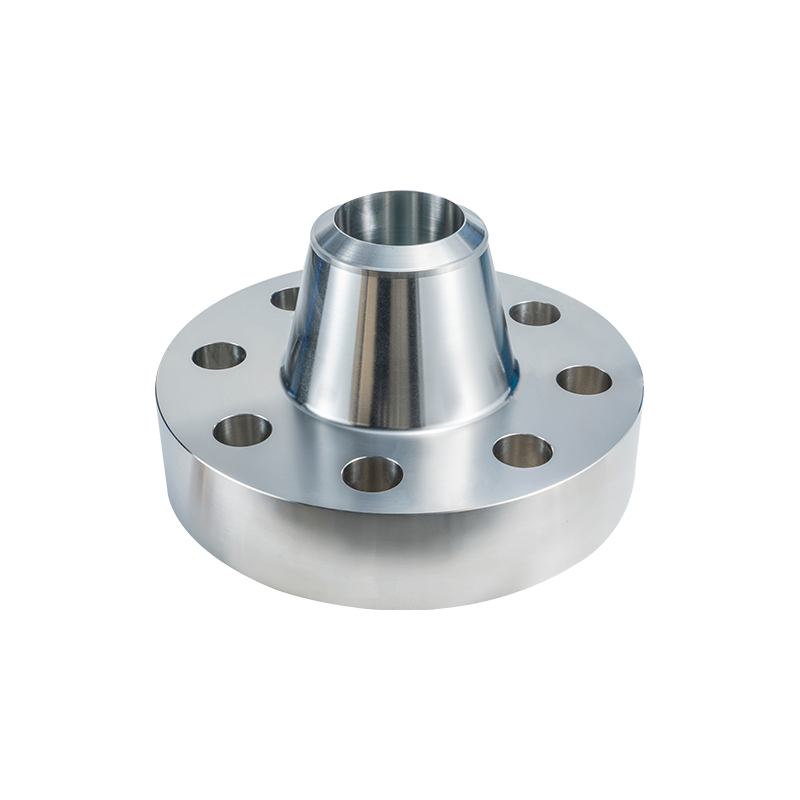
- Welding neck flanges, which are the preferred choice for severe service because the tapered hub transmits stresses for a smooth transition between pipe and flange.
- Slip-on flanges, which are used in lower-pressure and lower-temperature service and are easier to align during assembly.
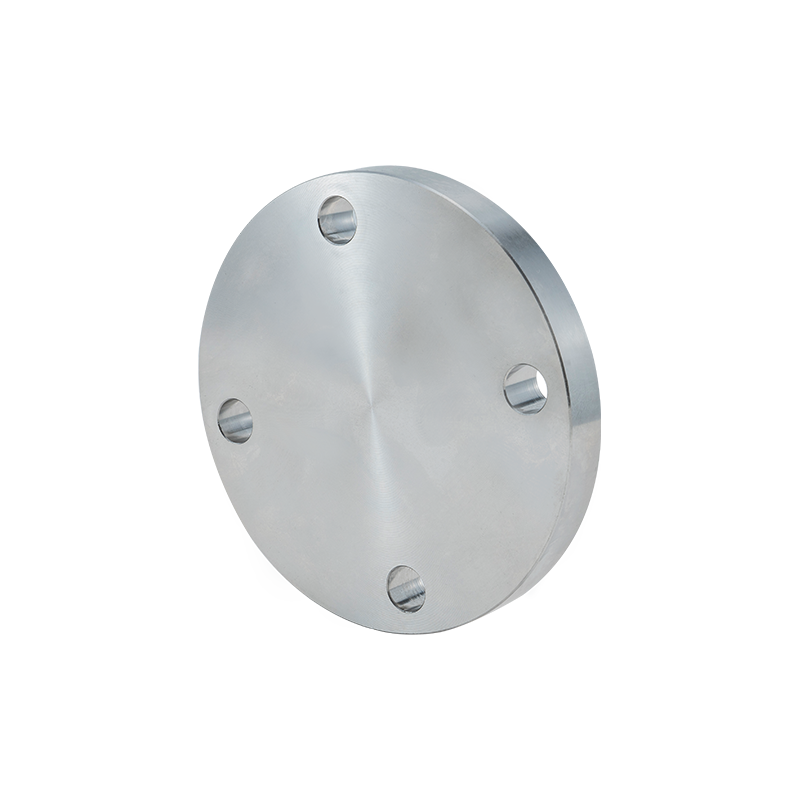
- Blind flanges, which close off piping ends or vessel openings.
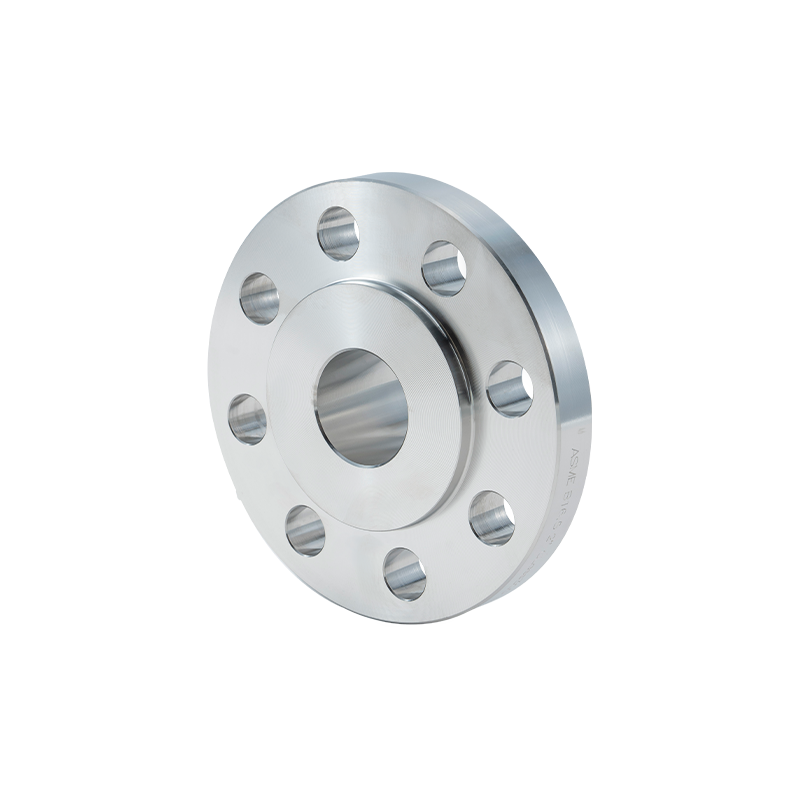
- Lap joint flanges, which are used with a stub end when the pipe material needs to be different from the flange material or when frequent dismantling is required.
- Plate flanges, which are flat, economical flanges used in low-pressure applications.
For duplex piping systems, welding neck flanges are the most common choice for critical service because the butt-weld connection avoids the full-penetration weld concerns associated with slip-on flanges and preserves the corrosion resistance of the weld joint. If a slip-on flange is used on duplex pipe, the fillet weld geometry and heat input need to be carefully controlled to avoid excessive ferrite formation or chromium nitride precipitation at the weld root.
Heat Treatment, Ferrite Content, and Quality Control
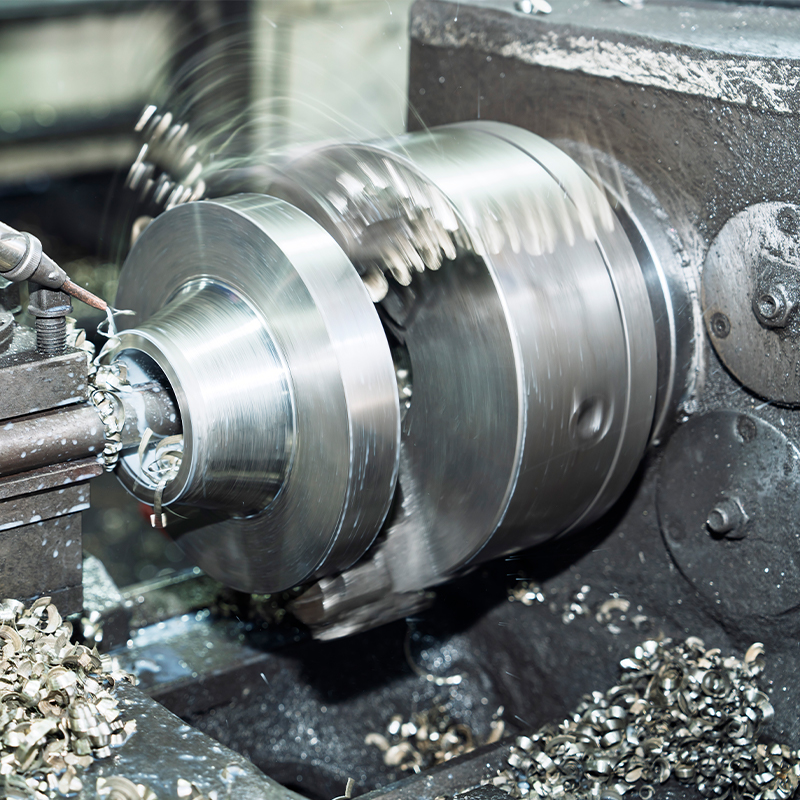
Duplex stainless steel flanges must be supplied in the solution-annealed condition. This means the flanges are heated to a temperature typically between 1020°C and 1120°C, depending on the grade, and then rapidly quenched in water. The purpose is to dissolve any undesirable secondary phases, such as sigma phase, and to restore the correct balance of ferrite and austenite.
Heat treatment is not an optional step. If a duplex flange is cooled too slowly, or if it is held in the dangerous temperature range between approximately 700°C and 950°C, sigma phase can precipitate at the ferrite–austenite boundaries. Sigma phase is hard and brittle, and it depletes the surrounding matrix of chromium and molybdenum, leading to a sharp drop in corrosion resistance. This is why duplex flange manufacturers need genuine furnace capability and written heat-treatment procedures, not just a certificate that says “annealed.”
When you order duplex flanges from a foundry or a forging supplier, check the following points in the quality documentation:
- The heat-treatment chart showing actual soak temperature and quench time.
- Ferrite content measured by a magnetic method or metallographic examination, typically in the range of 35–65% for standard duplex and 30–70% for super duplex.
- Mechanical test results, including yield strength, tensile strength, and Charpy V-notch impact energy at the specified test temperature.
- Corrosion test results when required, such as ASTM G48 Method A for pitting resistance in ferric chloride.
- Hydrostatic and dimensional inspections, especially for flange face flatness, bolt-hole alignment, and hub dimensions.
Flange face flatness deserves a special mention. A distorted flange face is one of the most common root causes of gasket leakage. Duplex flanges are strong, but they are not immune to distortion during machining or welding. Verifying face flatness after final machining and before shipping is a simple check that prevents much more expensive problems during commissioning.
Practical Procurement Considerations for Duplex Stainless Steel Flanges
Ordering duplex stainless steel flanges is not the same as ordering a standard carbon steel flange. The material cost is higher, the lead time is longer, and the requirement for material traceability is usually stricter. The following considerations have a direct impact on the success of the purchase:
Grade Selection and Specification
Define the grade by UNS number, not by a trade name. Specify the ASTM A182 grade, such as F60 for 2205, and indicate whether you require the tighter chemistry of UNS S32205 or whether S31803 is acceptable. For subsea or high-temperature seawater service, specify super-duplex and confirm the required PREN and critical pitting temperature. The product range of duplex stainless steel flanges offered by many manufacturers includes standard and super-duplex grades; ask for the specific material certificate for your heat number rather than relying on the catalogue description.
Pressure Class and Face Finish
Confirm the pressure class against the ASME B16.5 rating table for the specific duplex material group. A 300 lb class duplex flange might seem over-specified compared with a 300 lb class 316L flange, but the rating tables are not always what you expect at elevated temperatures. Also confirm the flange face finish, usually specified as 125 to 250 microinches RA for Raised Face flanges, and the gasket type, because the face finish and gasket selection are interdependent.
Traceability and Documentation
For dual-certified or project-specific requirements, the material test certificate must show the heat number, the chemical analysis, the mechanical properties, and the results of any supplementary tests. If the flanges are to be welded in the field, the weld procedure should be qualified for the exact duplex grade, and the welder should be qualified accordingly. Duplex welding requires strict control of interpass temperature and heat input, and not all fabrication shops have duplex-specific procedures.
Custom and Non-Standard Flanges
If your project requires a non-standard size, an unusual facing, or a special machining detail, you should confirm whether the manufacturer can produce it from a solid forging rather than from rolled plate. Forged duplex flanges generally provide better grain flow and more consistent mechanical properties than flanges cut from plate, particularly in heavier sections. This is an important point when the flange will be used in high-pressure or cyclic service.
Typical Applications of Duplex Stainless Steel Flanges
Duplex stainless steel flanges are used wherever the pipe content is aggressive enough to attack standard stainless steels. In practice, the most common applications are:
- Offshore oil and gas platforms, where seawater and chloride-bearing production fluids create a high risk of pitting and stress corrosion cracking.
- Chemical and petrochemical plants producing chlorine-containing intermediates or using cooling water with high chloride content.
- Desalination plants and seawater reverse osmosis systems, where duplex and super-duplex are specified for their resistance to chloride pitting.
- Pulp and paper mills, where bleaching chemicals and chloride-rich process streams require a material that withstands both corrosion and abrasion.
- Flue gas desulfurization systems in power plants, where condensates are acidic and high in chlorides.
In each of these environments, the duplex flange is typically part of a larger duplex piping system, so the flange material must be compatible with the pipe and fitting material. Mixing a duplex flange with a lower-grade pipe is possible in some cases, but the weld and the heat-affected zone become the weakest link. It is almost always better to keep the flange, pipe, and fittings in the same duplex grade.
For services where the temperature is extremely high, duplex stainless steel is generally not the right material; its use is limited by the embrittling behaviour above approximately 280°C to 300°C. For cryogenic service, duplex grades have limited impact toughness compared with austenitic grades, although they are often acceptable down to about -40°C, depending on the grade and thickness. Verify the impact test temperature and absorbed energy requirements with the design code before ordering.
What To Check Before You Order
Before placing an order for duplex stainless steel flanges, confirm the following points with the manufacturer or supplier:
- The exact material grade, stated as a UNS number and an ASTM A182 designation, not just “duplex.”
- The dimensional standard (ASME B16.5, ASME B16.47, EN 1092-1, or JIS B2220) and the pressure class.
- The heat-treatment requirement: solution annealed and water quenched, with a report of actual parameters.
- The required mechanical tests, including yield strength, tensile strength, hardness, and Charpy impact if required.
- The required corrosion tests, such as ASTM G48 Method A, if the service is chloride-rich or if the project specifies a minimum PREN.
- The face finish, gasket type, and surface protection before shipping.
- The delivery timeline, including the time for forging, heat treatment, machining, and documentation. Duplex castings and forgings require more careful process control than carbon steel, so lead times are naturally longer.
A practical way to reduce risk is to buy from a manufacturer that controls the production steps in-house: forging, heat treatment, machining, and quality testing. This reduces the risk of miscommunication between a forging subcontractor and a machining subcontractor, and it also simplifies the documentation chain. If the manufacturer can show you its own heat-treatment line and testing equipment, you can ask more targeted questions about ferrite measurement, temperature control, and quench timing.
Issues such as flange face distortion, poor flatness, or incorrect bolt-hole alignment are much easier to resolve when the flange is still in the manufacturer's workshop. Insist on dimensional inspection reports before dispatch, and, for critical service, arrange a third-party inspection or a factory acceptance test. For projects with high safety or availability requirements, the extra cost of a factory inspection is far lower than the cost of a flange failure in service.
Final Recommendation
Duplex stainless steel flanges are a mature, reliable product class when the material, standard, and quality-control requirements are properly specified. The most common failure in selecting duplex flanges is not a lack of available supply, but under-specification: ordering “duplex flanges” without a UNS number, accepting a grade substitution without checking the properties, or missing the additional inspection requirements that differentiate duplex from standard stainless steels.
For most projects, the safe starting point is a standard 2205 duplex flange to ASME B16.5, in the correct pressure class, supplied with a full material traceability package, solution-annealed and certified for the required mechanical properties. It gives you the corrosion resistance and strength that duplex is known for, without the procurement complexity of super-duplex. Save super-duplex for the environments that truly require it: warm seawater, high chlorides, low pH, and subsea installations.
 Previous