English
 中文简体
 Deutsch






Content
- 1 The Four Line Blanks, Defined Without Ambiguity
- 2 Paddle Blind vs Spade: Same Disc, Different Field Reality
- 3 Thickness, Class and the Rating Chain
- 4 When a Spectacle Blind Beats a Spade and Spacer
- 5 An Installation Sequence That Survives an Audit
- 6 Blind Flange, Line Blank and Custom Sizes
- 7 Practical Questions Before You Release the Purchase Order
A 6 mm forged disc clamped between two flanges decides whether a 40 bar hydrocarbon header is live or dead. That disc is a line blank, and the four names buyers use for it, spade, paddle blind, spacer and spectacle blind, describe four different pieces of hardware that all sit in the same bolted joint. Confusing them on a purchase order is how a project ends up with Class 900 blanks that will not fit the joint gap, or with a plain spade where the field crew expected a handle to lift.
ASME B16.48, Steel Line Blanks, is the document that fixes the geometry. It covers spades, spacers, paddle blinds and spectacle plates from NPS 1/2 to NPS 24 in Classes 150 through 2500, and it replaced API 590 when that standard was withdrawn. Everything below works inside that frame.
The Four Line Blanks, Defined Without Ambiguity
ASME B16.48 defines four line-blank products, and the differences between them are geometric rather than related to pressure class or material grade.
Spade
A solid circular plate with no bore. It shares the outside diameter, bolt circle, bolt hole count and hole diameter of the mating ASME B16.5 flange, so the same studs that close the joint also carry the blank. No handle, no bore, full blockage.
Paddle blind
The same disc as a spade with one addition: an integral handle or tab that serves as the lifting point, the tag point and the visual proof that the joint is blinded. Also sold as a paddle blank.
Spacer
A ring of the same outside diameter and the same thickness as the blank it replaces, with a bore matched to the pipe inside diameter. It enters the joint when the line runs open, and it exists only to hold the gap unchanged.
Spectacle blind
Two discs joined by a web, one solid and one bored. Loosen the bolts, rotate the plate on a single stud, and the line changes from closed to open without any part leaving the joint. Also called a figure-8 blank or a spectacle plate.
Only thickness and the presence of a bore actually change between these products. The flange interface is common to all four, which is why a spade can be swapped for a spacer in the field with the original stud set.
| Type | Through bore | Handle | Changeover | Typical specification |
| Spade | None | No | Lifted out and stored off-line | Fixed isolation points under a tag log |
| Paddle blind | None | Integral tab | Lifted by the handle | Same duty as a spade, faster changeover |
| Spacer | Full pipe bore | No | Bolted in place of the blank | Keeps the joint gap while the line runs open |
| Spectacle blind | One of the two discs | No, the web is the grip | Rotated on one bolt | Lines that switch state repeatedly |
Paddle Blind vs Spade: Same Disc, Different Field Reality
A paddle blind is a spade with a handle, and both carry the same nominal thickness for a given size and class in ASME B16.48, so the only difference that reaches the purchase order is the tab.
Trade usage adds the noise. European contractor drawings usually read paddle blind or paddle blank, US piping specifications usually read spade, and B16.48 itself lists the handled version as a paddle blind and the unhandled version as a spade. None of these terms changes the pressure rating, because the disc geometry underneath is shared.
The handle does change the job. An NPS 18 Class 600 spade is heavy enough that two fitters and a sling are needed to lift it clear of the joint, and a bare plate offers nothing to rig. The integral tab gives a rigging point, a place to hang the tag, and a visible signal to anyone walking the line that this joint is blinded rather than open.
If the line list says paddle blind, the delivered item must have a handle. A plain spade of the same thickness is dimensionally correct and operationally wrong, because the handle is the lifting point, the tag point and the proof of isolation.
One more purchasing detail sits beside the handle: the spacer. A spade and spacer pair only works when the spacer thickness equals the blank thickness, because stud length and joint gap are set for that single dimension. Ship a spacer 3 mm thinner and the joint will either fail to compress the gasket or leave the studs short.
Thickness, Class and the Rating Chain
A line blank carries no pressure rating of its own: it takes the rating of the flange pair it is bolted between, so a Class 300 blank in ASTM A105 is rated 740 psi at 100 F, identical to the flange beside it.
NPS 1/2-24B16.48 blank range
150-2500classes covered
285 psiClass 150 A105 at 100 F
1.5xB31.3 test minimum
The six ASME B16.5 classes span a factor of 21.6 between Class 150 and Class 2500 inside one material group, and the blank follows that curve exactly because its rating is the joint rating. The values below apply to group 1.1 material, the ASTM A105 carbon steel used for most carbon blanks.
Allowable pressure by class
ASME B16.5 group 1.1 (ASTM A105), maximum allowable pressure at 100 F, in psi
Thickness is where line blanks separate from flanges. B16.48 tabulates one blank thickness per size and class, and that dimension, not the flange thickness, sets the gap the studs must span. Buyers in wet or sour service commonly add a corrosion allowance of 1.5 mm or 3 mm on top of the tabulated value; that is a purchasable option rather than a standard change, and it has to appear on the drawing because it changes the stud length.
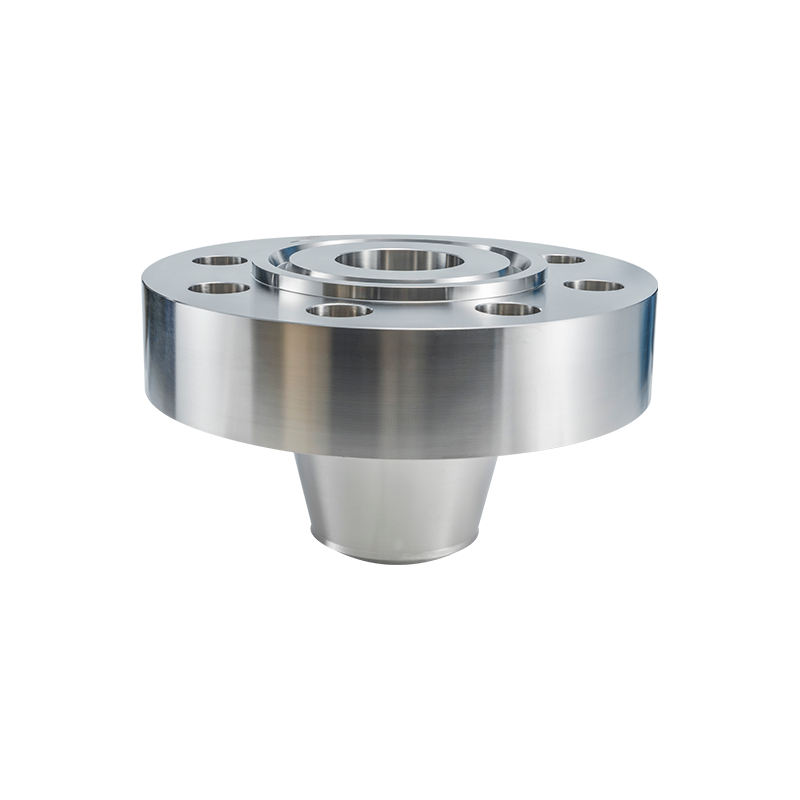 ANSI Flanges in Classes 150, 300, 900, 1500 and 2500Compare forged ANSI flanges in Classes 150, 300, 900, 1500 and 2500, including slip-on and weld-neck types for standard or custom applications.View Product →
Two checks catch most errors before shipment. First, record the blank thickness against the flange class, never against the pipe schedule. Second, read the blind flange size chart for the flange interface and the blank table for the disc, because a single chart rarely carries both sets of numbers.
When a Spectacle Blind Beats a Spade and Spacer
A spectacle blind wins on lines that change state more than about once a month, and a spade and spacer pair wins on large sizes and high classes where the figure-8 assembly becomes a two-person lift.
Spectacle blind
- No loose parts to store, tag or lose between shutdowns
- State change is a bolt loosening and a rotation on one stud
- Open position is visible, because the bored disc sits in the joint
- Penalty: the web adds mass and the plate cannot be split for lifting
Spade and spacer
- Lower unit mass for the same size and pressure class
- Practical above NPS 16 in Class 900 and above
- Each face is machined and inspected as a separate part
- Penalty: the removed blank needs a rack and a tag system
Weight decides most of these cases. A Class 2500 spectacle plate at NPS 24 is a forging that requires mechanical lifting, while the same duty split into a spade and a spacer gives two pieces that two fitters can handle. On oil and gas gathering and transmission lines, where isolation points are switched around pigging and maintenance windows, the rotation speed of a spectacle blind usually outweighs the weight penalty.
An Installation Sequence That Survives an Audit
Six steps carry a line-blank installation from isolation to sign-off, and skipping any of them tends to surface later as a leak report rather than a checklist finding.
- Prove zero energy. Depressurize, drain, apply lockout, and confirm with a gauge at the nearest vent before a single bolt is cracked.
- Break the joint and discard both gaskets. A spiral wound gasket to ASME B16.20 compresses once, and a reused gasket is a leak waiting for the first thermal cycle.
- Inspect the raised faces. ASME B16.5 specifies a 125 to 500 microinch Ra finish on the serrated or spiral serrated face, and a radial scratch deeper than that is a leak path no torque value repairs.
- Insert the blank with the handle horizontal or pointing down. An upward handle collects water and becomes a corrosion site and a snag point.
- Fit new gaskets on both faces and torque in three passes at 30, 60 and 100 percent of the specified value in a star pattern, then record the final number against the tag.
- Tag, log and re-torque after the first thermal cycle, once the joint has been through its full temperature swing.
A hydrotest at 1.5 times design pressure with the blank installed proves the disc and the joint together, which is why ASME B31.3 treats a correctly installed line blank as positive isolation rather than a valve closure.
Blind Flange, Line Blank and Custom Sizes
A blind flange is not a line blank: it is an ASME B16.5 flange with no bore, bolted to a flange face and left there for the life of the line, while a spade or paddle blind is inserted for a shutdown and removed again.
That difference drives the purchase. A blind flange closes a nozzle, a header end or a spare branch permanently and carries a full B16.5 pressure-temperature rating in its own right, in sizes from NPS 1/2 to NPS 24 in Classes 150 through 2500. A paddle blind is a maintenance item, bought in sets with spacers and gaskets, and it spends most of its life on a storage rack.
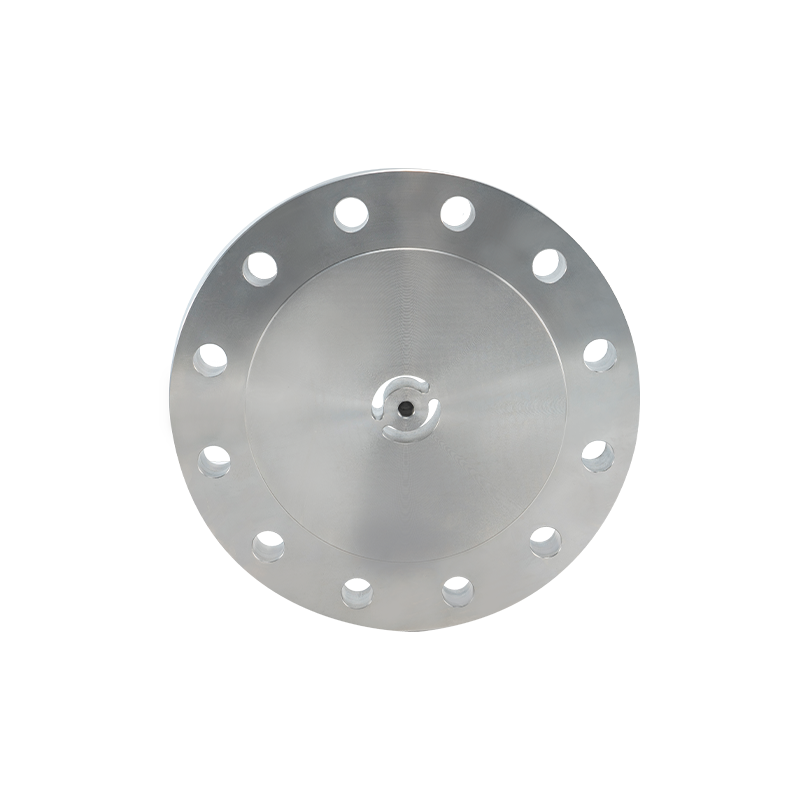 Blind Flanges for Permanent Pipe End SealingView ASME B16.5/B16.47 blind flanges in sizes NPS 1/2–24 and Classes 150–2500, with carbon, stainless, alloy or duplex steel options.View Product →
Material follows the service rather than the device, and the certificate is part of the specification, not paperwork added later.
Material quick rule
ASTM A105 for carbon steel blanks on non-corrosive duty, ASTM A182 F316L for stainless, duplex grades where chlorides rule out the 300 series, and NACE MR0175 / ISO 15156 for any blank entering sour service. Under PED 2014/68/EU the normal minimum for pressure-retaining parts is an EN 10204 3.1 certificate carrying the heat number stamped on the disc.
ASME B16.48 stops at NPS 24. Anything larger, or any blank with a non-standard bolt circle, an oversize handle, a drain tapping or a thickness that carries a 3 mm corrosion allowance, falls outside the table and has to be engineered from ASME B16.5 or B16.47 flange dimensions plus a drawing. Jiangyin Zhonghai Precision Machinery Co., Ltd. forges and machines flanges from 1/2 inch to 60 inch with a maximum single-piece weight of 10 t and a maximum envelope of 4 m, working to ASME, EN, JIS, DIN and GB dimensions under ISO 9001 and PED/TUV scope, which is where the sizes beyond the standard table get covered.
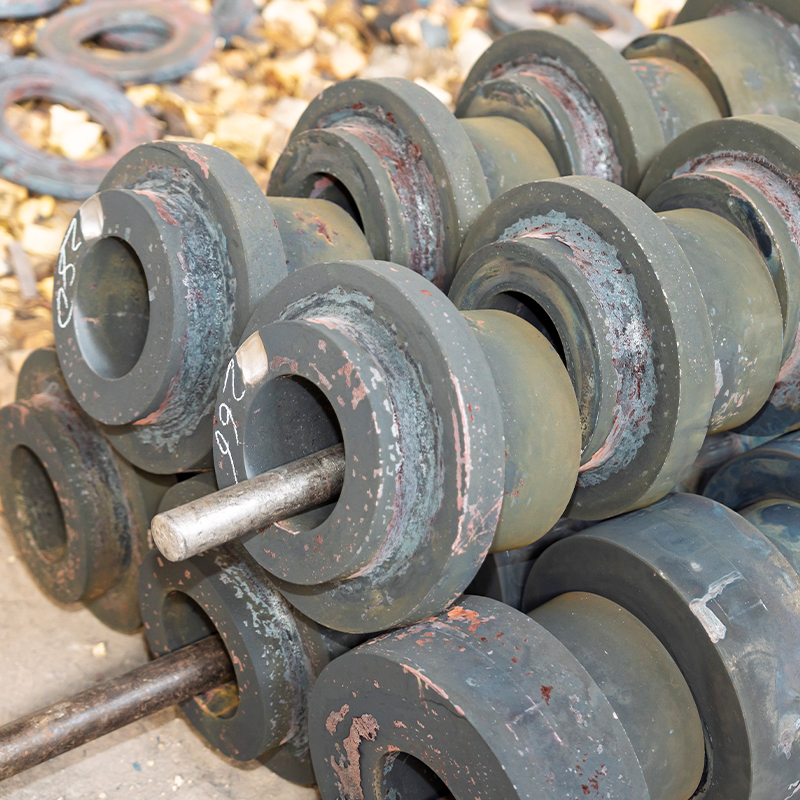 Non-Standard Forged Flanges Made to DrawingsCustom forged flanges and rings from 1/2 to 60 inches, up to 4 m diameter, produced to ASME, EN, JIS, DIN or GB drawings.View Product →
Practical Questions Before You Release the Purchase Order
Is a paddle blind the same as a spade?
Yes on the disc and no on the hardware. Both are solid line blanks with no bore, and both take the same ASME B16.48 thickness for a given size and class, while the paddle blind adds an integral handle for lifting, tagging and visual identification.
What is the difference between a spacer and a blind?
A spacer has a full pipe bore and lets flow pass, while a blind has no bore and stops it. They share the same outside diameter and the same thickness, which is what lets a joint run open with a spacer and close with a blank using the original studs.
Which pressure class should a line blank be?
Match the flange class in the same joint. A Class 150 blank in ASTM A105 carries 285 psi at 100 F and a Class 300 blank carries 740 psi, so fitting a lower class blank de-rates the whole joint to the weaker component.
Can a spectacle blind serve as positive isolation?
Yes. A spectacle blind in the closed position is a mechanical barrier with no actuator, no seat and no bypass path, and it is accepted as positive isolation in process piping as long as the closed disc matches the joint class and the bolts are re-torqued after rotation.
Five values on the purchase order prevent almost every line-blank error: nominal size, ASME class, blank thickness including any corrosion allowance, material grade, and whether a handle is required.
 Previous