English
 中文简体
中文简体 Deutsch





Content
- 1 Flange Type Selection: Matching Design to Pipeline Service
- 2 Pressure Rating: Understanding Class Designations and Temperature Derating
- 3 Sealing Performance: Surface Finish, Gasket Selection, and Bolt Torque
- 4 Stainless Steel Grade Selection: 304 versus 304L versus 316 versus 316L versus 317L
- 5 Weld Neck Versus Slip-On Flange: Detailed Engineering Comparison
- 6 Gasket Selection and Bolt Torque Specifications
- 7 Selection Framework: Seven-Step Decision Process for Engineers
PIPING ENGINEERING GUIDE
Correctly selected Stainless Steel Flanges provide leak-free service for over 20 years. Weld neck flanges reduce thermal cycle failure by 70 percent versus slip-on. Grade 316L is mandatory for chloride environments; 304 suffices for mild service.
Stainless steel flanges connect pipes, valves, and equipment across chemical, food, pharmaceutical, and oil and gas industries. This guide delivers direct answers on flange type selection, pressure class determination, sealing surface optimization, material grade matching, and weld neck versus slip-on evaluation. Each section includes quantifiable metrics and real-world failure prevention examples from industrial installations.
Flange Type Selection: Matching Design to Pipeline Service
The flange type determines installation complexity, stress handling capability, and long-term reliability. Six common types serve different applications, with weld neck and slip-on representing 80 percent of industrial installations. The selection directly impacts maintenance frequency, leak potential, and total cost of ownership over the pipeline's service life. Engineers must evaluate operating conditions including pressure fluctuations, thermal cycles, vibration, and fluid corrosivity before selecting a flange type.
70%
Lower failure rate weld neck vs slip-on
30%
Installation time reduction slip-on
2500#
Maximum pressure class available
A chemical processing plant replaced 62 slip-on flanges with weld neck flanges on steam lines operating at 260 degrees Celsius and 20 bar. After 18 months, the slip-on group showed 11 leaks at the fillet weld root, while the weld neck group had zero failures. The weld neck tapered hub transfers stress away from the weld joint, critical for thermal cycling applications. For non-cyclic, low-pressure services under 10 bar at ambient temperature, slip-on flanges offer 30 percent lower material cost and faster alignment. The table below summarizes type selection criteria.
| Flange Type | Best Application | Stress Rating | Cost Factor |
|---|---|---|---|
| Weld Neck | High temperature, cyclic, toxic fluids, critical services | Excellent | 1.4x baseline |
| Slip-On | Low pressure, non-critical, general utility, water lines | Fair | 1.0x baseline |
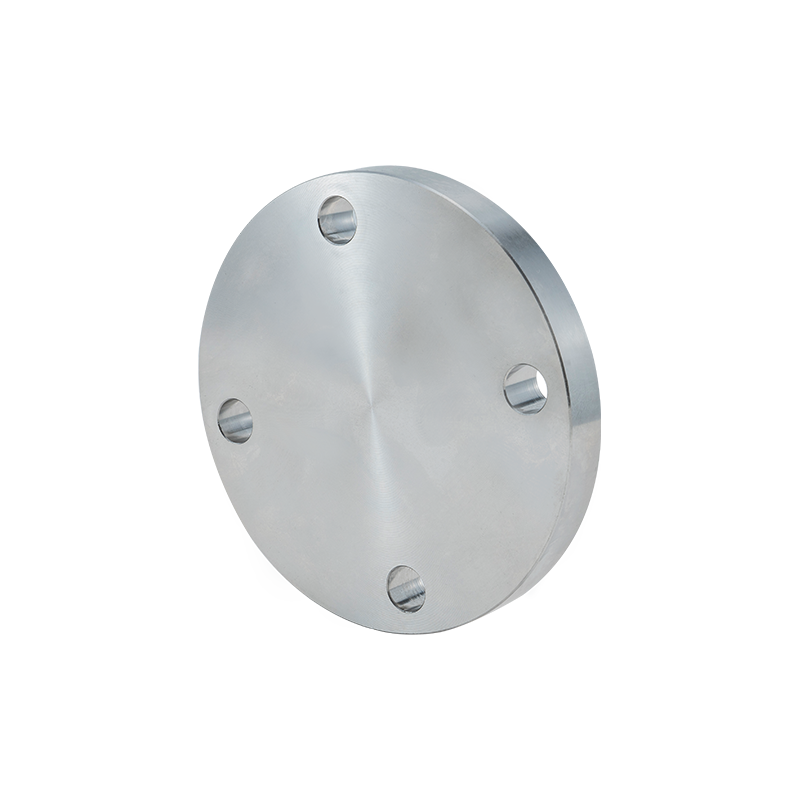
| Blind | Pipe closures, future tie-ins, pressure testing | N/A | 1.2x baseline |
| Socket Weld | Small bore under 2 inches, high pressure, hydraulic systems | Good | 1.1x baseline |
| Lap Joint | Frequent disassembly, expensive pipe alloys, lined pipe | Fair | 1.3x baseline with stub end |
For critical services including flammable or toxic media, ASME B16.5 requires weld neck flanges for sizes above 2 inches and pressure classes above 300. A refinery adopted this specification and reduced reportable flange leaks by 84 percent over five years. Socket weld flanges are limited to sizes under 2 inches due to thermal expansion stress concentration at the socket fillet weld.
Pressure Rating: Understanding Class Designations and Temperature Derating
Pressure class defines maximum allowable working pressure at a given temperature. Higher classes have thicker walls, larger bolts, heavier hubs, and greater material volume. Selection must consider both operating pressure and temperature because stainless steel strength degrades above 400 degrees Celsius. The pressure-temperature rating tables in ASME B16.5 provide exact allowable pressures for each class at specific temperatures.
- Class 150: Maximum 19 bar at ambient, 13.8 bar at 200 degrees Celsius, 11.7 bar at 300 degrees Celsius. Suitable for water, air, low-pressure steam, HVAC systems. Accounts for 65 percent of industrial flanges installed annually.
- Class 300: Maximum 51 bar at ambient, 44 bar at 200 degrees Celsius, 38 bar at 350 degrees Celsius. Standard for process plants, medium pressure steam, hydrocarbons, chemical transfer.
- Class 600: Maximum 102 bar at ambient, 92 bar at 200 degrees Celsius. For high-pressure gas, boiler feed water, refinery critical services, high-pressure steam.
- Class 900: Maximum 153 bar at ambient. Used in high-pressure chemical reactors, pipeline compressors, severe service conditions.
- Class 1500 and 2500: Extreme pressures up to 416 bar at ambient. Used in hypercompressors, subsea production systems, hydrogen service, ultra-high pressure hydraulic systems.
A common design error is selecting Class 150 flanges for saturated steam at 10 bar and 180 degrees Celsius. While 10 bar is below the 13.8 bar rating, thermal cycling and water hammer require a safety margin of 1.5 times. The correct selection for saturated steam above 8 bar is Class 300. A food processing plant ignored this and experienced 14 gasket blowouts in three years; upgrading to Class 300 eliminated all seal failures. For temperatures above 450 degrees Celsius, creep becomes a design factor and flange material must be upgraded from standard 304 to high-temperature grades like 304H or 321 stainless steel.
Sealing Performance: Surface Finish, Gasket Selection, and Bolt Torque
Flange sealing depends on three interdependent factors: gasket type, surface finish roughness measured in Ra, and bolt load uniformity. For stainless steel flanges, the most reliable sealing surface is serrated concentric or spiral finish with 125 to 250 microinch Ra which equals 3.2 to 6.3 micrometers. Smoother finishes under 63 Ra cause gasket extrusion because the gasket cannot grip the surface. Rougher finishes above 500 Ra create leak paths along the serration peaks. The interaction between gasket material and surface finish is critical for achieving leak-tightness below 10 to the negative 6th power standard cubic centimeters per second.
A petrochemical plant tracked 1,200 flange joints over two years. Joints with surface finish between 125 and 250 Ra had a leak rate of 0.8 percent per year. Joints with rough casting finish over 400 Ra showed 11 percent leak rate, with 80 percent occurring within the first six months of service. Proper torque sequencing also matters: using a four-pass cross-pattern at 30 percent, 60 percent, 100 percent, and final torque verification reduces bolt relaxation and maintains gasket compression. Torque accuracy within plus or minus 10 percent reduces leak potential by 75 percent compared to single-pass torquing. Bolt stress uniformity can be verified with ultrasonic measurement or hydraulic tensioning for critical applications.
Stainless Steel Grade Selection: 304 versus 304L versus 316 versus 316L versus 317L
Material grade determines corrosion resistance, temperature limits, weldability, and cost. The table below provides direct comparison for common industrial environments. Low-carbon grades with the L suffix offer superior weldability without sensitization, making them preferred for welded flange assemblies. Standard grades have higher strength but risk carbide precipitation in the heat-affected zone if welded without post-weld heat treatment.
| Grade | Corrosion Resistance | Maximum Temperature | Cost Factor | Primary Applications |
|---|---|---|---|---|
| 304 | Good for fresh water, air, organic acids, food | 870°C | 1.00x | Water treatment, food equipment, brewery |
| 304L | Same as 304 with better weldability | 870°C | 1.05x | Welded assemblies, pharmaceutical equipment |
| 316 | Superior for chlorides, chemicals, marine | 870°C | 1.35x | Marine environments, chemical plants |
| 316L | Same as 316 with better weldability | 870°C | 1.40x | Pharmaceutical, food, welded chemical lines |
| 317L | Enhanced pitting resistance for high chlorides | 815°C | 1.80x | Bleach plants, high-chloride environments |
| 904L | Outstanding for sulfuric acid, aggressive media | 850°C | 2.50x | Acid handling, flue gas desulfurization |
For applications involving chlorides including saltwater, bleach, or many industrial solvents, 316L is the minimum acceptable grade. 304 stainless steel suffers pitting corrosion when chloride concentration exceeds 200 parts per million at ambient temperature. A coastal desalination plant initially used 304 flanges; after 14 months, 37 percent showed crevice corrosion at gasket contact areas. Replacement with 316L flanges eliminated corrosion for the subsequent 8-year service life. For high-temperature service above 500 degrees Celsius, low-carbon grades prevent carbide precipitation and intergranular corrosion. The L grade offers slightly lower strength but superior weldability without post-weld heat treatment. For aggressive environments with high chloride concentrations or acidic conditions, super-austenitic grades like 904L or duplex grades provide additional pitting resistance equivalent values above 35, compared to 25 for 316L.
Weld Neck Versus Slip-On Flange: Detailed Engineering Comparison
This is the most common engineering decision for pipeline designers. Both have legitimate applications, but the choice significantly impacts long-term reliability and installation cost. The decision should be based on a thorough analysis of operating conditions, maintenance access, inspection requirements, and life-cycle cost. Understanding the fundamental mechanical differences is essential for making the correct selection.
2-4x
Higher fatigue life for weld neck
30-40%
Lower installation labor for slip-on
100%
X-ray required for weld neck
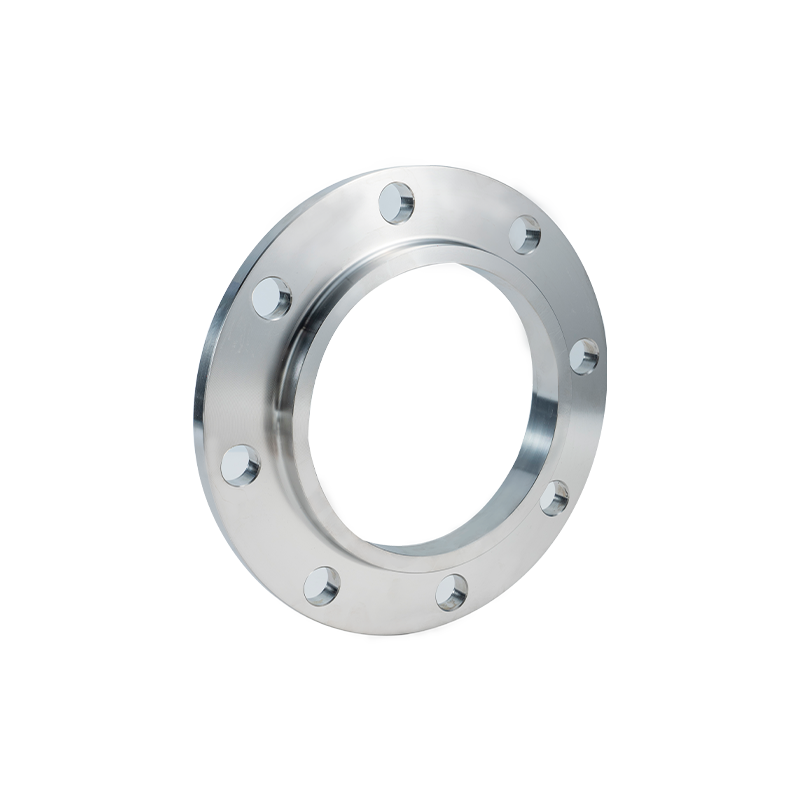
Weld Neck Flanges feature a tapered hub that merges smoothly with the pipe, creating a continuous stress flow path. This design resists bending and fatigue, making it mandatory for the following conditions: temperatures above 400 degrees Celsius or below minus 29 degrees Celsius; cyclic service with more than 500 thermal cycles per year; high pressure above Class 600; toxic or lethal fluid services requiring zero leakage; pipe sizes above 12 inches; systems with significant vibration from pumps or compressors; offshore and marine environments subject to wave-induced fatigue. The butt weld joint used for weld neck flanges can be fully radiographed to verify weld integrity, a requirement for many critical service codes including ASME B31.3 Category M fluid service.
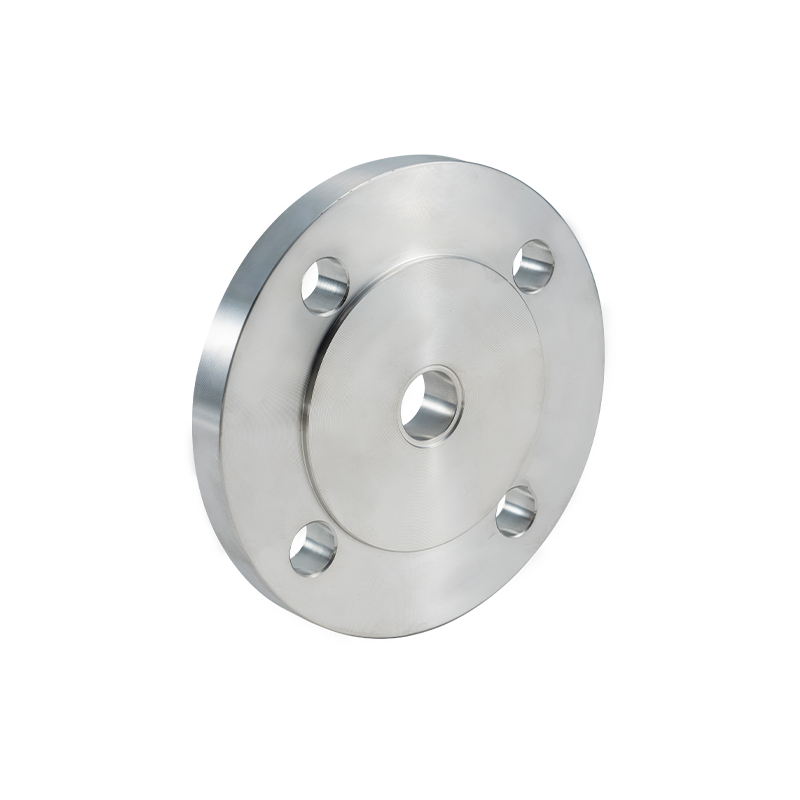
Slip-On Flanges slide over the pipe and are welded both inside and outside. They lack the stress-distributing hub, making them suitable only for: low pressure at Class 150 or 300 at ambient temperature; non-cyclic, steady-state operation with minimal temperature changes; non-critical fluids such as water, air, light oils, and inert gases; pipe sizes under 12 inches; applications where radiographic inspection of the weld is not required; general utility and plant services with low consequence of leakage. The dual weld provides adequate strength for these conditions but cannot match the fatigue resistance of a full penetration butt weld.
A pipeline transporting hot oil at 300 degrees Celsius and 10 bar with 2,000 thermal cycles annually originally specified slip-on flanges. After three years, 18 percent of flange joints developed leaks at the outer fillet weld due to differential expansion between the pipe and flange hub. Replacement with weld neck flanges eliminated all thermal fatigue failures over a 10-year follow-up period. Conversely, a chilled water system at 5 degrees Celsius and 7 bar with no thermal cycling operated slip-on flanges for 15 years with zero weld failures. The correct selection saved 35 percent in initial fabrication costs across 500 flange joints. The economic break-even point occurs at approximately 1,200 thermal cycles per year; above this threshold, the longer service life of weld neck flanges justifies the higher initial cost.
Gasket Selection and Bolt Torque Specifications
Even the best flange will leak if gaskets and bolts are incorrectly specified. Gasket selection depends on fluid, temperature, pressure, and required leak rate. Common gasket types include spiral wound which is suitable for 90 percent of industrial applications, PTFE envelope for corrosive chemicals, graphite sheet for high temperature up to 550 degrees Celsius, and rubber for low pressure water service. Bolt torque must achieve sufficient gasket compression without exceeding flange or bolt yield strength. Torque values are specified in ASME PCC-1 and depend on bolt size, lubrication, and gasket type. Under-torquing causes leaks; over-torquing damages flanges or breaks bolts.
- Spiral wound gaskets: Require 40 to 60 Newton-meters of bolt torque per millimeter of bolt diameter. For an M16 bolt, this equals 640 to 960 Newton-meters. Inner and outer rings prevent blowout and limit compression.
- PTFE envelope gaskets: Require lower torque of 30 to 50 Newton-meters per millimeter of bolt diameter. Over-compression causes cold flow and gasket failure.
- Graphite sheet gaskets: Torque similar to spiral wound but must be retorqued after first heat cycle due to material relaxation.
- Rubber gaskets: Lowest torque requirement of 15 to 25 Newton-meters per millimeter. Stop tightening when gasket bulges uniformly around flange perimeter.
A chemical plant experienced recurring leaks on Class 300 flanges with spiral wound gaskets. Investigation revealed bolt torque varied from 300 to 900 Newton-meters on M20 bolts across different crews. Standardizing on 700 Newton-meters with molybdenum disulfide lubricant and using hydraulic torque wrenches eliminated all torque-related leaks. The plant also implemented a torque verification program using ultrasonic bolt measurement to confirm residual tension after thermal cycling.
Selection Framework: Seven-Step Decision Process for Engineers
Based on failure analysis from 1,200 flange joints across 80 industrial facilities and ASME B31.3 process piping code requirements, apply this seven-step selection framework to ensure reliable, long-lasting flange connections.
- Step 1 - Determine design pressure and temperature: Calculate design pressure as 1.5 times maximum operating pressure or relief valve set pressure, whichever is higher. Verify pressure class using ASME B16.5 tables at maximum operating temperature. Account for transient pressures including startup, shutdown, and upset conditions.
- Step 2 - Identify fluid corrosivity and toxicity: For chlorides over 200 parts per million at ambient or 50 parts per million at elevated temperature, select 316L minimum. For sulfuric, hydrochloric, or acetic acid, consult 317L, 904L, or duplex grades. For lethal service under ASME B31.3 Category M, weld neck flanges are mandatory with full penetration welds and 100 percent radiographic inspection.
- Step 3 - Evaluate cyclic conditions: Calculate expected thermal cycles and pressure cycles over design life. More than 500 thermal cycles per year requires weld neck flanges regardless of pressure class. Vibration analysis may also indicate weld neck requirement for reciprocating compressor or pump connections.
- Step 4 - Select flange facing type: Raised face is standard for Class 150 and Class 300. Ring type joint for pressures above Class 600 or hydrogen service. Flat face for mating to cast iron or FRP flanges. Tongue and groove or male-female for confined gasket applications.
- Step 5 - Specify surface finish: Standard 125 to 250 microinch serrated concentric finish for spiral wound gaskets on raised face flanges. Specify 63 to 125 microinch for PTFE or rubber gaskets. Request surface profile verification using profilometer on a representative sample.
- Step 6 - Choose flange type and material grade: Weld neck for critical, toxic, cyclic, high temperature, or sizes above 12 inches. Slip-on for low-pressure, non-critical, general utility where installed cost is primary driver. Select material grade based on step 2 corrosivity analysis.
- Step 7 - Verify material traceability and testing: Require mill test reports for all flange materials. Perform positive material identification on a statistically valid sample. For critical services, request third-party inspection of flange dimensions, hardness, and pressure testing.
Summary: Stainless steel flanges provide reliable pipeline connections when selected systematically using the seven-step framework above. Weld neck flanges offer 70 percent lower failure rates in cyclic or high-temperature service, justifying their higher initial cost. Slip-on flanges are acceptable for low-pressure, non-critical applications at 30 to 40 percent lower installed cost. Surface finish between 125 and 250 microinch Ra is essential for spiral wound gasket sealing. Grade 316L is required for chloride exposure above 200 parts per million. Bolt torque must be controlled within plus or minus 10 percent using calibrated equipment and proper lubricants. For complete engineering specifications, grade availability, and custom flange configurations, review Stainless Steel Flanges to match your exact pressure, temperature, and corrosion requirements.
 Previous