English
 中文简体
中文简体 Deutsch





Content
- 1 How a Lap Joint Flange and Stub End Work Together
- 2 Sealing Behavior and Gasket Selection for Stub End Faces
- 3 Lap Joint vs Weld Neck: Cost, Stress, and Maintenance
- 4 Material Selection and Standards for Lap Joint Assemblies
- 5 How to Order Lap Joint Flanges and Stub Ends: Specifications That Matter
- 6 Frequently Asked Questions
A DN200 cooling water line that needs to be disassembled twice a year is a clear candidate for a lap joint flange and stub end assembly. Instead of cutting and re-welding a weld neck flange, the maintenance crew can rotate the loose flange, slide the pipe apart, and replace only the stub end. Jiangyin Zhonghai Precision Machinery Co., Ltd. manufactures such assemblies with full in-house forging, CNC turning, drilling, and inspection, producing the flange ring and the stub end in the same controlled batch.
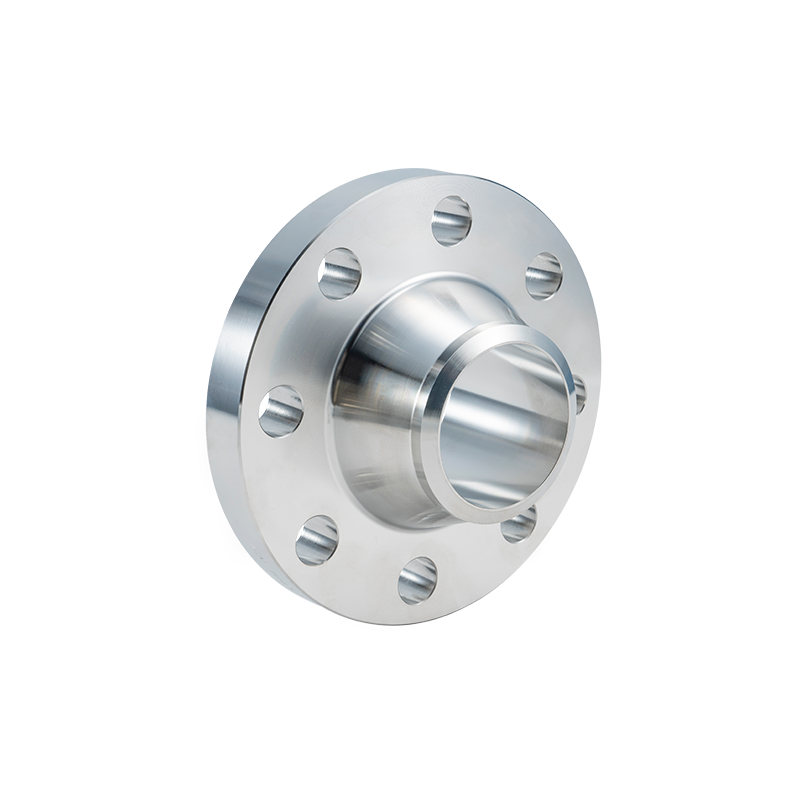
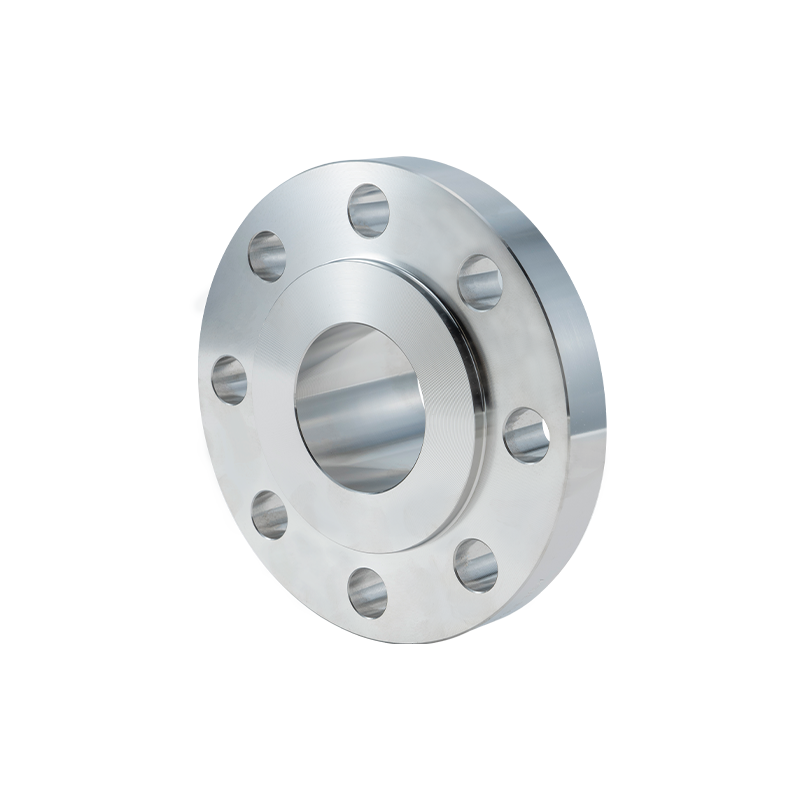
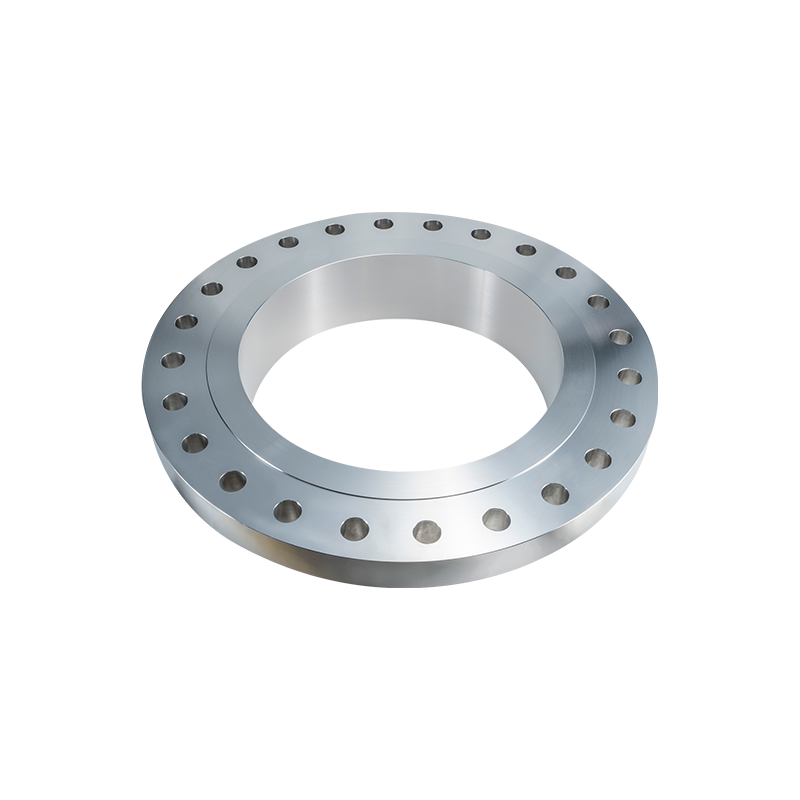 Lap Joint Flange for Frequent Maintenance and Corrosion ResistanceThis lap joint flange rotates freely on the pipe, simplifying bolt alignment and reducing installation time. Ideal for systems requiring frequent disassembly, it allows cost-effective material selection for the flange ring.View Product →
Lap Joint Flange and Stub End is a two-piece pipe connection assembly: a lap joint flange slips over a stub end, and the stub end's flared face forms the sealing surface while the flange supplies bolt clamping force. The flange is not in contact with the process fluid, so it can be rotated independently to align bolt holes. That makes maintenance faster and allows the flange ring to be specified for cost rather than for corrosion resistance.
How a Lap Joint Flange and Stub End Work Together
A lap joint flange only clamps; the stub end does the sealing. That division of labor is why this assembly dominates maintenance-heavy piping systems.
15% Share of lap joint assemblies in chemical piping installations
40+% Average reduction in disassembly time versus welded flanges
C2500 Maximum pressure class for lap joint flanges
The stub end is a piece of pipe whose end is flared outward at a 37.5 degree angle. The lap joint flange, which has a bored hole larger than the pipe OD, slips over the pipe before the stub end is welded. When bolts are tightened, the flange presses against the back of the stub end flare and the gasket is compressed between the stub end face and the mating flange.
This design handles two jobs separately. The flange absorbs the bolt loads and allows the pipe to be rotated for alignment. The stub end carries the pressure boundary and contacts the process fluid. In practice, this separation means that a carbon steel flange can be paired with a corrosion-resistant stub end in a stainless steel or duplex line, cutting the total component cost without reducing the pressure rating of the joint.
Sealing Behavior and Gasket Selection for Stub End Faces
Sealing quality is determined by the stub end face, not by the flange ring or the bolt load alone. Roughness, flatness, and gasket type define the leak-tightness of the joint.
In a lap joint assembly, the flange rotates freely but does not make fluid contact. The stub end face, which is usually finished with a 0.8 to 3.2 micrometer Ra surface, creates the actual seal with the gasket. The flange thickness and bolt torque only provide the force needed to compress the gasket against that face.
- Ra 0.8 micrometer to 1.6 micrometer stub end faces suit spiral wound gaskets in Class 150 and Class 300 service.
- Ra 1.6 micrometer to 3.2 micrometer faces are common for non-metallic gaskets in low-pressure water or air lines.
- Ra 0.8 micrometer or better is required for metal gaskets and RTJ ring joints in high-pressure classes.
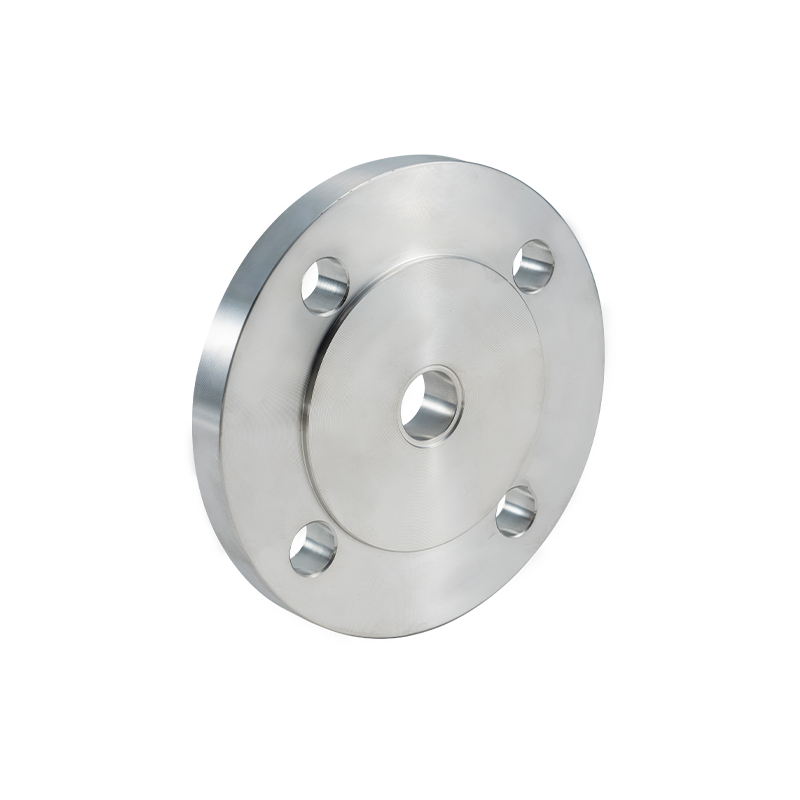
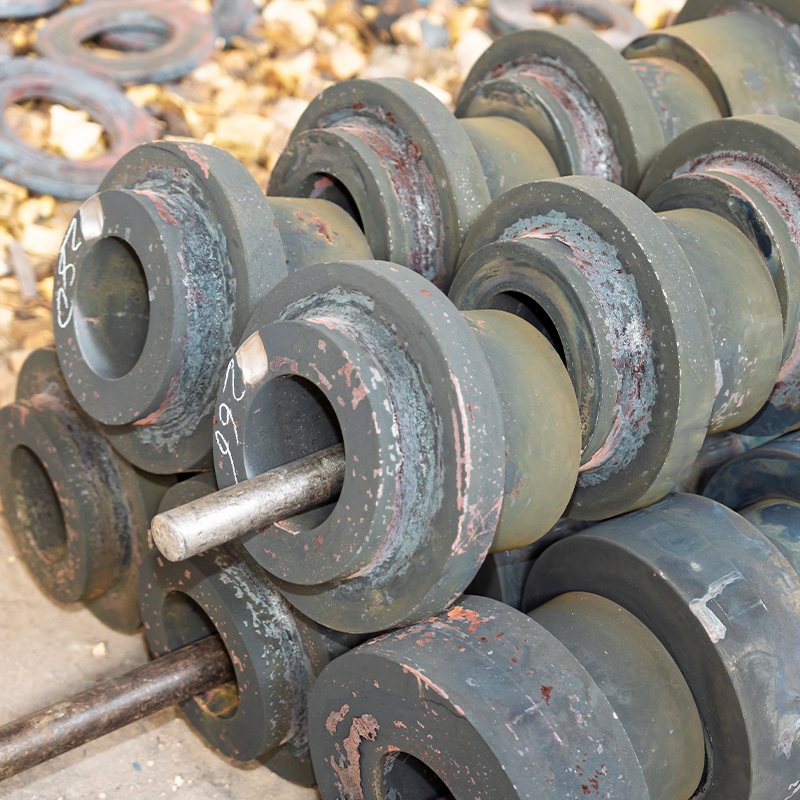 Class 900 Lap Joint Flange for High-Pressure Piping SystemsDesigned for high-pressure service up to Class 2500, this flange offers robust sealing with a stub end. Its rotating ring facilitates alignment and maintenance, even in demanding hydraulic conditions.View Product →
In ASME B16.5, lap joint flanges are specified with raised face for Class 150 through Class 900, while Class 1500 and Class 2500 usually require ring joint faces. The stub end surface must match the flange face finish to avoid localized leakage at the gasket contact area.
Lap Joint vs Weld Neck: Cost, Stress, and Maintenance
Choose a weld neck flange when cyclic loading dominates and a lap joint with stub end when frequent disassembly and material economy are the priority.
Lap Joint + Stub End
- Flange material can be lower-cost carbon steel while the stub end is stainless.
- Rotational alignment of bolt holes without rotating the pipe.
- The stub end is replaceable, so the flange ring is reusable.
Weld Neck
- Full penetration weld gives higher fatigue strength.
- No separate stub end to purchase and weld.
- Better for high cyclic pressure or thermal shock.
The table below summarizes the trade-offs an engineer should weigh before selecting a weld neck flange or a lap joint assembly.
| Parameter | Lap Joint + Stub End | Weld Neck |
| Relative material cost | Lower for corrosive service | Higher for alloy grades |
| Dismantling time | Rapid; no cutting required | Slow; cut and re-weld required |
| Cyclic fatigue rating | Moderate | High |
| Flange reusability | Flange ring can be reused | Flange is discarded after cut |
| Maximum pressure class | Class 2500 | Class 2500 and above |
Material Selection and Standards for Lap Joint Assemblies
Material pairing between the stub end and the flange is the core decision because each part sees a different mix of stress and corrosion.
The stub end must match the pipe material to avoid galvanic or crevice corrosion at the weld. The flange can be a different grade, provided the pressure class and bolt loads are satisfied. In many chemical plants, the flange ring is A105 carbon steel while the stub end is F316L stainless steel, because the process fluid only touches the stub end.
| Service Fluid | Stub End Material | Flange Material |
| Non-corrosive water and steam | A106 Gr.B carbon steel | A105 carbon steel |
| Dilute acids and process chemicals | F316L stainless steel | F316/316L stainless steel |
| High temperature steam | F304H stainless steel | F304H stainless steel |
| Sea water and chloride-rich media | Super Duplex 2507 | F55/F60 duplex steel |
For non-standard dimensions or special wall thicknesses, a forged non-standard component is often the fastest route. Many suppliers, including Jiangyin Zhonghai Precision Machinery Co., Ltd., accept drawings for custom stub ends and matching industrial application scenarios. This makes a lap joint and stub end assembly suitable for retrofits where the pipe schedule differs from standard catalog dimensions.
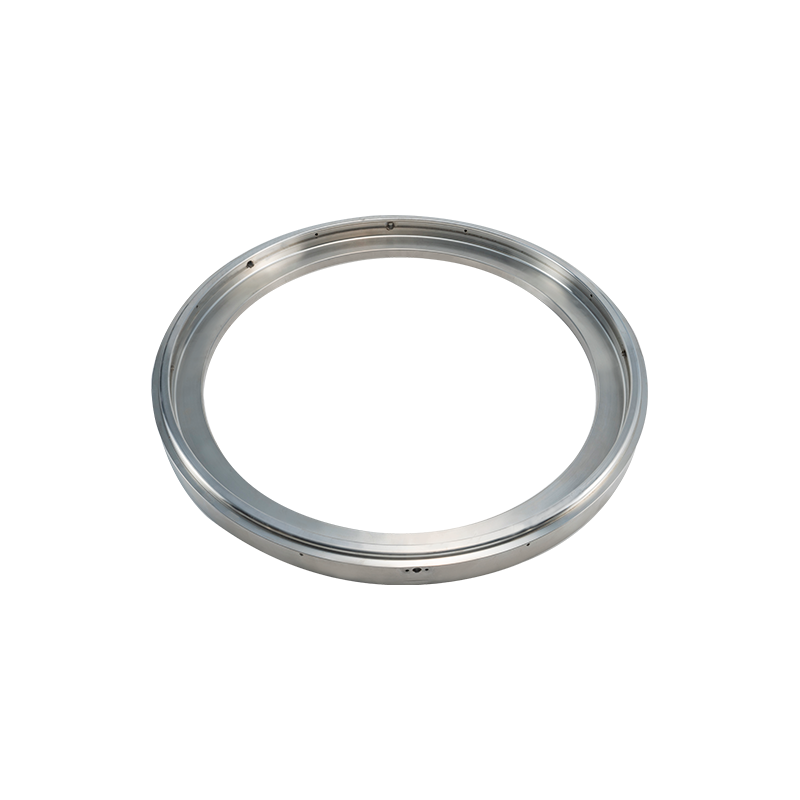
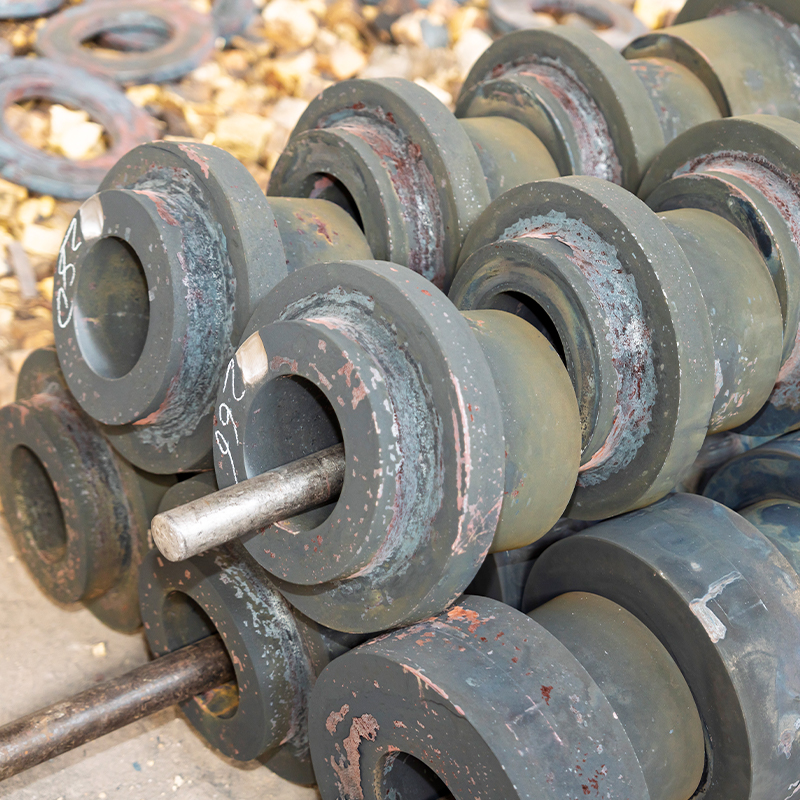 Custom Non-Standard Flanges for Specialized ApplicationsTailor-made flanges engineered to your drawings or key parameters. With capabilities up to 4 meters diameter and 10 tons weight, these components meet unique structural requirements and ensure precise integration.View Product →
How to Order Lap Joint Flanges and Stub Ends: Specifications That Matter
A complete order must cover standard, pressure class, material grade, size schedule, face finish, and inspection level.
One common mistake is ordering a flange ring to a pressure class while the stub end is made from a pipe schedule that is too thin. The flange can clamp correctly, but the stub end will creep at the flare under pressure. The six steps below reflect a practical ordering sequence used by piping engineers.
- Choose the standard: ASME B16.5 or ASME B16.9 for the stub end, plus DIN/EN or JIS when the system runs on those codes.
- Set the pressure class: Class 150, 300, 900, 1500, or 2500; each changes the flange ring thickness and bolt diameter.
- Match material grades: A105 carbon steel, F304/F316 stainless, duplex, or nickel alloys for corrosive service.
- Define size and pipe schedule: the stub end wall thickness follows the pipe schedule, not the flange class.
- Specify the face finish: raised face, flat face, or ring joint face; include the required gasket contact surface roughness.
- State the inspection level: EN 10204 3.1 material certificates, PMI testing, hydraulic testing, and NDT reports.
Frequently Asked Questions
What is the difference between a lap joint flange and a weld neck flange?
Both are used at pipe ends, but a weld neck flange is welded directly to the pipe and develops full joint strength through the neck, while a lap joint flange is not welded at all. In a lap joint assembly, the stub end is welded to the pipe and its flared face serves as the sealing surface. This means a lap joint flange can be reused after maintenance, whereas a weld neck flange is generally cut off and discarded once the pipe is altered.
Can a lap joint flange be used in high-pressure applications?
Yes. ASME B16.5 lap joint flanges are available up to Class 2500. In classes above Class 900, the face configuration is usually ring joint instead of raised face, and the stub end material must have sufficient wall thickness to handle the pressure without creeping at the flared section.
When should I replace the stub end in a lap joint flange assembly?
Replace it whenever the flared face shows grooves, corrosion pitting, or deformation from repeated bolt tightening. A gasket that leaked under pressure can cut a line into the stub end face, making a reset ineffective even if the flange itself is in perfect condition. The flange ring can usually be reused, but not the stub end.
What standard covers lap joint flanges and stub ends?
ASME B16.5 governs the flange dimensions and pressure ratings, while ASME B16.9 covers the butt-welded stub end dimensions. EN 1092 and JIS B2220 are the common alternatives in European and Japanese systems. A manufacturer holding ISO 9001 certification plus PED/TUV/TS credentials can supply these components with traceability.
Ordering from a manufacturer that forges both components in-house reduces the risk of flange and stub end mismatch, shortens lead time, and gives you a single source for material certificates.
 Previous