English
 中文简体
中文简体 Deutsch





Content
- 1 How to Read a Blind Flange Size Chart
- 2 Blind Flange Size Chart by Standard: ANSI, JIS, and EN
- 3 Thickness and Pressure Rating: What the Chart Does Not Tell You
- 4 Material Selection for Blind Flanges: Carbon Steel vs Stainless Steel
- 5 How to Use a Blind Flange Size Chart in Procurement
- 6 Frequently Asked Questions
A 6-inch ANSI Class 150 blind flange measures 9 inches across the outside, 8.5 inches across the bolt circle, and 0.625 inches thick. Change the standard to JIS B2220 10K, and the same nominal 150 mm opening suddenly needs a 280 mm outside diameter and 12 bolt holes. The blind size chart is the document that settles these differences before you commit to a purchase.
Jiangyin Zhonghai Precision Machinery Co., Ltd. manufactures blind flanges to ANSI, JIS, EN, and DIN standards, with ISO 9001 and PED/TUV/TS certification. The company's in-house forging, heat treatment, CNC machining, and testing line covers sizes from 1/2 inch to 60 inches and single-piece weights up to 10 tons. This guide explains how to read a blind flange size chart, what the dimensions mean for your piping design, and how to avoid ordering the wrong blank plate.
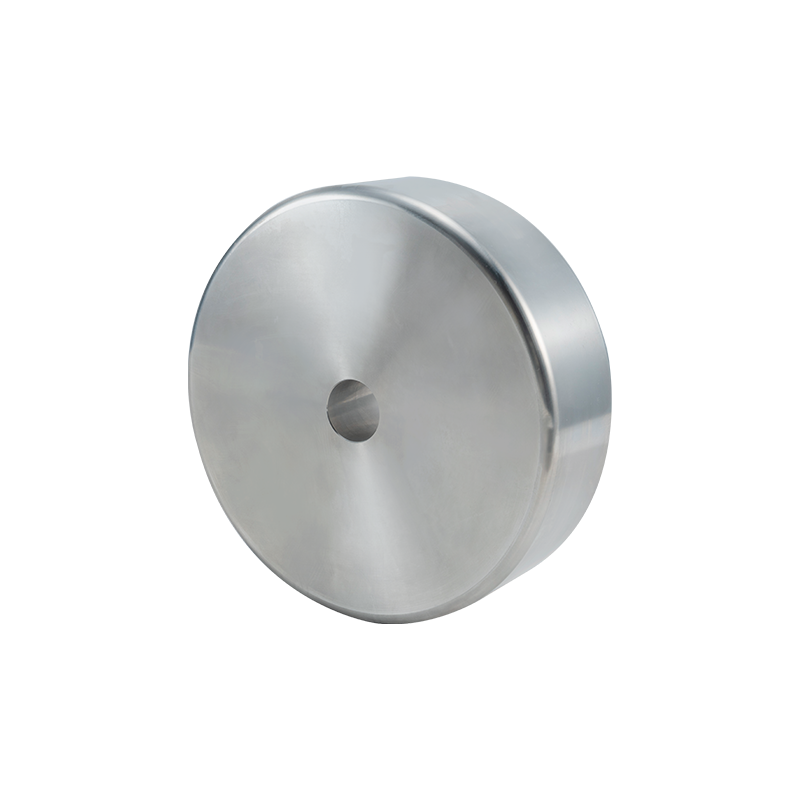
A blind flange is a solid plate installed to close the end of a pipe, valve, or pressure vessel. It has no bore, and its size chart records the outside diameter, bolt circle diameter, number of bolt holes, and thickness required to seal the opening under a given pressure class.
How to Read a Blind Flange Size Chart
Read a blind flange size chart by locating the nominal pipe size first, then moving across the row to find the outside diameter, bolt circle diameter, number of bolt holes, and flange thickness.
The columns in a flange chart carry different information depending on the standard. A typical ANSI B16.5 chart lists NPS, outside diameter (OD), bolt circle diameter (BCD), number of bolt holes, bolt diameter, and thickness. A JIS B2220 chart uses DN, OD, BCD, bolt holes, and thickness for each pressure rating. EN 1092-1 uses DN and PN ratings.
- Nominal pipe size (NPS/DN): the first column you look up.
- Outside diameter (OD): controls the matching gasket size.
- Bolt circle diameter (BCD): the center-to-center distance across opposite bolt holes.
- Bolt holes: both count and diameter must match the mating flange.
- Thickness: determines the pressure the blind flange can safely contain.
- Pressure class or rating: the standard-specific grade such as Class 150, 10K, or PN16.
Take a real example. For an ASME B16.5 Class 150 blind flange in NPS 4, the chart gives an OD of 9 inches, a BCD of 7.5 inches, 8 bolt holes of 0.75 inch diameter, and a thickness of 0.56 inch. If your pipeline uses JIS 10K, the chart for DN 100 shows a different OD of 210 mm and a different bolt pattern. Reading the wrong standard is the most common cause of wrong orders.
| Standard | NPS/DN | Outside Diameter | Bolt Circle | Bolt Holes | Thickness |
| ANSI Class 150 | 4 in / DN100 | 9.0 in | 7.5 in | 8 / 0.75 in | 0.56 in |
| JIS B2220 10K | DN100 | 210 mm | 175 mm | 8 / 19 mm | 14 mm |
| EN 1092-1 PN16 | DN100 | 220 mm | 180 mm | 8 / 19 mm | 18 mm |
Blind Flange Size Chart by Standard: ANSI, JIS, and EN
A blind flange size chart is not universal. ANSI B16.5, JIS B2220, and EN 1092-1 assign different dimensions to the same nominal pipe size, and a flange made to one standard will not bolt up to a flange made to another.
ANSI B16.5 covers NPS 1/2 through 24 in pressure classes 150, 300, 600, 900, 1500, and 2500. JIS B2220 covers DN 10 through 1500 in pressure ratings 5K, 10K, 16K, and 20K. EN 1092-1 covers DN 10 through 2000 in PN 6, PN 10, PN 16, PN 25, and PN 40. Each standard uses different bolt sizes and BCD values even for the same opening.
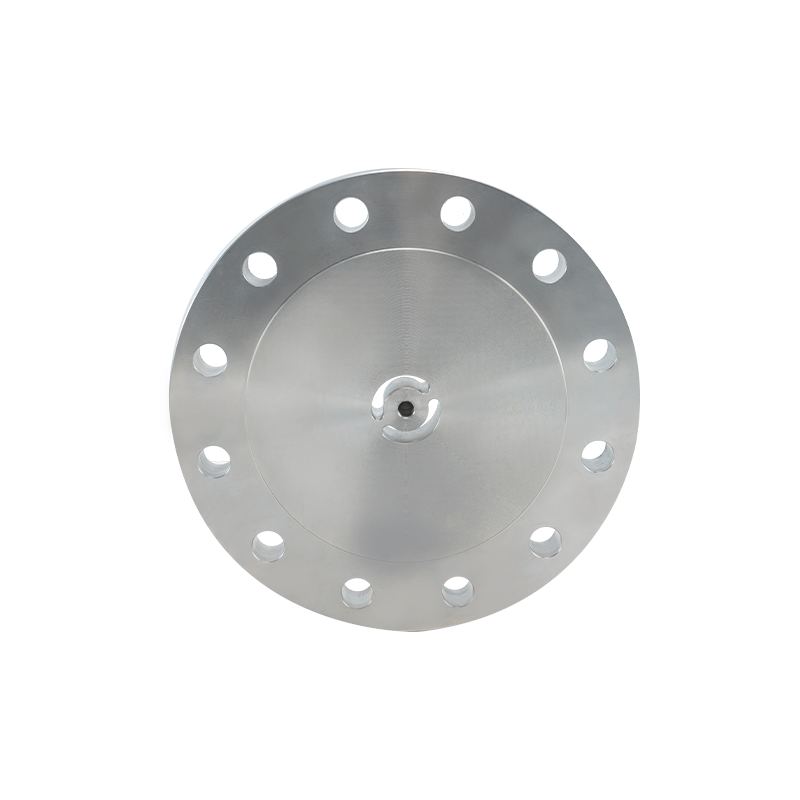 Stainless Steel Blind Flange for High-Pressure Sealing and System ExpansionThis blind flange from Jiangyin Zhonghai Precision Machinery is built to seal pipe ends and support pressure testing or future expansions. It is manufactured in-house with forging, machining, and heat treatment, available in sizes from 1/2 to 60 inches and up to 10 tons, complying with ASME, JIS, and EN standards.View Product →
When a buyer asks for a size chart, the chart must state the standard and pressure class, or the dimensions are meaningless. A 150 mm blind flange in JIS 10K has an OD of 280 mm. The same 150 mm opening in EN 1092-1 PN10 has an OD of 285 mm. If you try to mount the wrong one, the bolt holes will not align.
Thickness and Pressure Rating: What the Chart Does Not Tell You
Flange thickness is the most safety-critical number in a blind flange size chart, and it increases non-linearly as pressure class rises.
The chart records thickness, but it does not record the pressure rating's effect on bending stress. A blind flange has no bore to relieve stress across the plate center, so during hydrostatic testing the full internal pressure pushes against the entire face and creates a bending moment that the thickness must resist.
Material also affects the actual pressure capacity even though the size chart fixes thickness. A carbon steel A105 blind flange has a lower allowable stress at high temperature than a stainless F316L flange, so a standard chart alone cannot decide the service pressure. For elevated temperature service, the pressure-temperature ratings must be checked separately.
You should always cross-check the chart's thickness with the mating gasket and bolt specification. A blind flange with an incorrect bolt circle diameter can create a gasket blowout path when test pressure is applied. This is why the bolt pattern matters just as much as the thickness, and flatness tolerance and gasket blowout prevention become the deciding factors when the operating pressure pushes toward the rated limit.
Material Selection for Blind Flanges: Carbon Steel vs Stainless Steel
Material selection fixes the pressure, temperature, and corrosion limits of a blind flange, while the size chart only fixes its geometry.
Carbon Steel Blind Flanges
A105 carbon steel dominates ANSI applications up to 425 Celsius. Q235B serves domestic and non-code projects. Carbon steel is cheaper, easier to weld, and sufficient for water, steam, oil, and non-corrosive media.
Stainless Steel Blind Flanges
F304 and F316L are the workhorses for chemical, food, and marine service. F316L adds molybdenum for chloride resistance. Duplex and nickel-based alloys cover severe and subsea environments.
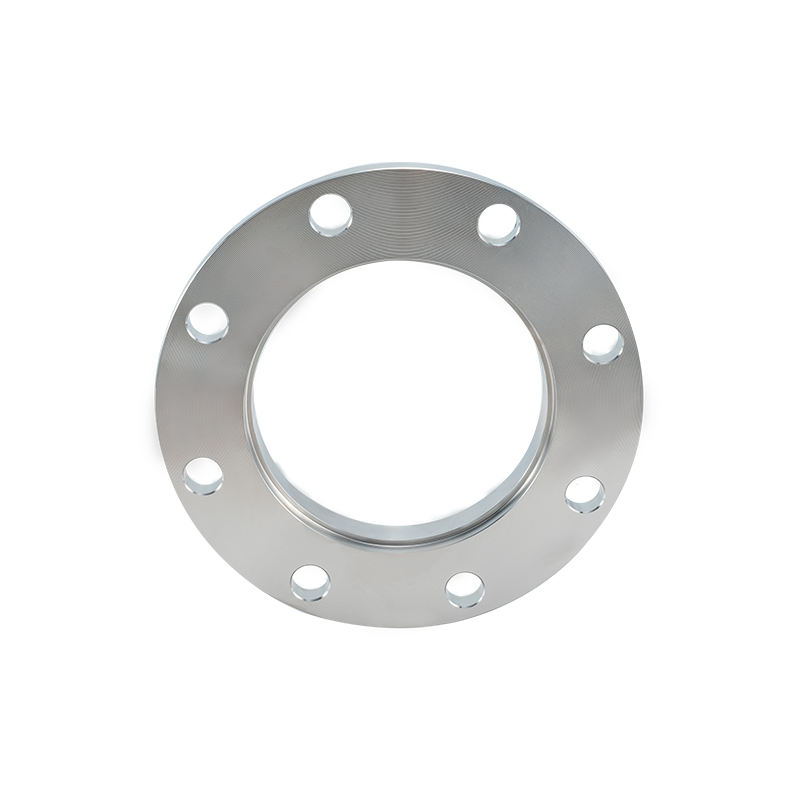 ASTM A105 Carbon Steel Blind Flange for Ambient and High-Temperature ServiceThis A105 carbon steel flange meets ASME, ASTM, EN, and DIN standards, produced via integrated forging and heat treatment for strong mechanical properties. It is available in sizes up to 60 inches and 4 meters diameter, with ISO 9001, PED, and TS certifications, suitable for pressure systems.View Product →
Carbon steel blind flanges from Jiangyin Zhonghai Precision Machinery include A105 and Q235B, supplied with standard-compliant forging, heat treatment, and CNC machining. When a contractor orders to a fixed size chart, the material grade determines the acceptable temperature and pressure de-rating.
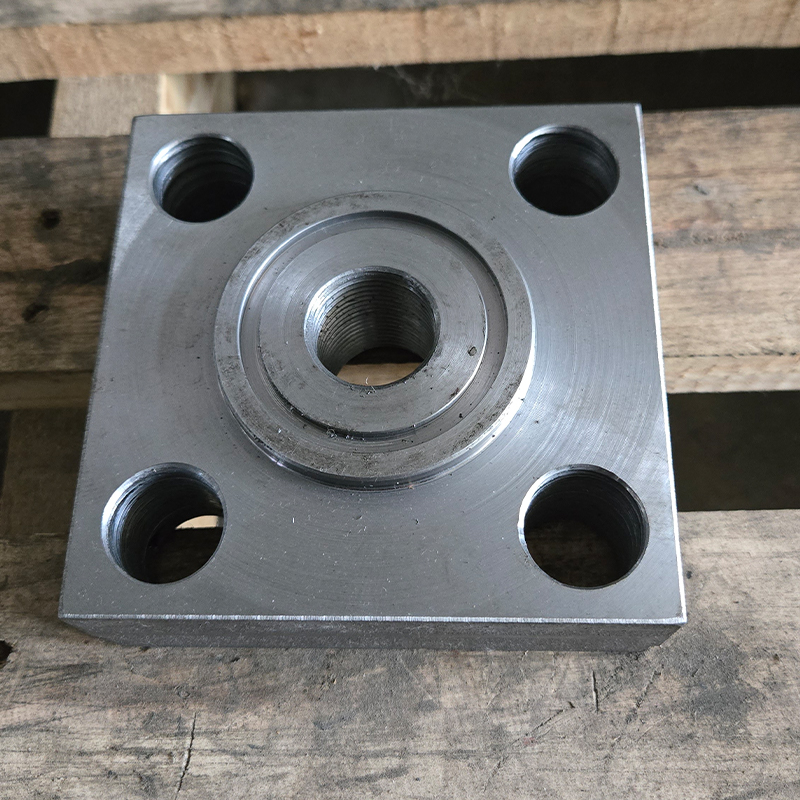 F304 F304L F304H Stainless Steel Flange for Versatile Industrial PipingThis 304 series stainless steel flange covers F304, F304L, and F304H grades, forged and machined in-house. It maintains stability from cryogenic to elevated temperatures, with sizes up to 60 inches and 10 tons. Certified to ISO 9001 and PED, it includes 4-meter machining capacity for custom parts.View Product →
A 6-inch Class 150 blind flange in A105 performs differently at 400 Celsius than the same flange in F316L. The size chart cannot express this difference, which is why the purchase order should always state the material grade and standard together. The company's full-category manufacturing capability means both material families come from the same forging and CNC line, reducing sourcing complexity for plants that need mixed materials in one order.
For deeper material guidance, see the free handbook on stainless steel blind flanges, which covers grades, standards, and maintenance requirements.
How to Use a Blind Flange Size Chart in Procurement
To use a blind flange size chart properly, lock down three values before contacting a supplier: nominal pipe size, standard and pressure class, and material grade.
- Confirm the nominal pipe size and the flange facing (raised face or flat face).
- Select the standard (ANSI B16.5, JIS B2220, or EN 1092-1) and the pressure rating.
- Read the chart for OD, bolt circle, bolt hole count, and thickness.
- Check the bolt size and gasket dimensions against the mating flange.
- Send the drawings and material requirement to the manufacturer for a forged quote.
1/2 to 60 inBlind flange size range
10 tMax single-piece weight
4 mMax forged outer dimension
Consider a real procurement example. A plant needs to close a DN 150 cooling water line during maintenance. The line uses EN 1092-1 PN16 flanges. A blind flange size chart for this standard gives an OD of 285 mm, a BCD of 240 mm, 8 bolt holes of 23 mm, and a thickness of 20 mm for the stainless version. The plant confirms the material as F316L, sends the chart to Jiangyin Zhonghai Precision Machinery, and receives a forged blind flange with full material traceability and CNC-machined faces.
For non-standard openings, the company also produces forged blind flanges to drawings. Custom dimensions can be generated directly from the client's piping drawing, with the same forging and CNC capability applied to a unique geometry. Always send the application temperature and medium with your purchase request so the manufacturer can match the size chart to a grade that survives the actual service conditions.
Frequently Asked Questions
What does "blind" mean in a blind flange size chart?
"Blind" means the flange has no bore, so its purpose is to close off a pipe opening. The chart lists the outside diameter, bolt circle, and thickness needed to cover the opening, without any inside diameter column.
Which standard should I use, ANSI, JIS, or EN?
Use the same standard as the mating pipe flange and valves in your line. If the line was built to JIS B2220, the blind flange must also be JIS B2220. Mixing ANSI and JIS at the same nominal size produces misaligned bolt holes.
How thick is a 4-inch blind flange?
For an ASME B16.5 Class 150 blind flange, the standard thickness is 0.56 inches. At Class 300 it increases to 0.75 inches, and at Class 600 to 1.0 inch. Always confirm thickness from the specific size chart for your pressure class.
Can I order a non-standard blind flange size?
Yes. Many manufacturers, including Jiangyin Zhonghai Precision Machinery, supply non-standard forged blind flanges to drawings. The size chart is a starting point; for unusual bore or bolt patterns, the manufacturer can produce a custom blind flange with CNC machining and full traceability.
 Previous