English
 中文简体
中文简体 Deutsch





Content
- 1 What Is a Flange Weld Neck Raised Face and Why Does It Matter?
- 2 How Raised Face Height Changes with Pressure Class in Weld Neck Flanges
- 3 ASME B16.5 Dimensional Checks for Weld Neck Raised Face Flanges
- 4 Material and Facing Choices for Flange Weld Neck Raised Face Service
- 5 Frequently Asked Questions About Flange Weld Neck Raised Face
A 2019 refinery outage on the U.S. Gulf Coast began with a 0.5 mm scratch on a raised face. The flange was a weld neck, NPS 10 Class 1500, and the scratch crossed the gasket sealing line. Within 36 hours, the plant lost USD 2.1 million in throughput. The root cause was not the gasket or the bolts; it was the flange weld neck raised face geometry that nobody measured after installation.
If you buy or specify weld neck flanges, the raised face is the detail that decides whether a joint seals for twenty years or fails in the first thermal cycle. This guide gives you the dimensions, the pressure-class rules, and the shop-floor checks we use at Jiangyin Zhonghai Precision Machinery Co., Ltd., an ISO 9001 certified flange and forging manufacturer, to keep raised face joints leak-free across ASME, EN, and JIS piping systems.
What Is a Flange Weld Neck Raised Face and Why Does It Matter?
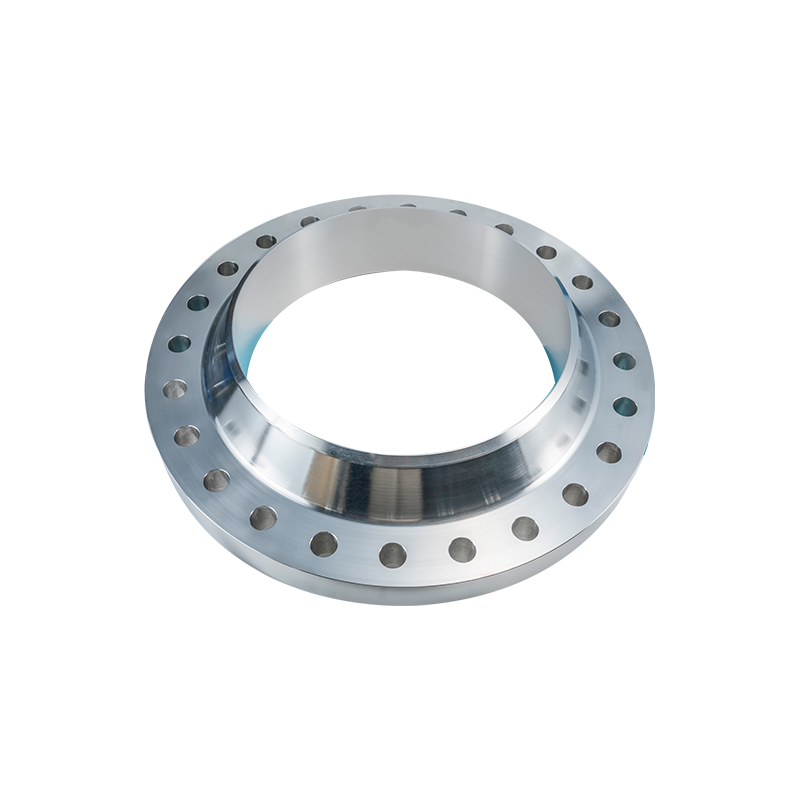
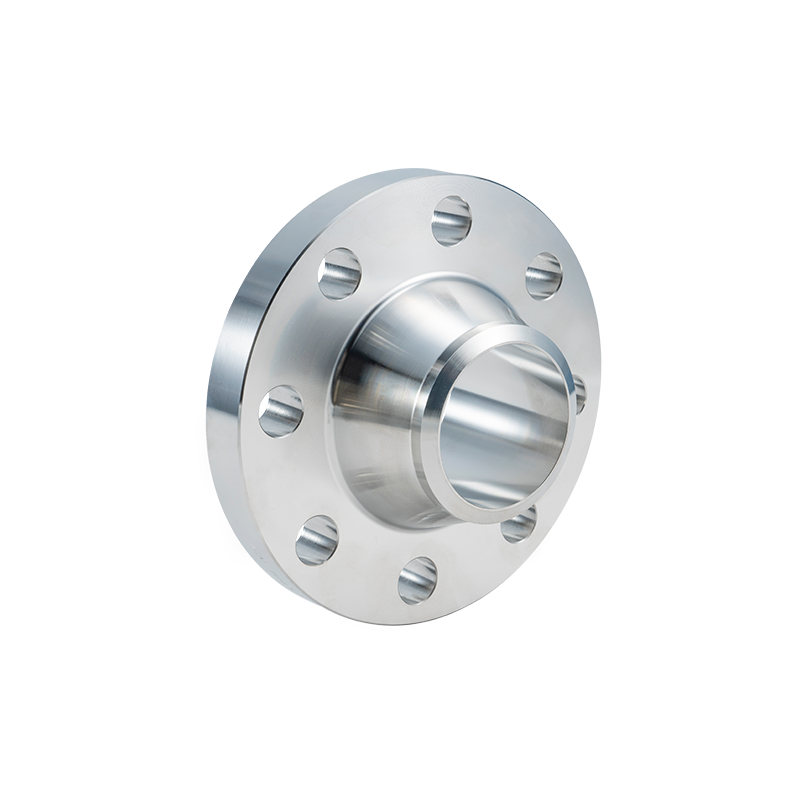
A flange weld neck raised face is a weld neck flange with a raised annular sealing surface that stands above the bolting plane, usually by 1.6 mm or 6.35 mm, to concentrate bolt load on the gasket. This geometry is defined in ASME B16.5 and is the default choice for high-pressure, high-temperature piping because it creates a controlled contact stress that a flat face cannot match.
The raised face works by reducing the sealing area. When you tighten the bolts, the same bolt force is applied over a smaller ring, so the gasket sees higher unit pressure. That is why a Class 900 weld neck raised face flange can seal at 150 bar with a spiral wound gasket, while a flat face flange of the same size would need a much wider gasket and still risk blowout. The trade-off is that the raised face is more sensitive to damage. A dent, a scratch, or a misaligned gasket can create a leak path that no amount of bolt torque will close.
1.6 mm
Raised face height for Class 150 and 300
6.35 mm
Raised face height for Class 400 to 2500
125-250 AARH
Typical surface roughness for sealing
Definition: The raised face is the machined ring on the flange face that contacts the gasket. Its height, diameter, and surface finish determine how the gasket deforms and whether the joint leaks under thermal cycling.
In our production of welding neck flanges, we measure raised face height with a depth micrometer at four points, ninety degrees apart, and we reject any flange where the height varies by more than 0.1 mm. A variation of 0.2 mm is enough to cause uneven gasket compression and a weeping joint after the first heat-up.
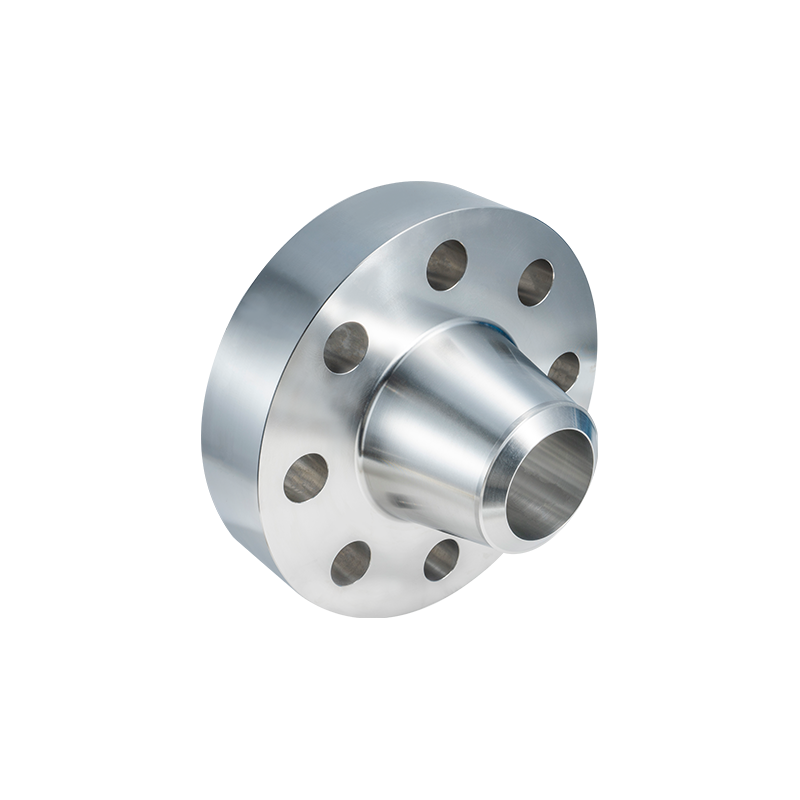 Custom High-Pressure Weld Neck Flange with Raised FaceHigh-pressure weld neck flange with long tapered hub, ASME B16.5/B16.47 options, precision raised face, and use in oil, gas, chemical, and power piping.View Product →
How Raised Face Height Changes with Pressure Class in Weld Neck Flanges
Raised face height is pressure-class dependent: ASME B16.5 sets it at 1.6 mm for Class 150 and 300, and at 6.35 mm for Class 400, 600, 900, 1500, and 2500. The taller face on high-pressure classes gives the gasket more room to flow without being crushed into the bolt hole, and it keeps the sealing line away from the flange edge.
This difference is not cosmetic. A Class 300 flange with a 6.35 mm raised face will not mate correctly with a Class 300 valve that has a 1.6 mm raised face. The gasket will sit on one face and bridge the other, and the bolts will not develop the intended load. The same rule applies across standards: JIS B2220 10K flanges use a raised face height that matches their pressure rating, and EN1092-1 Type 11 flanges have their own face dimensions. Always verify the mating face before you install.
For high-pressure service, the extra 4.75 mm of face height also protects the gasket from extrusion. In a Class 1500 line, a 1.6 mm face would let the gasket creep outward under 250 bar, especially at 400 degrees Celsius. The 6.35 mm face keeps the gasket confined and maintains sealing stress through thermal cycles.
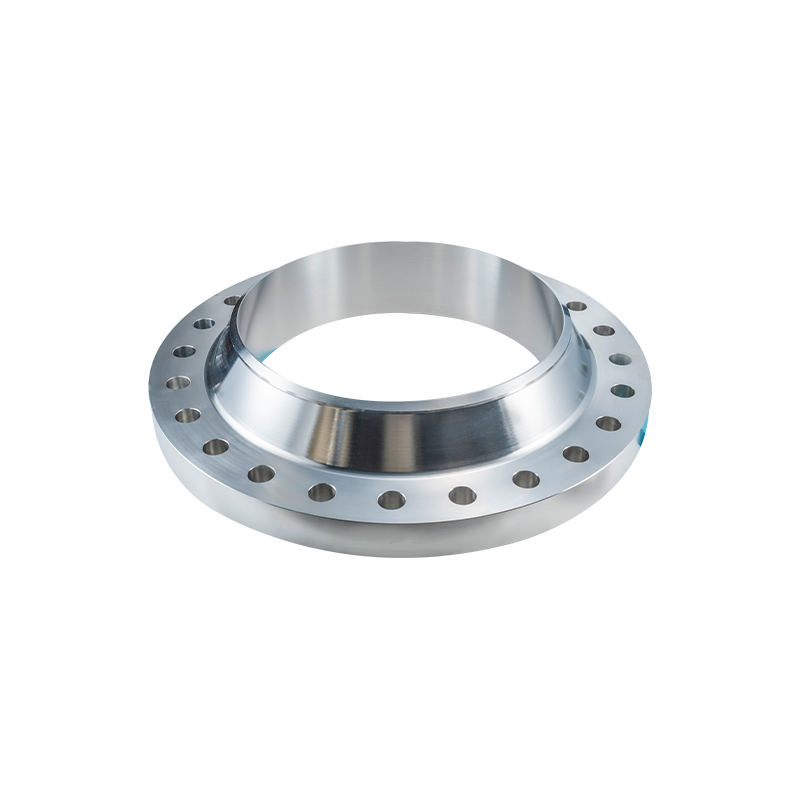 Custom Class 300 Weld Neck Flange with Raised FaceClass 300 weld neck flange with tapered hub, ASME B16.5 raised-face dimensions, custom bore and facing options for demanding industrial piping service.View Product →
 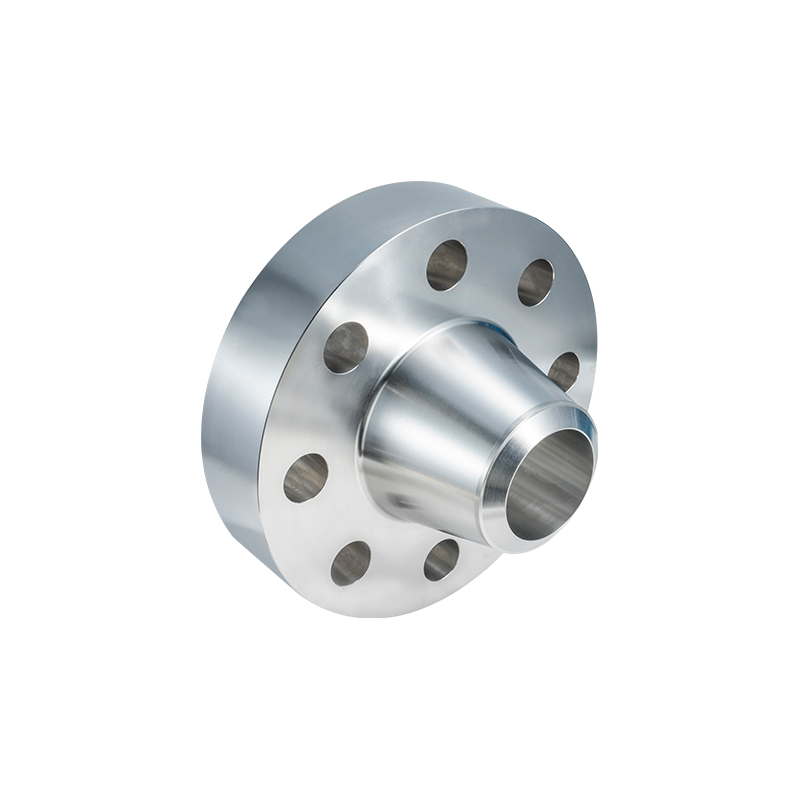 Custom Class 1500 High-Pressure Flange for Severe ServiceClass 1500 flange for high-pressure service, available as weld neck, blind, slip-on, socket weld, and RTJ with ASME B16.5/B16.47 dimensions.View Product →
ASME B16.5 Dimensional Checks for Weld Neck Raised Face Flanges
To verify a weld neck raised face flange, check five dimensions against ASME B16.5: flange outside diameter, bolt circle diameter, raised face diameter, raised face height, and hub length. A mismatch in any of these will cause gasket misalignment, bolt interference, or insufficient sealing stress.
- Flange outside diameter and bolt circle: must match the mating flange and the bolt size so that the wrench can reach the nuts.
- Raised face diameter: must sit inside the gasket inner diameter and outside the pipe bore; otherwise the gasket will overhang or block flow.
- Raised face height: 1.6 mm or 6.35 mm depending on class; measure with a depth micrometer, not a caliper.
- Hub length and weld end: must match the pipe schedule and the welding procedure; a short hub can cause weld distortion that pulls the face out of flatness.
- Surface finish: 125-250 AARH for spiral wound gaskets; smoother surfaces are used for soft gaskets but can cause adhesion and tearing on some sheet materials.
One more check that is often missed is raised face flatness. A flange can pass all dimensional checks and still leak if the face has a low spot. We recommend reviewing raised face flatness and gasket blowout prevention before you accept a shipment. A flatness deviation of 0.1 mm across the face is enough to reduce gasket contact in a Class 2500 joint.
| Feature | Raised Face | Flat Face |
| Sealing principle | Concentrates bolt load on a small ring | Uses full face contact over a larger area |
| Pressure range | Class 150 to 2500 | Class 150 and 300 only |
| Gasket type | Spiral wound, ring joint, or sheet | Full face sheet gasket |
| Leak risk under thermal cycling | Lower when dimensions are correct | Higher because bolt load is spread thin |
| Mating requirement | Must match raised face height of mating flange | Can mate with raised face if gasket is full face |
Custom Class 1500 High-Pressure Flange for Severe ServiceClass 1500 flange for high-pressure service, available as weld neck, blind, slip-on, socket weld, and RTJ with ASME B16.5/B16.47 dimensions.View Product →Material and Facing Choices for Flange Weld Neck Raised Face Service
Material selection for a flange weld neck raised face depends on the fluid, temperature, and external environment. Carbon steel A105 is the workhorse for non-corrosive Class 150 to 300 lines, while stainless steel F316/316L, duplex F55, and nickel alloys are specified for offshore, chemical, and high-chloride service.
Carbon Steel
A105 and Q235B flanges cover most refinery and power plant piping. They offer high strength at low cost, but they require coating or cathodic protection in buried or marine atmospheres. Raised face surfaces are machined after coating to avoid paint on the sealing ring.
Stainless Steel
F304/304L, F316/316L, 321, and duplex F55 flanges resist corrosion and maintain strength at high temperature. For subsea or sour service, duplex and nickel-based alloys are chosen for their chloride stress corrosion cracking resistance and fatigue performance.
The raised face finish must also match the gasket. A 125-250 AARH finish is standard for spiral wound gaskets. If you specify a smoother finish, the gasket may not bite into the surface and can slip under thermal cycling. If you specify a rougher finish, the gasket may not seal at low bolt loads. For application-specific guidance, see our industrial piping applications page, which maps flange choices to pressure, temperature, and fluid conditions.
Frequently Asked Questions About Flange Weld Neck Raised Face
What is the difference between a raised face and a flat face flange?
A raised face flange has a small raised ring on the sealing surface that concentrates bolt load onto the gasket. A flat face flange has a full flat sealing surface and relies on a full face gasket. Raised face flanges are used for higher pressure classes, while flat face flanges are limited to low-pressure Class 150 and 300 systems.
How do I measure raised face height on a weld neck flange?
Use a depth micrometer with a flat base. Place the base on the raised face and measure down to the bolting plane at four points ninety degrees apart. The height should be 1.6 mm for Class 150 and 300, and 6.35 mm for Class 400 through 2500. Variation across the face should not exceed 0.1 mm.
Can I use a spiral wound gasket with a raised face flange?
Yes. Spiral wound gaskets are the standard choice for raised face weld neck flanges in Class 300 and above. They require a surface finish between 125 and 250 AARH and a raised face that is flat within 0.1 mm. Always check that the gasket inner diameter clears the pipe bore and the outer diameter sits inside the raised face.
What surface finish is required for a raised face flange?
The typical requirement is 125-250 AARH for spiral wound and sheet gaskets. For ring joint or soft gaskets, the specification may call for a smoother finish, but too smooth a surface can cause the gasket to slip. The finish must be measured with a profilometer, not judged by eye or by touch.
 Previous