English
 中文简体
 Deutsch






Content
- 1 What the ASME B16.5 Flange Standard Covers, and Where It Stops
- 2 Pressure Classes: How the ASME B16.5 Flange Rating Table Really Moves
- 3 Flange Types: Six Shapes Under One Standard
- 4 Material Selection Is Where Most B16.5 Projects Get Into Trouble
- 5 Dimensions, Facings and Tolerances That Cause Field Rework
- 6 Marking and Documentation for an ASME B16.5 Flange Order
- 7 Frequently Asked Questions
A pipe drawing lands on the desk with this line on it: 6 in, Class 300, WN RF, A105, ASME B16.5 flange. Every token in that line is a purchasing decision with its own price, lead time and failure mode. Getting the specification right is the difference between a joint that bolts up on the first attempt and a crate of parts that has to go back onto the machine.
This guide covers what the standard actually fixes, how the rating tables really behave, which flange type fits which job, and where material and documentation decisions usually go wrong on a live order.
NPS 1/2 - 24B16.5 size range
7 classes150 through 2500
285 - 6170 psiambient rating spread
What the ASME B16.5 Flange Standard Covers, and Where It Stops
ASME B16.5 is the specification standard for pipe flanges and flanged fittings from NPS 1/2 through NPS 24, in pressure Classes 150, 300, 400, 600, 900, 1500 and 2500.
It fixes nominal dimensions, tolerances, materials, marking, testing and pressure-temperature ratings, which is why a flange produced in one plant bolts straight onto a valve produced in another. That interchangeability is the whole purpose of the document, and it is the reason drawings quote it instead of a mill's own shop standard.
Where the document stops matters just as much. As soon as a line exceeds NPS 24, the reference changes to ASME B16.47, which splits into Series A and Series B with different bolt circles for a nominally identical size. Gasket dimensions live in ASME B16.20. Bolting materials, torque values and the design pressure of the system itself come from the piping code, normally ASME B31.3, and from the project specification.
ASME B16.5 is a specification standard, not a design standard. It defines what the component looks like and how much pressure it can hold at a given temperature. It does not decide what the piping system has to contain.
Working definitionInside the B16.5 boundary
- Nominal dimensions for six flange types, NPS 1/2 to 24
- Pressure-temperature ratings indexed by material group
- Raised face, flat face and ring joint facing dimensions
- Bolt hole drilling, marking and pressure testing rules
Outside the boundary
- NPS 26 and larger, handled by ASME B16.47
- Gasket dimensions and materials, handled by ASME B16.20
- Bolt material, torque and assembly procedure
- System design pressure and wall thickness, set by ASME B31.3
Pressure Classes: How the ASME B16.5 Flange Rating Table Really Moves
The seven classes do not climb in even steps. Each jump multiplies the rated pressure by roughly 2.5, so moving from Class 600 to Class 900 buys about 740 psi of extra capacity rather than a tidy 50 percent.
Class 150
285
Class 300
740
Class 400
985
Class 600
1480
Class 900
2220
Class 1500
3705
Class 2500
6170
Those figures are the ambient column for carbon steel in material Group 1.1, the column that applies to A105 flanges. Two variables move that number, and both are ignored more often than they should be.
Temperature is the first. At 600 F (315 C) the same Class 150 A105 flange is rated at roughly 140 psi, about half its ambient value. A line running at 140 psi and 315 C sits exactly on the limit, so anything higher needs Class 300 or a stronger material, whatever the drawing originally said.
Material group is the second. Stainless and alloy materials are rated in their own groups, and the rating column changes with them. Substituting 316 stainless for corrosion resistance without re-reading the table is one of the most common routes to an under-rated joint on a project.
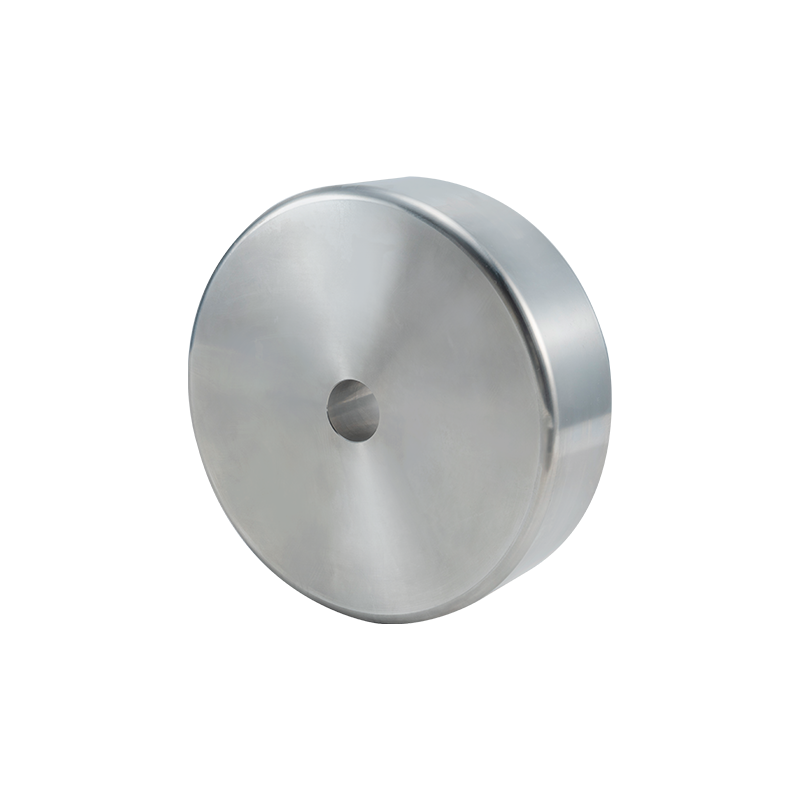
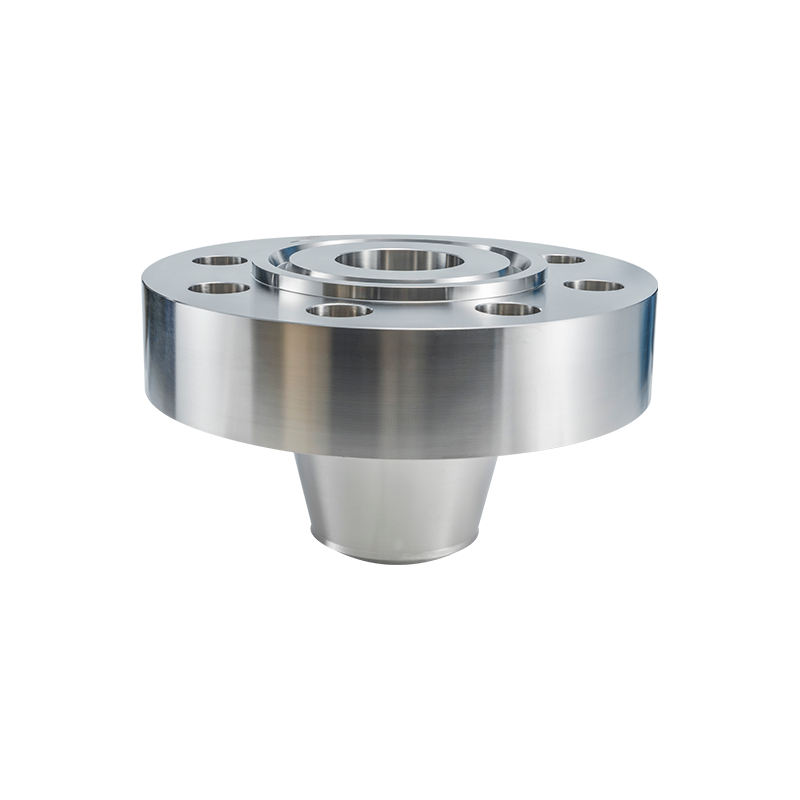 Custom Class 2500 High-Pressure Flange for Extreme ServiceClass 2500 high-pressure flange with ASME B16.5 custom options; relevant when material group and B16.5 dimensions drive selection.View Product →
Flange Types: Six Shapes Under One Standard
B16.5 dimensions six flange types, and each one exists because a different installation or service condition demands it.
| Type | Attachment | Where it earns its place | Facing options |
| Welding neck | Butt welded to the pipe | Cyclic service and high pressure, where fatigue life matters | Raised face, ring joint |
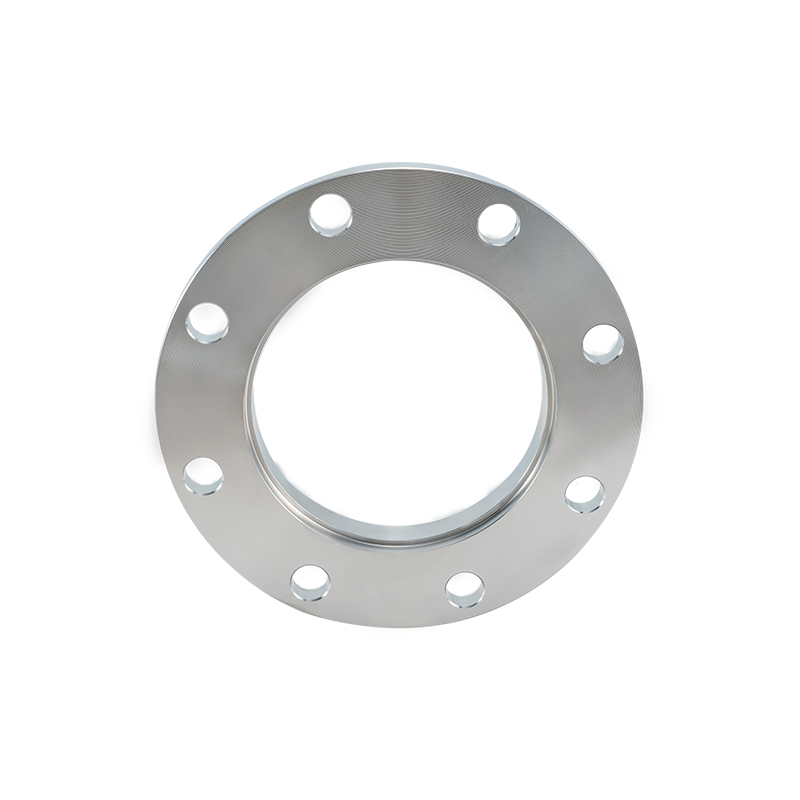
| Slip-on | Pipe passes through, fillet welded both sides | Low to moderate pressure utilities, cheap and easy to align | Raised face, flat face |
| Lap joint | Stub end butt welded, flange rotates | Lines opened frequently that need bolt holes to line up | Raised face, ring joint |
| Threaded | Screwed onto the pipe | Small bore, non-welded tie-ins with a low hazard profile | Raised face, flat face |
| Socket welding | Pipe inserted, fillet welded | Small bore instrument and utility connections | Raised face, flat face |
| Blind | No bore, closes the line | Future tie-ins, isolation points and inspection access | Raised face, ring joint |
Facing choice follows the class, not the other way round. A raised face is 1/16 in high on Class 150 and Class 300 flanges, and 1/4 in high from Class 400 through Class 2500. Ring joint grooves take over at the highest ratings and wherever a metal gasket is specified. Pairing a 1/4 in raised face flange with a gasket kit sized for the 1/16 in face is a guaranteed leak, and it is a mistake that shows up in the warehouse rather than at the drawing board.
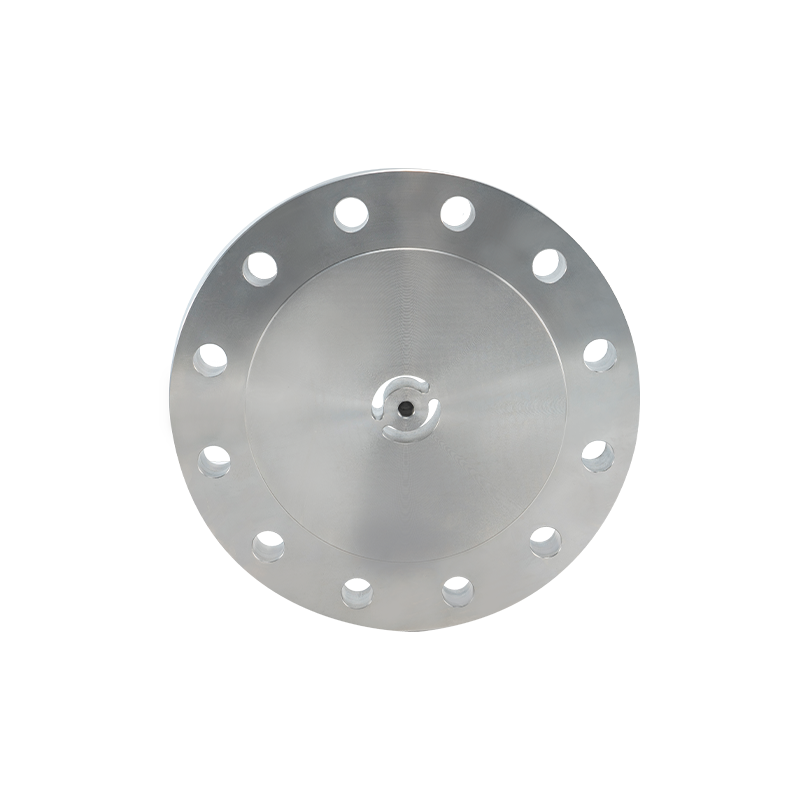
 ASME Class 150 Slip-On Flange for Piping SystemsASME B16.5 Class 150 slip-on flange with RF, FF, or RTJ facing; check facing height and material rating column before assembly.View Product →
Material Selection Is Where Most B16.5 Projects Get Into Trouble
The material callout decides which rating column applies to the flange, so it has to be frozen at the same time as the pressure class and never afterwards.
A105 forged carbon steel remains the default for ambient and moderate temperature service. It is not a single grade with a single rating, though. For sour service under NACE MR0175 and ISO 15156, A105 has to be supplied with controlled hardness, typically 187 HBW maximum, and that requirement belongs on the purchase order rather than in an assumption.
- A105 carbon steel for general and moderate temperature lines, with hardness control for sour service.
- A350 low temperature carbon steel when the design metal temperature falls below the impact test threshold set by the project.
- Austenitic stainless such as F304, F304L, F316, F316L and F321 for corrosive streams, and where welding without post-weld heat treatment is required.
- Duplex and super duplex grades such as F51, F55 and F60 where chloride stress corrosion cracking drives the specification.
- Nickel based alloys and Hastelloy grades for aggressive chemical service where stainless is simply not enough.
Documentation follows the material. European projects usually ask for EN 10204 3.1 certificates and PED compliant paperwork with third party involvement, while TS certification matters for domestic pressure equipment. A flange that measures correctly but arrives with the wrong paperwork is still rejected at goods-in, and by then the schedule has already slipped.
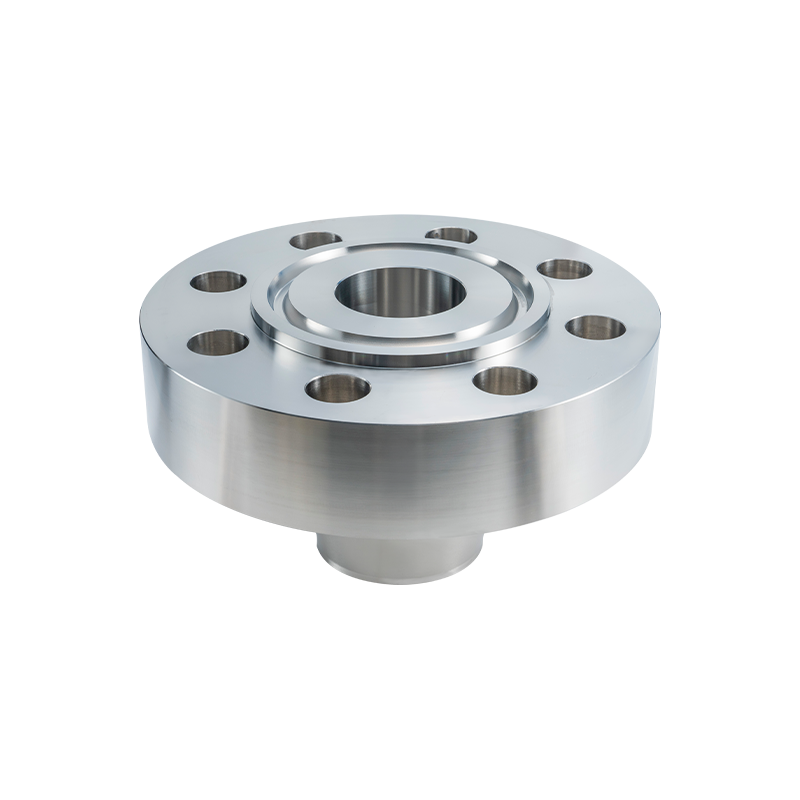
 Custom A105 Carbon Steel Flange for Pressure PipingASTM A105 forged flange with custom sizes up to 4 m; verify documentation, raised face finish, and bolt-hole alignment before acceptance.View Product →
Dimensions, Facings and Tolerances That Cause Field Rework
Two features generate most of the rework on B16.5 flanges: the raised face finish and the relationship between the bolt holes and the flange centerline.
125-250microinch AARH finish on a raised face for spiral wound gaskets
1/16 inraised face height, Class 150 and Class 300
1/4 inraised face height, Class 400 through Class 2500
Bolt holes straddle the centerline in B16.5 drilling practice, which means a flange cannot simply be rotated to line up with its mating part. If the drilling pattern is wrong or the bolt circle does not match, no amount of torque will close the joint. This is why a single stray flange in a shipment can hold up an entire tie-in.
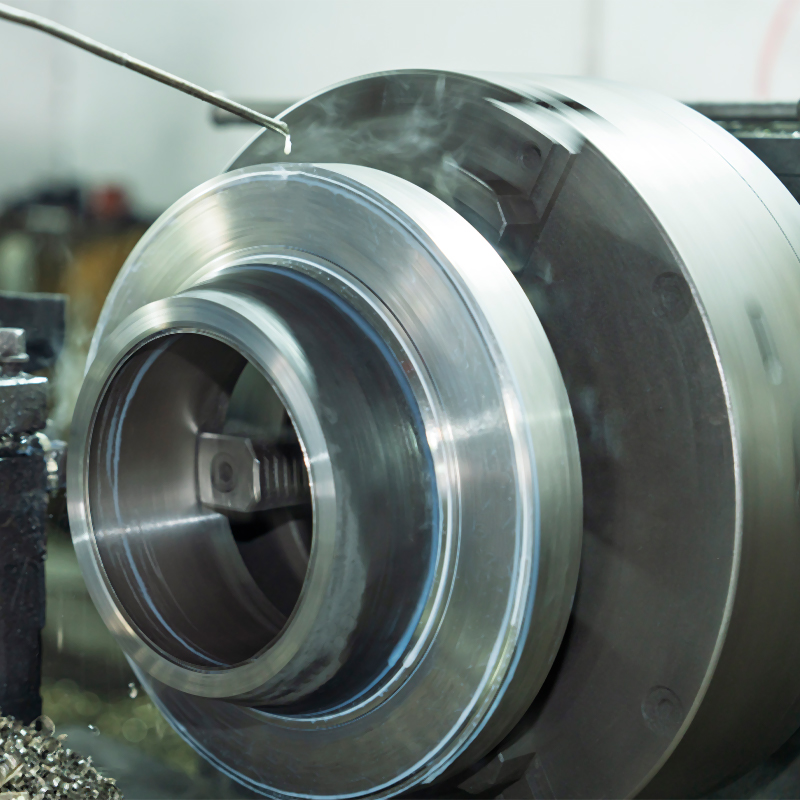
The welding neck bore and hub dimensions control fit-up with the pipe. An oversized bore leaves a gap at the root pass and invites burn-through, while an undersized bore will not accept the pipe at all. On ring joint flanges, the groove is machined to a defined profile and a scored or distorted groove turns the part into scrap, so groove protection in transit is part of the specification, not an afterthought.
Marking and Documentation for an ASME B16.5 Flange Order
A flange that cannot be traced back to a heat number and a material certificate is not a compliant B16.5 flange, no matter how well it measures.
Required marking on the component covers the manufacturer's name or trademark, the material grade, the pressure class, the size and the standard designation. Everything else travels with the paperwork, and the paperwork is what an inspector reads first. A purchase order that leaves certification vague will receive whatever the mill happens to issue.
Purchase order checklist
- Component marking: manufacturer, material grade, class, size and standard designation.
- Material certificate to EN 10204 3.1 with a heat number that matches the physical flange.
- Certification package that matches the market, for example PED and TUV documentation for European work or TS for domestic pressure equipment.
- Manufacturing limits the supplier can genuinely deliver, such as a range of 1/2 in to 60 in, single pieces up to 10 tonnes and maximum dimensions to 4 metres.
Jiangyin Zhonghai Precision Machinery Co., Ltd. works to this pattern as an ISO 9001 certified flange and forging manufacturer holding PED, TUV and TS approvals, with in-house forging, heat treatment, CNC turning, drilling and inspection. For buyers, the practical test is simple: ask for the marking, the certificate and the tolerance report together, and check that all three describe the same flange.
Frequently Asked Questions
Does ASME B16.5 cover Class 2500 flanges?
Yes. The standard covers Classes 150, 300, 400, 600, 900, 1500 and 2500 for sizes NPS 1/2 through NPS 24. Above NPS 24 the governing document becomes ASME B16.47.
What is the difference between ASME B16.5 and ASME B16.47?
The boundary is size. B16.5 ends at NPS 24, and B16.47 takes over from NPS 26 to NPS 60. B16.47 is split into Series A, formerly MSS SP-44, and Series B, formerly API 605, and the two series have different bolt circles for the same nominal size.
Can a Class 150 flange handle 150 psi?
It depends on temperature and material. A carbon steel Class 150 flange in material Group 1.1 is rated at 285 psi at ambient, but that rating falls with temperature and reaches roughly 140 psi at 600 F (315 C). Always read the rating column rather than the class number.
Which flange type should be used on a high cycle line?
A welding neck flange. The butt welded hub spreads stress away from the weld and delivers the fatigue performance that slip-on, threaded and socket welding designs cannot match in cyclic or high pressure service.
 Previous