English
 中文简体
中文简体 Deutsch





Content
- 1 ASME B16.5 Scope: NPS 1/2 to 24 in Six Pressure Classes
- 2 Selecting a Pressure Class by Working Conditions
- 3 Material Matching: Carbon Steel, Stainless Steel, and Duplex
- 4 Connection Types: Welding Neck, Slip-On, and Lap Joint
- 5 Forging and Inspection: How to Judge Flange Quality
- 6 Frequently Asked Questions About ASME B16.5 Pipe Flanges
During a piping upgrade, an engineer ordered twenty Class 150 flanges for a 6-inch steam line planned to run at 200 psi. When the bolt circles failed to match the neighboring Class 300 valve flanges, the discrepancy was traced to the pressure class, not the pipe size. That is a frequent error when ASME B16.5 pipe flanges are chosen by size alone. A flange that fits the pipe bore may still fail to match the mating valve, the gasket type, or the required bolt length. ASME B16.5 is the worldwide reference for flanged connections, covering NPS 1/2 through NPS 24 in six pressure classes and defining dimensions, tolerances, materials, and test requirements. This guide turns the standard into practical selection steps for engineers, buyers, and quality inspectors.
ASME B16.5 Scope: NPS 1/2 to 24 in Six Pressure Classes
ASME B16.5 applies to pipe flanges in sizes NPS 1/2 to NPS 24 and defines six pressure classes: Class 150, 300, 600, 900, 1500, and 2500. Each class carries its own pressure-temperature rating table, minimum wall thickness, and bolt pattern. The standard also covers reducing flanges, flanged fittings, and flange blind gaskets within that size range.
The standard was revised to align with current manufacturing methods and pressure vessel codes. Its pressure-temperature tables are built on the concept of design stress, so a higher class not only adds wall thickness but also changes the bolt pattern, bolt material, and gasket requirements.
1/2 - 24 NPS range
6 Pressure classes
60+ Material specs
RF / FF / RTJ Facing types
2-inch flange thickness by pressure class
Class 150
0.75 in
Class 300
0.96 in
Class 600
1.13 in
Class 900
1.25 in
Class 1500
1.69 in
Class 2500
2.10 in
Selecting a Pressure Class by Working Conditions
Class selection is driven by the pressure-temperature rating, not by the nominal pipe pressure alone.
ASME B16.5 tables list the maximum allowable working pressure for each material at different temperatures. A carbon steel A105 Class 150 flange is rated 285 psi at 100 deg F, but the rating drops to 230 psi at 500 deg F. If a line carries 250 psi at 500 deg F, a Class 300 flange is the minimum acceptable choice.
External loads from connected pumps, thermal expansion, and gasket seating force must also be evaluated. For a pipeline under sustained vibration or periodic pressure swings, going one class above the calculated minimum is a conservative, widely practiced strategy.
When specifying a flange for a new project, provide the design pressure, design temperature, the flange facing, the gasket type, and the material group. The supplier can then cross-reference the class and options. For high-pressure pumps, a Class 1500 or Class 2500 flange is usually selected to reduce face flange deflection under high seating loads.
| Temperature | Class 150 | Class 300 | Class 600 |
| 100 deg F | 285 psi | 740 psi | 1480 psi |
| 300 deg F | 260 psi | 675 psi | 1350 psi |
| 500 deg F | 230 psi | 600 psi | 1200 psi |
| 700 deg F | 205 psi | 535 psi | 1070 psi |
Material Matching: Carbon Steel, Stainless Steel, and Duplex
Material selection follows the pressure-temperature rating, the fluid chemistry, and the mechanical strength demand.
- A105 carbon steel flange for general water, oil, and steam service up to about 800 deg F, with the lowest cost per unit.
- F304 and F316 stainless steel flanges for corrosive and high-temperature service; F316 adds molybdenum to resist chlorides.
- F55 and F60 duplex stainless steel flanges for seawater and offshore lines where chloride stress-corrosion cracking is a real risk.
A common procurement error is ordering "304 stainless steel flange" without specifying the grade F304 or F304L. The difference in carbon content affects weldability and corrosion resistance, and it changes the pressure-temperature rating table that applies.
For stainless steel grades, the standard distinguishes between forged material, like F304, and plate material, like 304 plate. Forged flanges have better toughness through the section, which is why ASME B16.5 contains a list of approved forging specification numbers rather than generic alloy names.
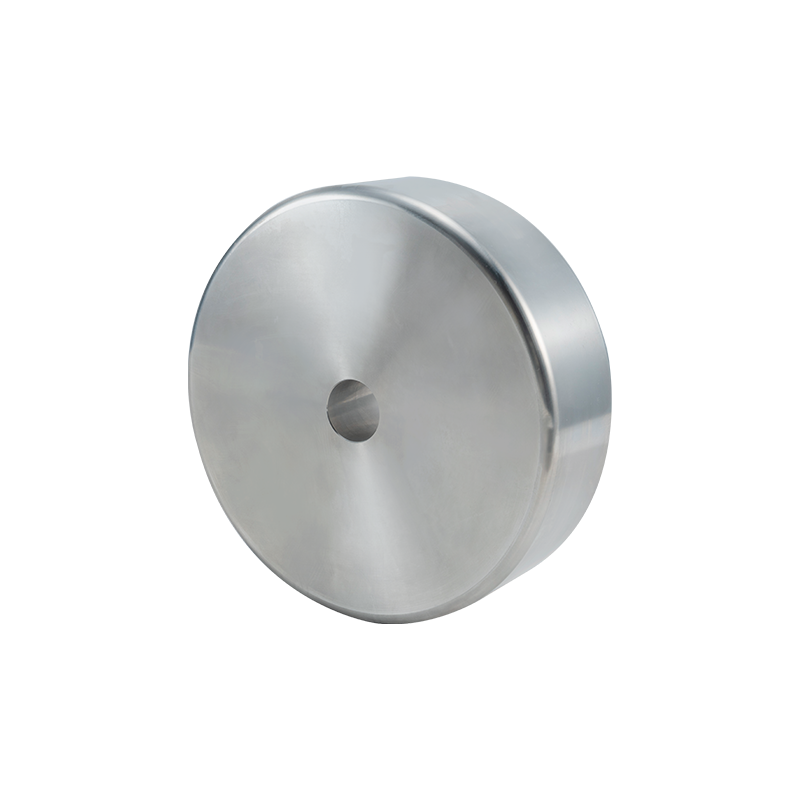
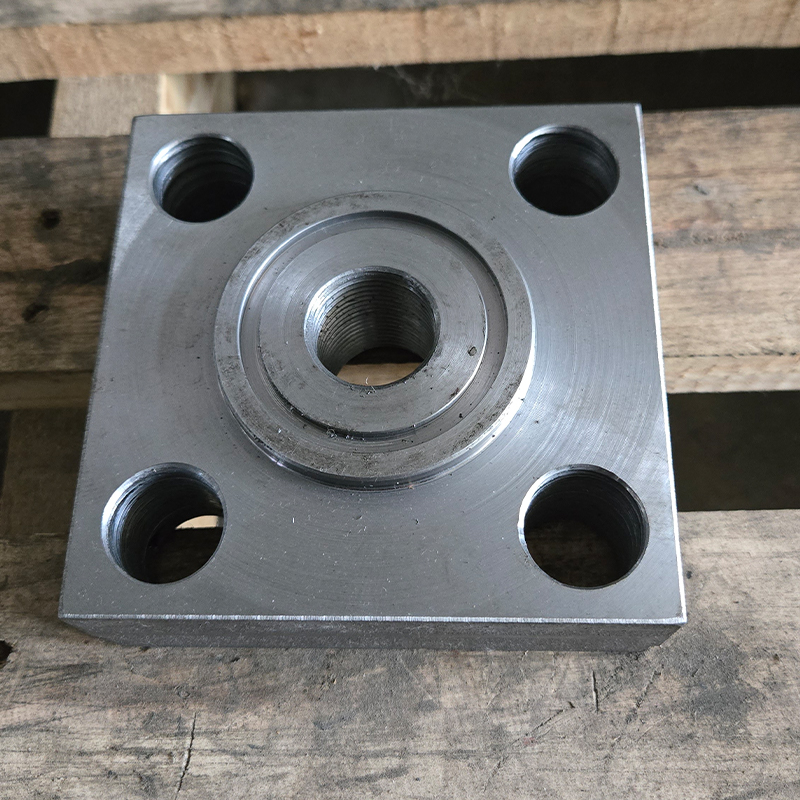 F316 316L 316Ti Forged Stainless Steel Flanges from Zhonghai PrecisionThese forged stainless steel flanges from Jiangyin Zhonghai Precision Machinery offer excellent corrosion resistance and are ideal for demanding petrochemical and marine applications. With ISO 9001, PED, and TS certifications, they meet stringent international standards.View Product →
Connection Types: Welding Neck, Slip-On, and Lap Joint
Welding neck flanges are the default for high pressure and cyclic loads; slip-on flanges are economical for low-pressure systems.
- Welding neck flange: the neck is butt-welded to the pipe, giving superior stress distribution and suitable for severe service from sub-zero to high temperature.
- Slip-on flange: the pipe is inserted and fillet-welded on both sides. Faster to fit, lower material cost, but less fatigue resistance.
- Lap joint flange: used when frequent dismantling is required, or when a dissimilar material combination is needed between flange and stub end.
For a 6-inch line at 250 psi and 500 deg F, a welding neck flange in Class 300 is the typical choice, especially where bending moments from thermal expansion are present. The right steel flange for a piping system depends on those combined conditions.
Facing selection is part of the connection choice. A raised face is the most common option up to Class 600. For high-pressure services above Class 600, a ring-type joint becomes necessary because a soft gasket can be blown out by the pressure.
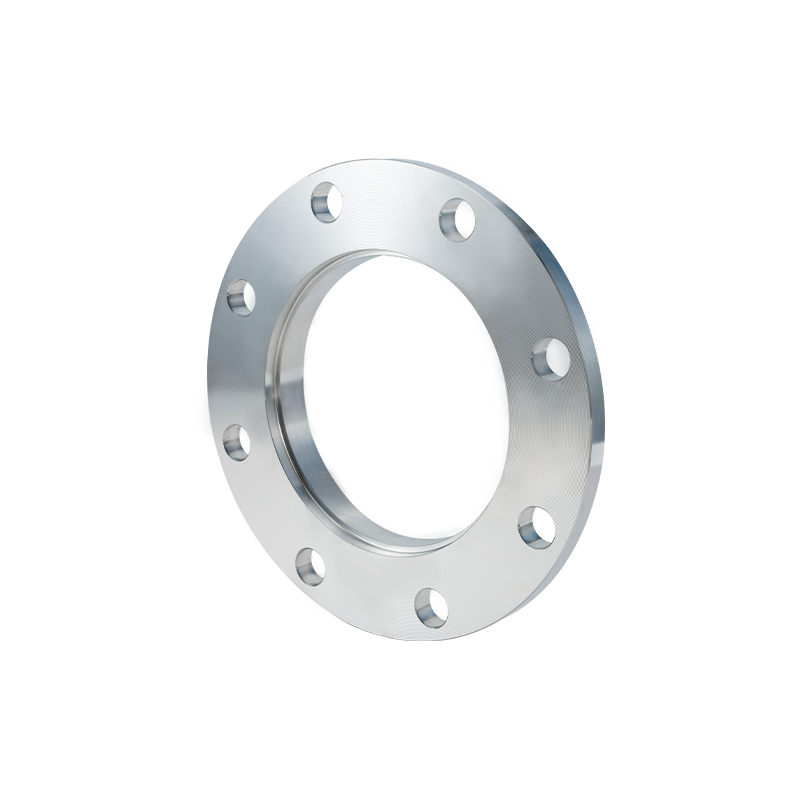
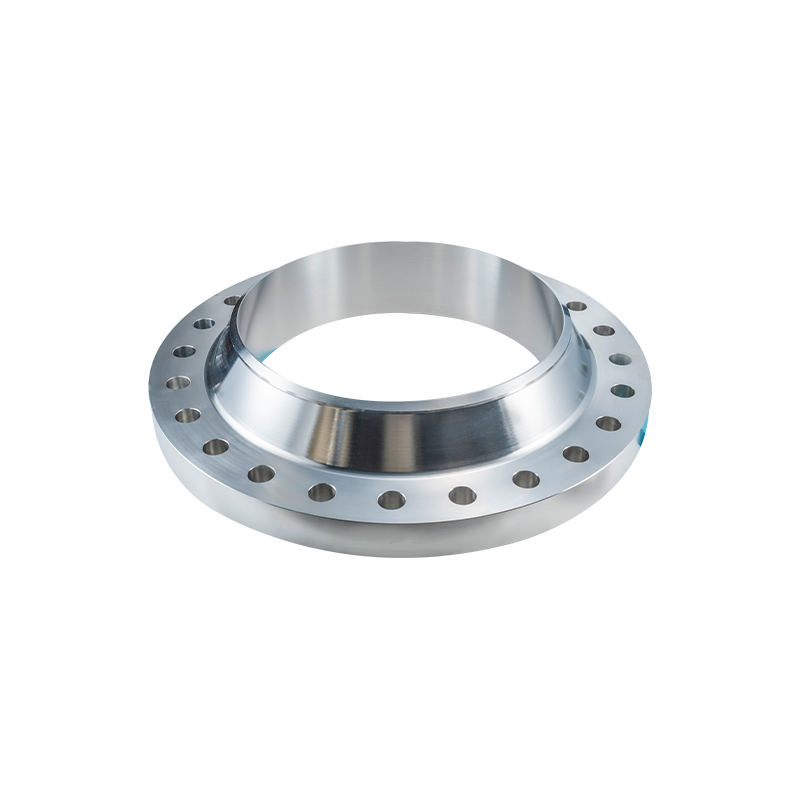 Class 300 Welding Neck Flange with Tapered Hub for Stress DistributionThe Class 300 WN flange features a long tapered hub that transfers stress to the pipe, reducing concentration at the hub base. It is designed for high-pressure and fluctuating loads, ensuring structural integrity in demanding environments.View Product →
Forging and Inspection: How to Judge Flange Quality
Forged flanges exhibit grain flow aligned with the flange circumference, which provides superior impact strength and fatigue resistance compared with plate-cut or cast flanges.
At Jiangyin Zhonghai Precision Machinery, forging, heat treatment, and CNC machining are performed in-house, which allows tighter control over grain flow and dimensional accuracy compared with outsourcing individual steps.
- Forging: the billet is upset in a closed die or ring-rolled to produce a continuous grain flow.
- Heat treatment: stress relieving or normalizing is applied to reach the required mechanical properties.
- CNC machining: bolt holes, facing, and neck taper are machined to B16.5 tolerances.
- Non-destructive testing: magnetic particle or ultrasonic testing checks for surface and subsurface defects.
- Dimension inspection: outside diameter, bolt circle, thickness, and raised face height are verified.
- Documentation: material certificate, heat number, and dimensional reports are issued.
The most common rejection observed during incoming inspection is a raised face height measurement that falls below the ASME B16.5 tolerance. The raised face on a Class 150 2-inch flange must be 0.06 inches high, while a Class 1500 flange uses an 0.25-inch raised face. These details matter because the gasket needs a specific load to seal.
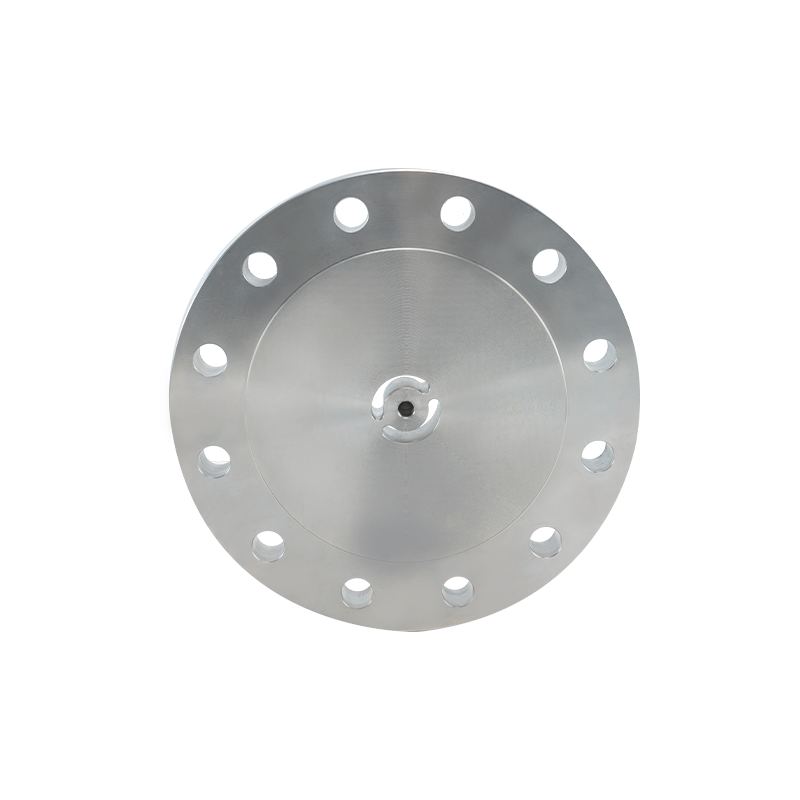
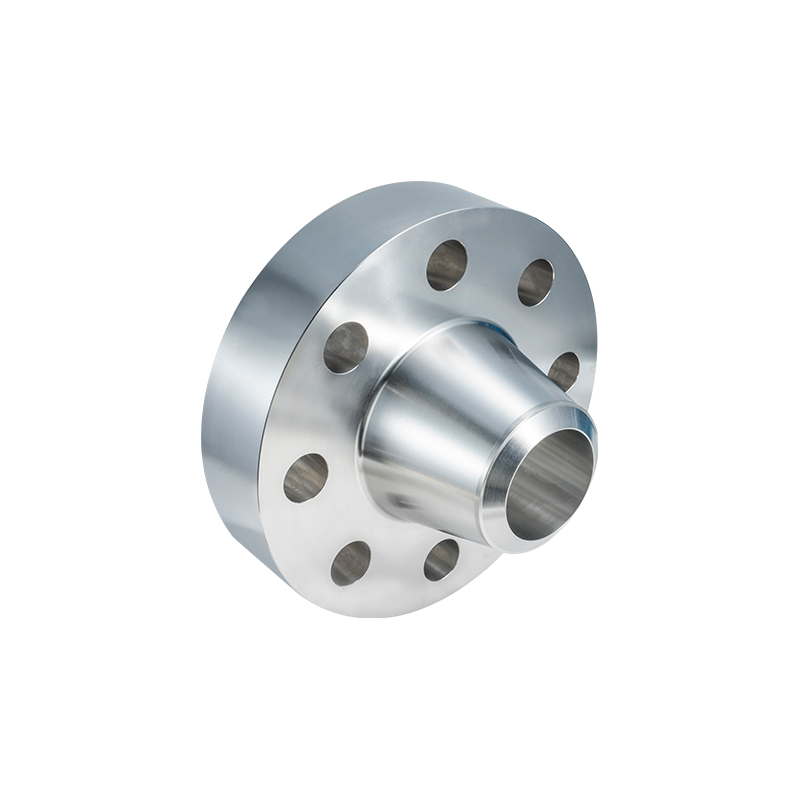 Class 1500 High-Pressure Flange Certified to ASME B16.5 and B16.47Engineered for high-pressure oil, gas, and power generation systems, these Class 1500 flanges are manufactured to ASME standards. With rigorous testing including UT and MT, they deliver reliable sealing and durability.View Product →
Frequently Asked Questions About ASME B16.5 Pipe Flanges
What is the difference between ASME B16.5 and ASME B16.47?
ASME B16.5 covers NPS 1/2 through 24, while ASME B16.47 covers NPS 26 through 60. Each standard has its own dimension tables, pressure-temperature ratings, and facing styles, and the two are not interchangeable at the size boundary.
Can a Class 150 flange be used at 300 psi?
Not automatically. A carbon steel A105 Class 150 flange is rated 285 psi at 100 deg F, but only 230 psi at 500 deg F. The actual design temperature must be checked against the applicable rating table before a class is confirmed.
What documentation is required for ASME B16.5 flanges?
A material certificate to EN 10204 3.1, a dimensional report, and test results for chemical composition and mechanical properties. For Class 600 and above, non-destructive testing reports are also expected.
What is the difference between RF and RTJ facings?
A raised face (RF) compresses a gasket inside the bolt circle. A ring-type joint (RTJ) seats a metal ring into a groove, giving a more reliable seal for high-pressure or gas service above Class 600.
 Previous