English
 中文简体
 Deutsch






Content
- 1 What ASME B16.5 Flange Coverage Actually Includes
- 2 The Six B16.5 Flange Types and Which One Belongs on Your Line
- 3 Material Groups Behind B16.5 Flange Pressure Ratings
- 4 Dimension Checks That Decide Whether a B16.5 Flange Joint Leaks
- 5 Class 1500 and 2500: B16.5 Flange Selection Under High Pressure
- 6 Frequently Asked Questions About B16.5 Flanges
A purchase order that reads "B16.5 flange, NPS 6, Class 150, raised face, A105" looks complete until the supplier's engineer sends three questions back: which raised face height, which material group was applied to the pressure rating, and whether the bolt holes must line up with a valve that is already bolted into the line. Those three answers decide whether the flanges ship in three weeks or come back as scrap.
ASME B16.5 is the American national standard that fixes the dimensions, pressure-temperature ratings, and material groups of pipe flanges and flanged fittings from NPS 1/2 through NPS 24, in Classes 150, 300, 400, 600, 900, 1500, and 2500. It says nothing about what the flange connects to. It only guarantees that one compliant B16.5 flange will bolt to any other compliant flange of the same size, class, and facing.
Definition: a B16.5 flange is a pipe flange whose outside diameter, bolt circle, bolt hole count and diameter, flange thickness, hub dimensions, and facing geometry all match the published tables of ASME B16.5 for one specific nominal pipe size and pressure class.
NPS 1/2 - 24Size range covered by the standard
7Pressure classes, 150 through 2500
125-250Microinch Ra finish required on raised gasket faces
What ASME B16.5 Flange Coverage Actually Includes
B16.5 spans NPS 1/2 through NPS 24 in seven pressure classes, but the class you order sets both the pressure rating and the size ceiling you are allowed to use.
Ambient ratings are where most selection errors begin. A Group 1.1 carbon steel flange holds 285 psi at 100 F in Class 150 and 6,170 psi in Class 2500, a factor of roughly 21 between the lightest and heaviest joint built to the same standard.
Two coverage limits catch buyers out. Class 2500 stops at NPS 12, so a 24 inch line at that pressure needs a different joint design altogether. Class 400 sits between 300 and 600 with its own tables, and many mills no longer keep tooling for it, so availability is worth confirming before the drawing is approved.
The Six B16.5 Flange Types and Which One Belongs on Your Line
The flange type follows the joint and the service rather than the pressure class: a slip-on and a weld neck flange in Class 300 share an identical bolt pattern but behave completely differently under thermal cycling.
| Flange type | Attachment | Where it fits | What to watch |
| Welding neck | Butt welded, tapered hub reinforces the joint | High pressure, large bore, cyclic or hot lines | Needs a beveled pipe end and a qualified welder |
| Slip-on | Pipe passes through, fillet welded on both sides | General service in Class 150 and 300, small to medium bore | Two fillet welds mean lower fatigue resistance |
| Lap joint | Stub end butt welded, backing flange floats | Lines opened often, tight bolt alignment | Requires a separate stub end to be tracked |
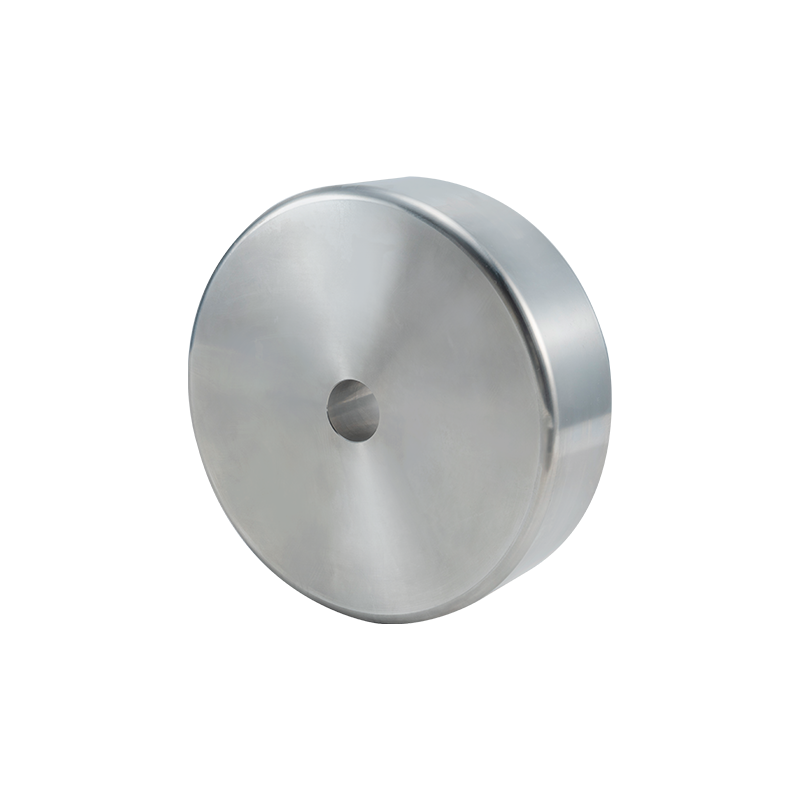
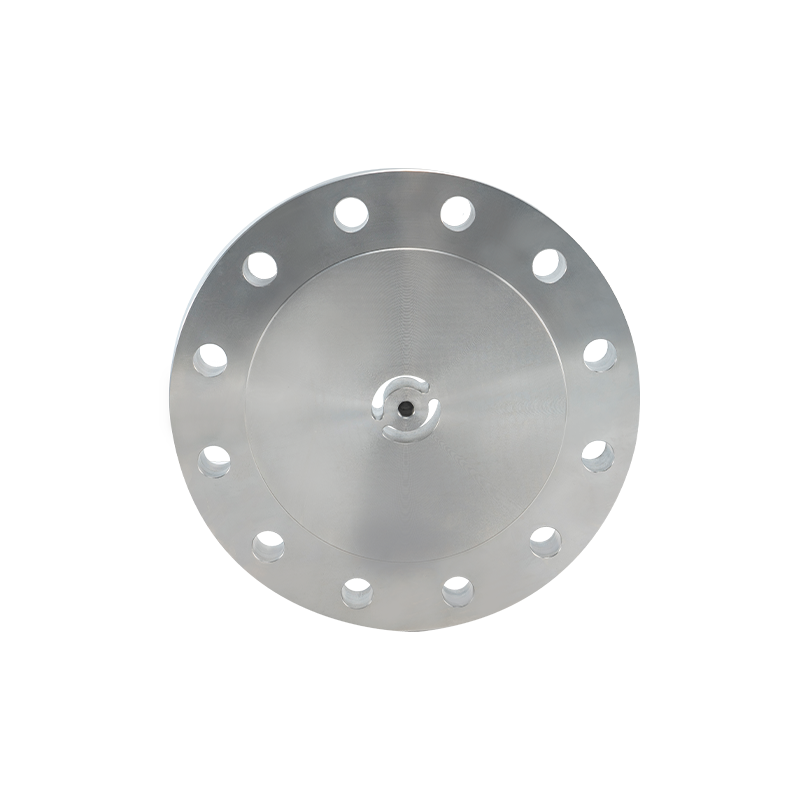
| Blind | No bore, solid closure | Isolation points, future tie-ins, header ends | Adds dead weight and must match the mating class |
| Threaded | Screwed onto pipe threads | Small bore utility lines where hot work is banned | Not for cyclic service or thin-wall pipe |
| Socket welding | Pipe inserted, fillet welded around the socket | Small bore, higher pressure | The internal crevice is a corrosion risk |
Above Class 600, beyond NPS 12, and on any line that cycles, the weld neck is the default. Its tapered hub moves bending stress into the pipe wall instead of concentrating it in a fillet weld.
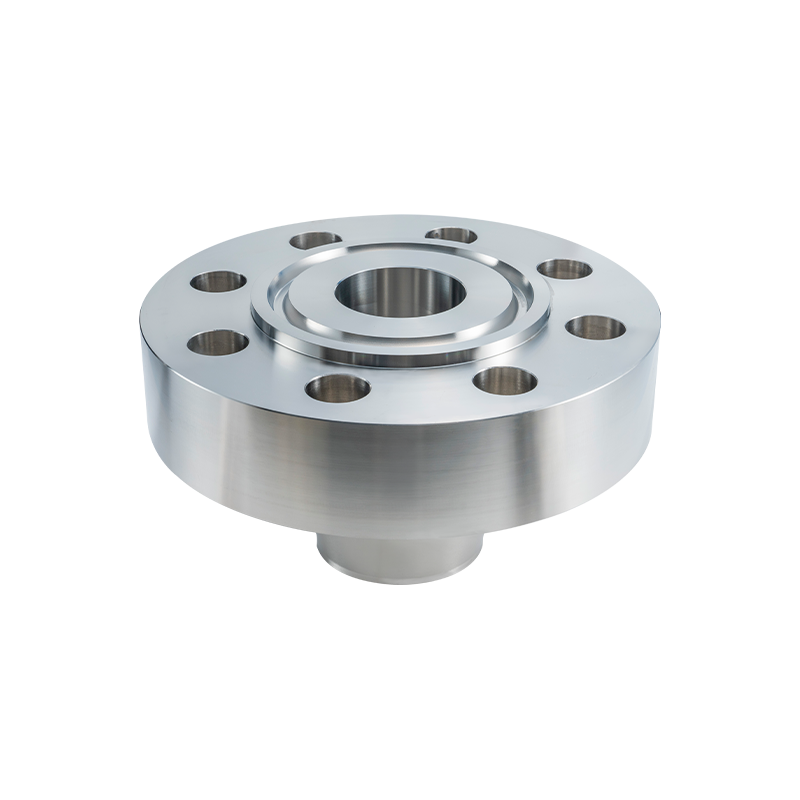
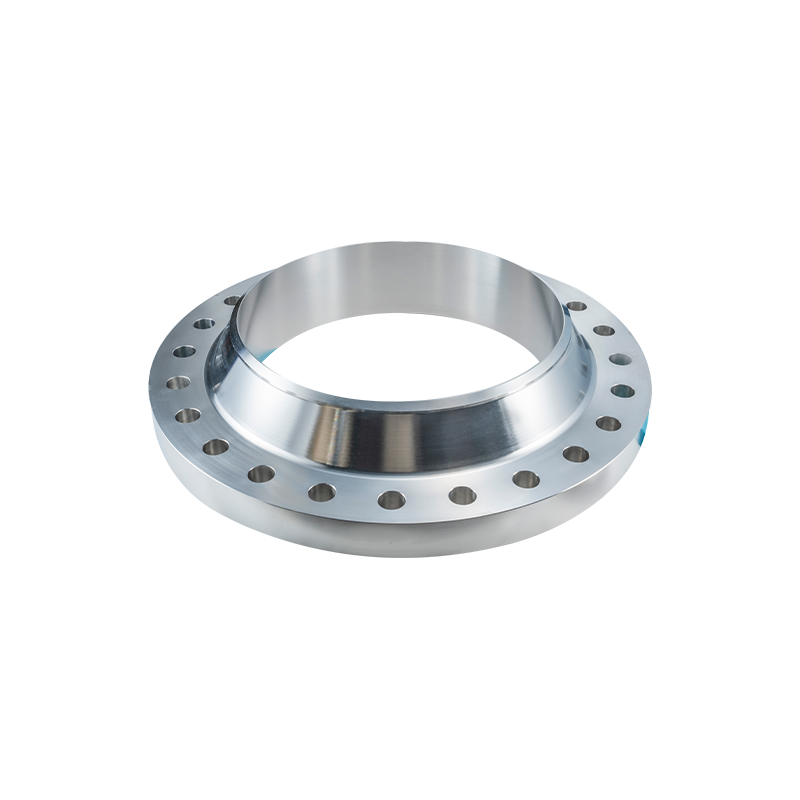 ASME B16.5 Class 300 Welding Neck FlangeFor high-pressure or cycling piping, this Class 300 weld-neck flange uses a tapered hub to move bending stress into the pipe wall.View Product →
Selection shortcut used on most process projects: slip-on and lap joint for Class 150 and 300 in steady service, weld neck for Class 600 and above, for large bore, and for anything that cycles.
Material Groups Behind B16.5 Flange Pressure Ratings
A B16.5 flange pressure rating belongs to a material group, not to the flange shape, so two flanges in the same size and class can carry different pressures at the same temperature.
| Material group | Typical grades | Class 150 at 100 F | Behavior as temperature rises |
| Group 1.1 | A105, A216 WCB carbon steel | 285 psi | Falls to about 140 psi at 600 F |
| Group 2.2 | F304, F304L, F316, F316L stainless | 275 psi | Starts about 3.5 percent lower, holds rating further up the range |
Group 1.1 carbon steel loses roughly half of its ambient rating by 600 F: 285 psi at 100 F becomes about 140 psi at 600 F. Austenitic stainless starts lower, at 275 psi in Class 150, but keeps a larger share of its rating as temperature climbs, which is why hot lines often run F316 or F316L flanges that look weaker in the 100 F column.
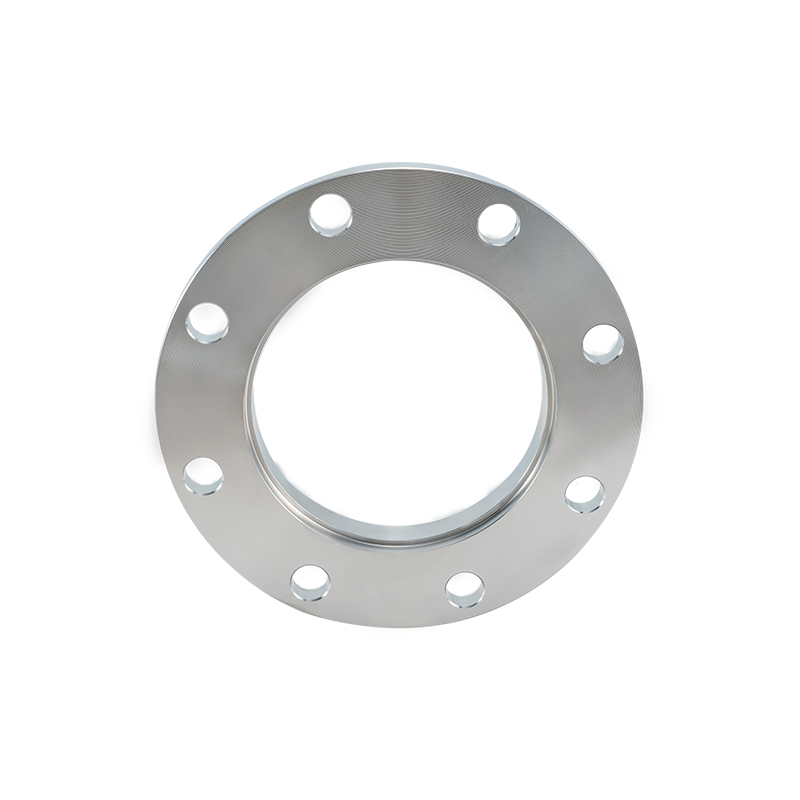 Custom ASTM A105 Carbon Steel FlangeForged A105 flange for ambient and high-temperature piping; CNC sealing surfaces and heat treatment support pressure classes through Class 2500.View Product →
Dimension Checks That Decide Whether a B16.5 Flange Joint Leaks
Most leaks blamed on bad flanges trace back to five details, and four of them are visible on the packing list before the material leaves the yard.
Facing type and raised face height
Class 150 and 300 raised faces stand 1.6 mm (1/16 in) above the flange face, while Class 400 and above stand 6.35 mm (1/4 in). Mixing the two heights on one joint loads the gasket unevenly, and a ring joint groove must be ordered to B16.20 so the gasket matches.
Gasket contact finish
B16.5 requires a gasket contact finish of 125 to 250 microinch Ra, roughly 3.2 to 6.3 micrometres. A face that is too smooth will not bite into a spiral wound gasket; too rough and the gasket cannot seal at all.
Bolt circle and hole count
A Class 150 NPS 6 flange carries eight 3/4 in bolts on a 9.5 in bolt circle. Ordering by "6 inch flange, Class 150" without the bolt detail is how flanges arrive that cannot be paired with the valve they were bought for.
Thickness and hub dimensions
Thickness is what resists the bolt load needed to seat a gasket. A flange turned from plate instead of forged stock can match the outside diameter and still fail the thickness or hub tolerance, and the error only shows up at hydrotest.
Marking and traceability
Size, class, material grade, facing, heat number, and standard should be stamped or tagged. If the mill certificate cannot be traced to the heat number on the flange, a quality audit will not close.
Face flatness is the sixth check and the hardest to see: a small deviation across the gasket seating surface concentrates bolt load, which is where flange face flatness and gasket blowout prevention become the same conversation.
Class 1500 and 2500: B16.5 Flange Selection Under High Pressure
Class 1500 and Class 2500 exist for the point at which a Class 900 joint can no longer hold the operating pressure at temperature, and the answer is a heavier flange rather than a thicker gasket.
In Group 1.1 carbon steel at 100 F, Class 1500 is rated 3,705 psi and Class 2500 is rated 6,170 psi, more than twenty times the Class 150 figure. Both classes normally call for ring joint or spiral wound gaskets, larger bolts, and thicker hubs, so weight and bolt torque rise quickly with size. Class 2500 is capped at NPS 12 in B16.5; larger high pressure lines move to ASME B16.47 Series A or Series B, which use different outside diameters and different bolt patterns.
In these classes the gasket and the tightening procedure matter as much as the flange.
Confirm the facing against the gasket, then agree bolt material, lubrication, and torque values before anyone discusses delivery dates.
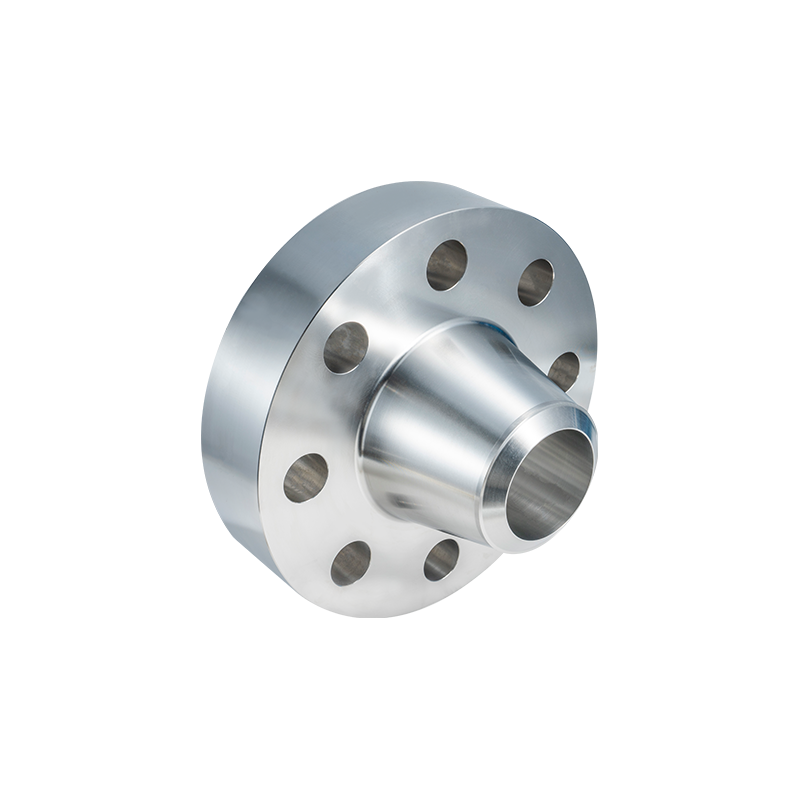 ASME B16.5 Class 1500 High-Pressure Forged FlangeFor extreme-pressure oil, gas, and refining connections, this forged Class 1500 flange offers CNC-machined sealing surfaces and multiple facing options.View Product →
Frequently Asked Questions About B16.5 Flanges
What does B16.5 mean on a flange?
ASME B16.5 is the standard number that identifies which dimension and rating tables a flange was manufactured to. A flange marked B16.5 has an outside diameter, bolt circle, hole pattern, thickness, and facing that match the ASME B16.5 tables for its size and class, which is what allows it to bolt to any other B16.5 flange of the same size, class, and facing.
Is Class 150 or Class 300 the right choice?
Choose from design pressure and temperature rather than habit. In Group 1.1 carbon steel, Class 150 is rated 285 psi and Class 300 is rated 740 psi at 100 F, and both figures fall as temperature rises. Size the joint so the rating at the maximum operating temperature still exceeds the design pressure with margin, because a Class 150 line that passes at ambient can fail its rating at 600 F.
Are B16.5 and EN 1092-1 flanges interchangeable?
No. EN 1092-1 uses different outside diameters, thicknesses, and bolt hole patterns in most sizes, even where the pressure classes look comparable, and PN 16 does not match Class 150 dimensionally. The two systems can meet only through an adapter or a short spool piece, never as a direct bolted pair.
What replaces B16.5 above NPS 24?
ASME B16.47 takes over above NPS 24 in two series: Series A, formerly MSS SP-44, and Series B, formerly API 605. Both use their own outside diameters and bolt patterns, so a 30 inch line cannot reuse B16.5 dimensions, and the flange family has to be specified early in the piping layout.
When a project runs past NPS 24, the practical question becomes whether one supplier can cover the B16.5 range and the larger B16.47 sizes without splitting the order. Jiangyin Zhonghai Precision Machinery Co., Ltd. manufactures flanges and forgings in Jiangyin, Jiangsu, working to ASME, EN, DIN, JIS, and GB standards with in-house forging, heat treatment, CNC turning, drilling, and inspection. The company holds ISO 9001 certification together with PED/TUV/TS approvals, and states a size range from 1/2 inch to 60 inches with single pieces up to 10 t, which keeps a B16.5 order and its B16.47 extension inside one supply chain.
 Previous