English
 中文简体
中文简体 Deutsch





Content
- 1 1. Introduction
- 2 2. Core Functions of Stainless Steel Blind Flanges
- 3 3. Common Material Grades for Stainless Steel Blind Flanges
- 4 4. Technical Specifications & Standards
- 5 5. Manufacturing Process and Quality Control
- 6 6. Industry Applications of Stainless Steel Blind Flanges
- 7 7. Buyer's Guide: 5 Critical Factors for Selecting Stainless Steel Blind Flanges
- 8 8. Installation and Maintenance of Stainless Steel Blind Flanges
- 9 9. Conclusion
1. Introduction
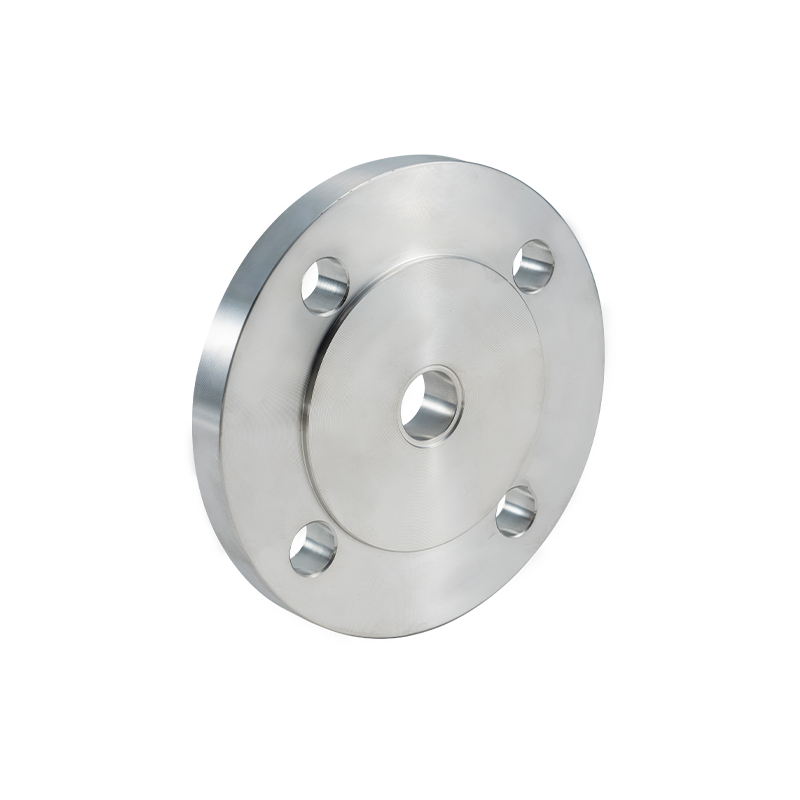
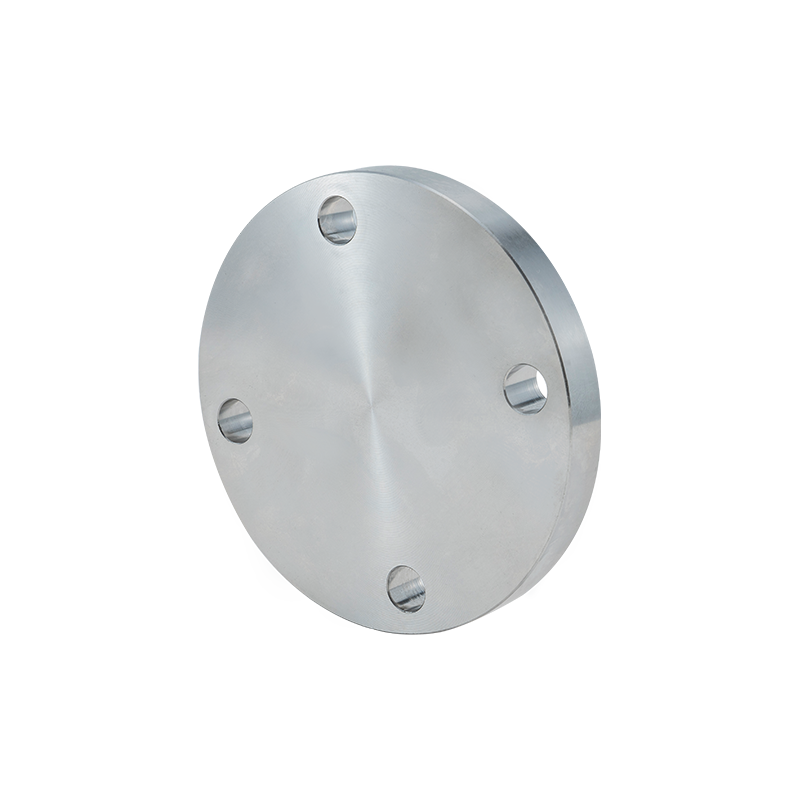
In the construction of complex industrial piping systems, the Stainless Steel Blind Flange plays an indispensable role. Unlike weld neck or slip-on flanges that feature a center bore for fluid transmission, a blind flange is a solid disk designed to completely block the flow of media.
What is a Blind Flange?
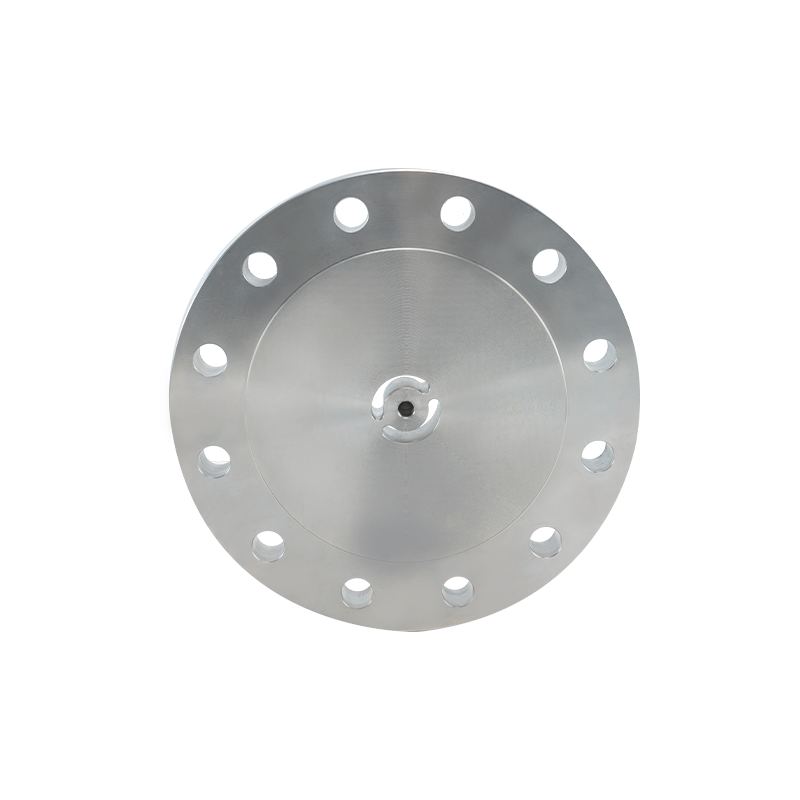
From a structural standpoint, a blind flange consists of bolt holes and a sealing surface but lacks an inner diameter (bore). It is typically installed at the end of a pipeline or after a valve where a periodic cutoff is required for system maintenance. Because it is positioned at the termination point, a blind flange must often withstand higher mechanical stress than other flange types, especially in conditions with significant water hammer effects or pressure surges.
As an ISO 9001–certified manufacturer with PED / TUV / TS qualifications, Jiangyin Zhonghai Precision Machinery Co., Ltd. deeply understands the critical role of blind flanges in system safety. Utilizing our complete in-house forging, heating, and CNC turning lines, we ensure every blind flange maintains superior structural integrity under high-pressure environments.
Why Choose Stainless Steel?
While carbon steel blind flanges are widely used in general environments, stainless steel is the professional choice for applications involving corrosive media, extreme temperatures, or strict hygiene standards:
- Superior Corrosion Resistance: Effectively resists erosion from the atmosphere, acids, alkalis, and salts, preventing seal failure caused by rust.
- High and Low Temperature Performance: Stainless steel maintains mechanical strength at high temperatures and exhibits excellent toughness at cryogenic temperatures, preventing brittle fractures.
- Long-term Cost Efficiency: Despite a higher initial cost, the extremely low maintenance frequency and extended service life reduce the total life-cycle cost for enterprises.
Key Material Parameter Comparison
To assist engineers in precise selection, the following table outlines the core performance differences of common stainless steel materials used in blind flange applications:
| Performance Indicator | 304/304L | 316/316L | 321 | Duplex S31803 |
| Corrosion Resistance | Good (General Purpose) | Excellent (Anti-Chloride) | Great (High Temp) | Top Tier (Pitting Resistance) |
| Tensile Strength | Approx. 515 MPa | Approx. 515 MPa | Approx. 515 MPa | ≥ 620 MPa |
| Operating Temp Range | -196°C to 425°C | -196°C to 450°C | Up to 800°C | -50°C to 280°C |
| Typical Application | Food processing, water transport | Chemical, Marine engineering | Exhaust, Boilers | Offshore, Concentrated acids |
Jiangyin Zhonghai Precision Machinery Co., Ltd. offers full size coverage from 1/2'' to 60''. For large-scale or specialized projects, we support customized manufacturing of blind flanges with maximum diameters up to 4 meters and single-piece weights up to 10 tons. Whether following ASME, EN, or DIN standards, our precision machining capabilities meet strict drawing-based tolerances, providing a reliable final barrier for your piping system.
2. Core Functions of Stainless Steel Blind Flanges
In industrial piping, the Stainless Steel Blind Flange is more than just a terminal plug. Its unique design and material properties provide several critical functional advantages that ensure the safety and flexibility of the entire fluid handling infrastructure.
Effective System Isolation
The primary function of a blind flange is to provide a positive shut-off at the end of a pipe, valve, or pressure vessel opening. Unlike a gate valve which may leak over time due to wear on the internal seats, a properly installed blind flange creates an absolute, leak-proof barrier. This is essential in high-stakes industries where Jiangyin Zhonghai Precision Machinery Co., Ltd. products are frequently utilized, such as chemical processing and oil refining, where accidental leaks can lead to environmental hazards or safety incidents.
Facilitating Maintenance and Inspection
One of the significant advantages of using a blind flange over a welded end cap is accessibility. By simply removing the bolts, technicians can gain full entry to the interior of the piping system. This allows for:
- Internal Cleaning: Efficient removal of debris, scale, or sediment buildup.
- Inspection: Direct visual or ultrasonic inspection of the pipe's internal wall condition.
- Temporary Closures: Sealing off sections of a plant during localized repairs without decommissioning the entire network.
Future-Proofing and System Expansion
Engineers often incorporate blind flanges into a design to allow for future system scalability. By installing a T-junction or a valve terminated with a blind flange, a facility can easily connect new piping runs or additional machinery at a later date without the need for hazardous cutting or welding on active lines. Jiangyin Zhonghai Precision Machinery Co., Ltd. supports this flexibility by providing fully customized, drawing-based manufacturing, ensuring that future expansion ports match your specific mechanical requirements perfectly.
Functional Comparison: Blind Flange vs. Welded Cap
When deciding how to terminate a pipe, it is helpful to compare the blind flange with a permanent welded cap:
| Feature | Stainless Steel Blind Flange | Welded End Cap |
| Reusability | High - Can be removed and reinstalled easily. | None - Must be cut off to open the pipe. |
| Maintenance Access | Excellent - Provides quick access via bolt removal. | Poor - Requires destructive entry. |
| Installation Time | Moderate (Bolt tightening) | High (Requires certified welding and NDT) |
| Pressure Capability | High (Depends on Class rating) | Very High (Structural unity with pipe) |
At Jiangyin Zhonghai Precision Machinery Co., Ltd., we specialize in precision flanges and forgings that meet these functional demands. With our ISO 9001 certification and TUV/PED qualifications, we ensure that every component—from standard 1/2'' units to massive 60'' custom blind flanges—delivers the reliability your critical systems require.
3. Common Material Grades for Stainless Steel Blind Flanges
Selecting the correct material grade is the most critical decision in the procurement of a Stainless Steel Blind Flange. The chemical composition of the steel determines how the flange will react to corrosive agents, extreme temperatures, and mechanical stress over time.
Austenitic Stainless Steels: The Industry Standard
The majority of blind flanges are manufactured from austenitic grades due to their excellent formability and resistance to corrosion. Jiangyin Zhonghai Precision Machinery Co., Ltd. maintains a robust inventory of these raw materials to support both volume production and complex machined parts.
- Grade 304/304L: The most widely used "18/8" stainless steel. It is suitable for fresh water, food processing, and architectural applications. The "L" version (Low Carbon) is preferred for parts that require welding to ensure intergranular corrosion resistance.
- Grade 316/316L: Containing molybdenum, this grade offers superior resistance to pitting and crevice corrosion in chloride environments. It is the gold standard for marine applications and chemical processing.
- Grade 321: Stabilized with Titanium, this grade is designed for service in the 800-1500°F (427-816°C) temperature range, where other grades might suffer from carbide precipitation.
Duplex and Super Duplex: For Extreme Conditions
When standard austenitic grades cannot meet the pressure or corrosion requirements, Duplex stainless steels (such as S31803 / S32205) are utilized. These materials offer nearly double the yield strength of 300-series stainless steel. As a specialist in precision forgings, Jiangyin Zhonghai Precision Machinery Co., Ltd. has the in-house heating and CNC capabilities to handle these high-strength alloys, which require precise thermal management during production.
Chemical Composition and Property Comparison
The following table illustrates why certain grades are preferred for specific industrial environments:
| Element / Property | 304L (1.4307) | 316L (1.4404) | 321 (1.4541) | Duplex 2205 (1.4462) |
| Chromium (Cr) | 18.0 - 20.0% | 16.0 - 18.0% | 17.0 - 19.0% | 22.0 - 23.0% |
| Nickel (Ni) | 8.0 - 12.0% | 10.0 - 14.0% | 9.0 - 12.0% | 4.5 - 6.5% |
| Molybdenum (Mo) | N/A | 2.0 - 3.0% | N/A | 3.0 - 3.5% |
| Main Advantage | Cost-effective / Versatile | Chloride Resistance | High-Temp Stability | High Strength / Stress Corrosion Resistance |
Quality Assurance in Material Sourcing
At Jiangyin Zhonghai Precision Machinery Co., Ltd., material integrity is non-negotiable. Every forged flange we produce undergoes PMI (Positive Material Identification) testing to verify its chemical signature. Our ISO 9001–certified facility ensures that all incoming raw materials are accompanied by 3.1 Mill Test Certificates, providing our clients with total transparency and reliability for their critical infrastructure.
Our expertise allows us to support maximum dimensions of 4 meters and single-piece weights up to 10 tons, even in challenging alloys like Duplex or Grade 321. This makes us a preferred partner for both standard and non-standard high-performance applications.
4. Technical Specifications & Standards
To ensure global interoperability and safety, the Stainless Steel Blind Flange must be manufactured in strict accordance with recognized international standards. These standards define the dimensions, tolerances, and pressure-temperature ratings required for various piping environments.
Common International Standards
Jiangyin Zhonghai Precision Machinery Co., Ltd. specializes in manufacturing flanges that adhere to the following major regulatory frameworks:
- ASME/ANSI B16.5: The most common North American standard for pipe flanges (sizes 1/2'' to 24'').
- ASME B16.47: Used for large-diameter flanges (Series A and B, sizes 26'' to 60'').
- EN 1092-1: The European standard for steel flanges, commonly used in metric-based systems.
- DIN Standards: Older German standards (like DIN 2527 for blind flanges) still prevalent in many industrial maintenance sectors.
- JIS B2220: The Japanese Industrial Standard for pipe flanges.
Pressure Ratings and Classes
Pressure ratings determine the maximum allowable pressure a blind flange can handle at a specific temperature. Under the ASME system, these are categorized into Classes, while the EN/DIN system uses PN (Nominal Pressure). As a manufacturer with PED and TUV qualifications, Jiangyin Zhonghai Precision Machinery Co., Ltd. ensures that every forged flange is tested to meet or exceed these ratings.
| ASME B16.5 Class | Corresponding EN/DIN PN (Approx.) | Typical Application |
| Class 150 | PN 10 / PN 16 / PN 20 | Low-pressure water and waste systems |
| Class 300 | PN 25 / PN 40 / PN 50 | Standard industrial chemical processing |
| Class 600 | PN 100 / PN 110 | High-pressure oil and gas pipelines |
| Class 900 / 1500 / 2500 | PN 150 / PN 250 / PN 420 | Extreme high-pressure offshore and power gen |
Sealing Face Types (Facing)
The "Face" of the blind flange is the surface where the gasket is placed. Choosing the right face is critical for preventing leaks:
- Flat Face (FF): The entire surface is flat; typically used with Class 150 flanges in low-pressure applications.
- Raised Face (RF): Features a small elevated area around the bore (or center of the blind) to concentrate pressure on the gasket. This is the most common type in industrial settings.
- Ring Type Joint (RTJ): Features a machined groove for a metal ring gasket. This is used for high-pressure and high-temperature service (Class 600 and above).
Customized and Large-Scale Manufacturing
While standard sizes are the backbone of the industry, many projects require unique specifications. Jiangyin Zhonghai Precision Machinery Co., Ltd. provides reliable solutions for both standard and non-standard applications. Our facility can handle maximum dimensions of 4 meters and supports fully customized, drawing-based manufacturing. Whether you need a specific thickness to meet high-stress calculations or a unique bolt-hole pattern for specialized machinery, our CNC turning and drilling lines deliver precision you can trust.
5. Manufacturing Process and Quality Control
The reliability of a Stainless Steel Blind Flange depends heavily on its internal grain structure and the precision of its final machining. At Jiangyin Zhonghai Precision Machinery Co., Ltd., we integrate traditional forging expertise with advanced CNC technology to produce components that exceed industry expectations.
The Forging Advantage vs. Casting
While casting is a cheaper alternative, forging is the mandatory standard for high-pressure applications. During the forging process, the stainless steel's grain structure is mechanically deformed to follow the shape of the flange. This results in:
- Increased Structural Integrity: Elimination of internal voids and gas pockets common in castings.
- Higher Fatigue Resistance: Better performance under cyclic pressure loads.
- Enhanced Impact Strength: Vital for pipe systems subject to thermal expansion or vibration.
As a PED / TUV / TS qualified manufacturer, Jiangyin Zhonghai Precision Machinery Co., Ltd. utilizes specialized heating and forging lines to handle single-piece weights up to 10 tons, ensuring that even our largest 60'' blind flanges possess uniform strength.
Precision Machining and CNC Turning
Once forged, the "blank" flange enters our CNC turning and drilling lines. Precision is paramount, especially regarding the sealing face and bolt hole alignment. Our capabilities include:
- Tight Tolerances: Ensuring perfect alignment with mating flanges to prevent stress on the bolt circle.
- Surface Finish Control: Machining the specific "serrated" or "smooth" finish required for different gasket types (e.g., spiral wound gaskets vs. rubber gaskets).
- Large-Scale Machining: Our equipment supports maximum dimensions of up to 4 meters, catering to heavy industrial and civil engineering projects.
Rigorous Quality Control and Inspection
To maintain our ISO 9001 certification, every Stainless Steel Blind Flange undergoes a series of stringent inspections before dispatch. We handle both volume production and complex machined parts with the same level of scrutiny.
| Inspection Type | Method / Tool | Purpose |
| Chemical Analysis | Spectrometric PMI Testing | Ensures the grade (304, 316, Duplex) matches the order. |
| Dimensional Check | Calipers, CMM, and Gauges | Verifies compliance with ASME, EN, or custom drawings. |
| Surface Inspection | Dye Penetrant (PT) / Visual | Detects surface cracks, laps, or irregularities. |
| Internal Soundness | Ultrasonic Testing (UT) | Ensures no internal defects exist within the forged body. |
| Mechanical Testing | Tensile & Hardness Tests | Confirms the material meets required strength specifications. |
Certified Performance
By managing the complete in-house production cycle—from raw forging to final inspection—Jiangyin Zhonghai Precision Machinery Co., Ltd. provides a seamless supply chain. Our TUV and PED qualifications serve as a guarantee that our flanges are safe for use in pressurized equipment throughout Europe and the rest of the world.
6. Industry Applications of Stainless Steel Blind Flanges
Due to their ability to provide a secure, leak-proof seal and withstand harsh environmental conditions, Stainless Steel Blind Flanges are essential components across a vast array of global industries. Jiangyin Zhonghai Precision Machinery Co., Ltd. provides reliable solutions for both standard and non-standard applications, ensuring high performance in the following sectors:
Oil and Gas Exploration and Refining
In the petrochemical sector, pipelines often transport volatile substances under extreme pressure. Blind flanges are used to seal off sections of the refinery during maintenance or to close off unused connection points on offshore drilling platforms. The forged flanges produced by Jiangyin Zhonghai Precision Machinery Co., Ltd. are particularly valued here for their resistance to high-pressure surges and hydrocarbon corrosion.
Chemical and Pharmaceutical Processing
Chemical plants deal with highly corrosive acids and bases that would quickly degrade carbon steel. Grade 316/316L stainless steel is the preferred material for these environments. In pharmaceutical manufacturing, the smooth finish and ISO 9001–certified quality of our machined flanges ensure that systems remain sterile and free from contamination during the production of life-saving medications.
Food and Beverage Industry
Hygiene is the top priority in food processing. Stainless steel is used because it does not leach chemicals into the product and can withstand rigorous Clean-In-Place (CIP) procedures involving hot water and steam. Our precision flanges provide the tight seals necessary to maintain a sanitary environment in breweries, dairy plants, and industrial kitchens.
Water Treatment and Desalination
Municipal water systems and desalination plants require components that can resist the corrosive effects of salt water and treatment chemicals. Blind flanges are frequently installed at the ends of large-scale water mains to allow for future system expansion. With our capability to manufacture maximum dimensions of 4 meters, Jiangyin Zhonghai Precision Machinery Co., Ltd. is a key supplier for large-diameter municipal infrastructure projects.
Application Matrix by Environment
The following table summarizes the typical usage of different blind flange specifications across industries:
| Industry | Common Material | Typical Pressure Class | Primary Function |
| Marine / Offshore | Duplex / 316L | Class 600 - 2500 | Sealing high-pressure sea water lines |
| Food Processing | 304 / 304L | Class 150 / PN 10 | Hygienic pipe termination |
| Power Generation | 321 / 347 | Class 900 - 1500 | High-temperature steam isolation |
| General Irrigation | 304 | PN 10 / PN 16 | Future expansion ports |
Providing Solutions for Complex Projects
As a specialist in precision flanges and forgings, Jiangyin Zhonghai Precision Machinery Co., Ltd. supports the unique demands of these industries through fully customized, drawing-based manufacturing. Our PED / TUV / TS qualifications ensure that whether a flange is destined for a local food plant or an international oil refinery, it meets the highest safety and performance standards.
7. Buyer's Guide: 5 Critical Factors for Selecting Stainless Steel Blind Flanges
Procuring a Stainless Steel Blind Flange requires careful technical consideration to ensure long-term safety and system compatibility. As a manufacturer specializing in precision flanges and forgings, Jiangyin Zhonghai Precision Machinery Co., Ltd. recommends evaluating these five key factors before placing an order.
1. Material Grade and Chemical Compatibility
The operating medium is the most important factor. While Grade 304 is excellent for general applications, systems exposed to marine environments or aggressive chemicals require Grade 316L or Duplex S31803. Using the wrong grade can lead to stress corrosion cracking or pitting, which compromises the seal. At Jiangyin Zhonghai Precision Machinery Co., Ltd., we provide full PMI inspection to guarantee the chemical integrity of every piece.
2. Pressure and Temperature Ratings
You must ensure the flange's Class (ASME) or PN (EN/DIN) rating exceeds the maximum operating pressure of the system at its highest temperature. It is a common mistake to overlook that as temperature rises, the allowable pressure for a flange decreases. Our technical team supports standard and non-standard applications, helping you select the correct thickness and rating for extreme conditions.
3. Flange Face and Gasket Matching
The sealing surface must match your existing piping and the intended gasket type. Using a Flat Face (FF) blind flange with a Raised Face (RF) mating flange can lead to uneven bolt stress and leakage. For high-pressure systems, a Ring Type Joint (RTJ) is often required. We offer precision CNC turning to achieve specific surface finishes (Ra values) required for professional-grade sealing.
4. Dimension and Specification Standards
Ensure the flange adheres to the correct standard (ASME B16.5, EN 1092-1, or JIS). Even minor discrepancies in bolt hole circles or outer diameters can halt an installation. Jiangyin Zhonghai Precision Machinery Co., Ltd. supports a massive range from 1/2'' to 60'' and provides fully customized, drawing-based manufacturing for proprietary or legacy equipment that does not fit modern standards.
5. Certification and Quality Documentation
In high-risk industries, a flange is only as good as its paperwork. Always verify that your supplier holds relevant certifications. Buying from a PED / TUV / TS qualified and ISO 9001–certified manufacturer like Jiangyin Zhonghai Precision Machinery Co., Ltd. ensures you receive 3.1 Mill Test Certificates (MTC), which are essential for safety audits and regulatory compliance.
Summary Selection Checklist
Use the following table as a quick reference during your procurement process:
| Selection Step | Key Question to Ask | Critical Consideration |
| Material | Is the medium corrosive or high-heat? | 304L vs. 316L vs. 321 vs. Duplex |
| Standard | What is the mating flange standard? | ASME, EN, DIN, JIS, or Custom |
| Pressure | What is the peak system pressure? | Class 150 through Class 2500 |
| Face Type | What gasket will be used? | RF, FF, or RTJ |
| Traceability | Is certification provided? | MTC 3.1, ISO 9001, PED/TUV |
With our in-house forging, heating, and inspection lines, Jiangyin Zhonghai Precision Machinery Co., Ltd. eliminates the risks associated with third-party sourcing. We manage the entire process to provide a reliable terminal solution for your most demanding projects.
8. Installation and Maintenance of Stainless Steel Blind Flanges
Proper installation and regular maintenance are vital to ensure the Stainless Steel Blind Flange performs its sealing function effectively over its service life. Even a high-precision component from Jiangyin Zhonghai Precision Machinery Co., Ltd. can fail if subjected to incorrect assembly techniques or environmental neglect.
Best Practices for Installation
Achieving a leak-proof seal requires more than just tightening bolts. Engineers should follow a standardized protocol:
- Alignment Check: Ensure the blind flange is perfectly aligned with the mating flange. Misalignment can cause uneven gasket compression and eventual leakage.
- Gasket Inspection: Always use a new, compatible gasket. Check for any scratches or debris on the sealing faces of both the pipe flange and the blind flange.
- Lubrication: Apply a high-quality anti-seize lubricant to the bolt threads to ensure consistent torque tension and prevent galling—a common issue with stainless steel fasteners.
- Star Pattern Tightening: Tighten bolts in a cross-over or "star" sequence. This ensures the pressure is distributed evenly across the gasket surface.
Maintenance and Long-Term Monitoring
While stainless steel is highly durable, regular inspections are necessary, especially in high-pressure or corrosive environments. Jiangyin Zhonghai Precision Machinery Co., Ltd. recommends the following maintenance steps:
- Visual Inspections: Periodically check for signs of weeping or salt buildup around the flange perimeter.
- Retorquing: In systems with significant thermal cycling (hot/cold shifts), bolts may loosen over time. Periodic torque verification helps maintain the seal.
- Corrosion Assessment: Even with 316L or Duplex steel, check for "pitting" in high-chloride environments or "crevice corrosion" under the gasket area.
Common Issues and Solutions
| Problem | Potential Cause | Corrective Action |
| Seepage at Seal | Uneven bolt tension or damaged gasket. | Replace gasket and retighten using a calibrated torque wrench. |
| Bolt Galling | High friction during stainless-on-stainless assembly. | Use specialized lubricants or different grades for bolts and nuts. |
| Surface Rust | External contamination or low-grade material. | Clean surface; verify material grade with PMI testing. |
9. Conclusion
The Stainless Steel Blind Flange is a critical safety and operational component that provides the "final line of defense" for industrial piping. From facilitating maintenance access to enabling future system expansion, its role is foundational to modern infrastructure. Choosing a manufacturer that combines material expertise with advanced production technology is essential for project success.
Jiangyin Zhonghai Precision Machinery Co., Ltd. stands at the forefront of this industry as an ISO 9001–certified manufacturer with PED / TUV / TS qualifications. Our ability to handle everything from standard ASME/EN components to fully customized, drawing-based manufacturing makes us a versatile partner for global engineering firms. With our in-house capabilities supporting maximum dimensions of 4 meters an
 Previous