English
 中文简体
中文简体 Deutsch





Content
- 1 What Are ANSI Standard Flanges and How Did They Evolve?
- 2 Technical Analysis of Five Critical Specifications
- 2.1 1. Low-Pressure Slip-On Configuration: ansi standard flanges 150 lb slip on
- 2.2 2. High-Pressure Weld Neck Design: ansi standard flanges weld neck schedule 40
- 2.3 3. Closure and Isolation Applications: ansi standard flanges blind raised face
- 2.4 4. Carbon Steel Material Grades: ansi standard flanges carbon steel a105
- 2.5 5. High-Pressure Socket Weld: ansi standard flanges socket weld 3000 psi
- 3 Manufacturing Quality and Certification Standards
- 4 Global Standards and Customization Services
- 5 Frequently Asked Questions
- 5.0.1 What bolt circle diameter differences exist between Class 150 and Class 300 flanges?
- 5.0.2 How do A105 and A350 LF2 materials compare for low-temperature applications?
- 5.0.3 What maximum pressure can slip-on flanges safely handle?
- 5.0.4 How do raised face and ring-type joint sealing performances differ?
- 5.0.5 What are minimum order quantities and sample policies?
- 6 Conclusion
- 7 References
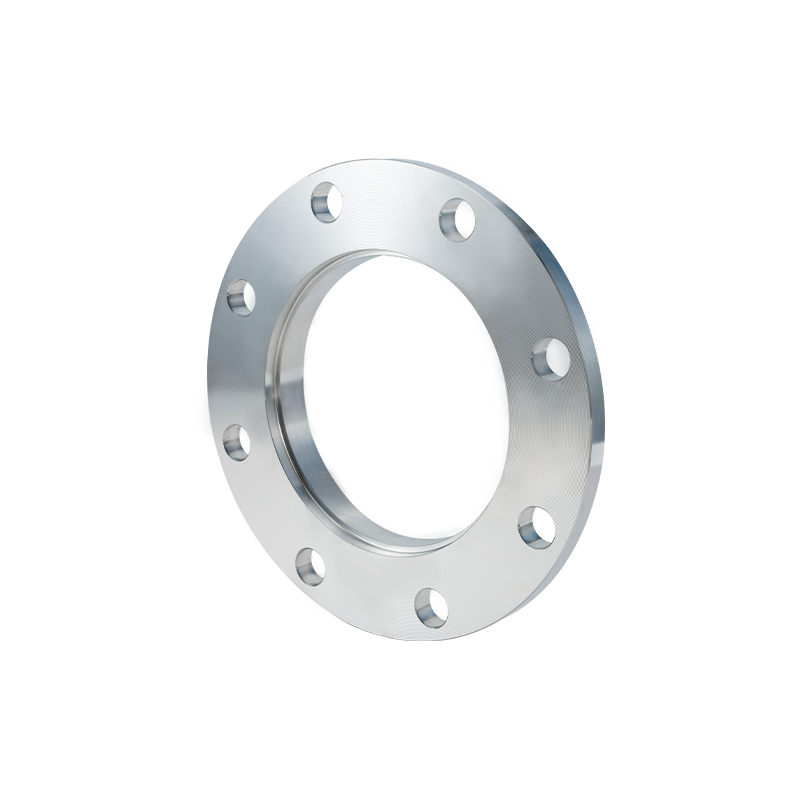
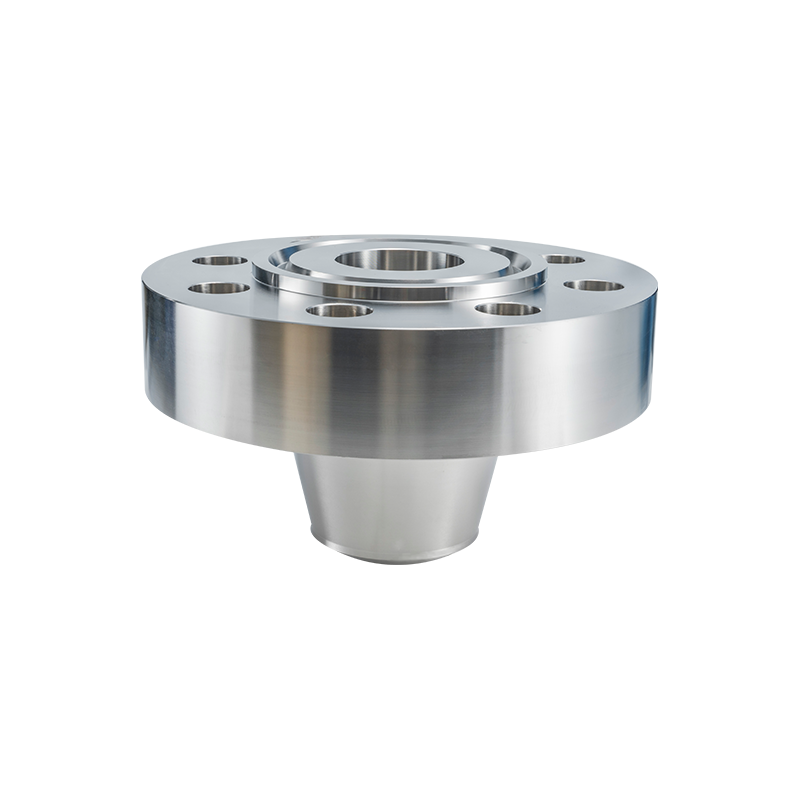
ANSI standard flanges provide the primary mechanical connection method for pressure piping systems in North American industrial facilities. This guide examines pressure-temperature ratings, facing types, and material specifications critical for procurement engineers and piping designers.
What Are ANSI Standard Flanges and How Did They Evolve?
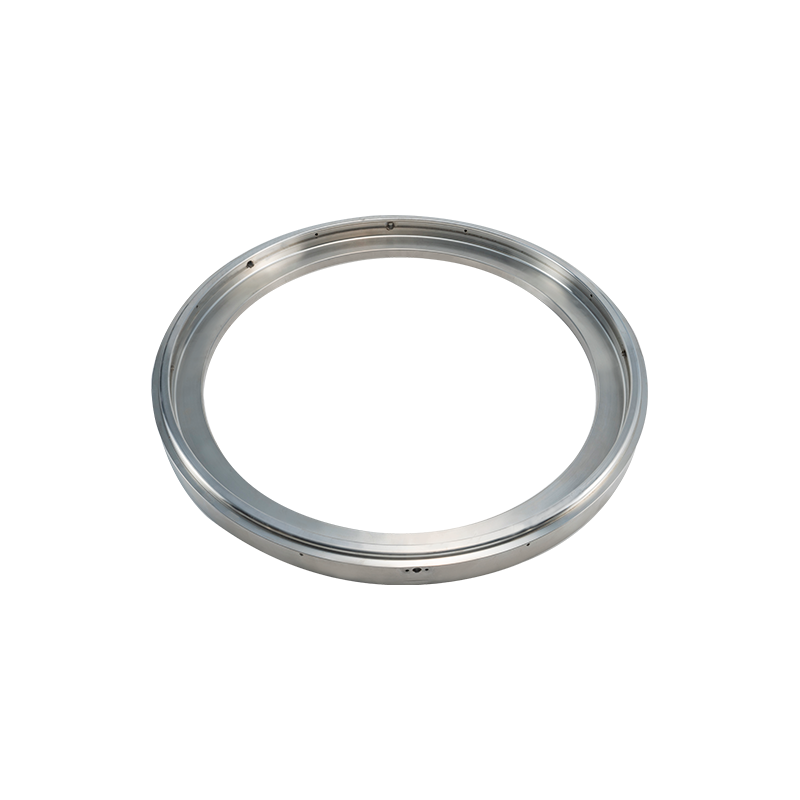
The American National Standards Institute (ANSI) originally published flange dimensional standards, which the American Society of Mechanical Engineers (ASME) subsequently maintained and updated. Current active standards include ASME B16.5 for flanges up to 24 inches nominal diameter and ASME B16.47 for larger diameters through 60 inches.
Key classification systems include:
- Pressure classes designated 150, 300, 600, 900, 1500, and 2500 representing dimensionless pressure-temperature ratings
- Face types including raised face (RF), flat face (FF), and ring-type joint (RTJ)
- Bore configurations matching pipe schedules for welding compatibility
Jiangyin Zhonghai Precision Machinery Co., Ltd. operates as an ISO 9001-certified manufacturer with PED, TUV, and TS qualifications, specializing in precision flanges and forgings. The company produces pipe flanges, forged flanges, machined flanges, and related components according to GB, ASME, ASTM, JIS, EN, and DIN standards, supporting fully customized drawing-based manufacturing. The production range covers 1/2 inch to 60 inches, single-piece weights up to 10 tons, and maximum dimensions of 4 meters. Complete in-house capabilities include forging, heating, CNC turning, drilling, and inspection lines handling both volume production and complex machined parts.
Technical Analysis of Five Critical Specifications
1. Low-Pressure Slip-On Configuration: ansi standard flanges 150 lb slip on
Class 150 represents the lowest standard pressure rating, suitable for ambient temperature water, steam, and non-critical process fluids. Slip-on flanges slide over pipe ends and fillet weld both sides, simplifying installation in tight spaces.
Pressure-temperature ratings for Class 150 carbon steel:
- Maximum pressure 285 psi at ambient temperature (100°F)
- Pressure derating to 140 psi at 400°F
- Pressure derating to 20 psi at 750°F
Installation cost comparison:
| Factor | Slip-On Flange | Weld Neck Flange |
| Material Cost | 15-20% lower | Baseline |
| Welding Labor | Two fillet welds (quick) | One butt weld (qualified procedure) |
| Inspection Requirements | Visual and magnetic particle | Radiographic or ultrasonic |
| Alignment Tolerance | ±2mm acceptable | ±0.5mm required |
| Fatigue Resistance | Moderate | Superior (smooth stress transition) |
ANSI standard flanges 150 lb slip on configurations suit utility piping, HVAC systems, and low-pressure process lines where installation speed outweighs fatigue resistance requirements.
2. High-Pressure Weld Neck Design: ansi standard flanges weld neck schedule 40
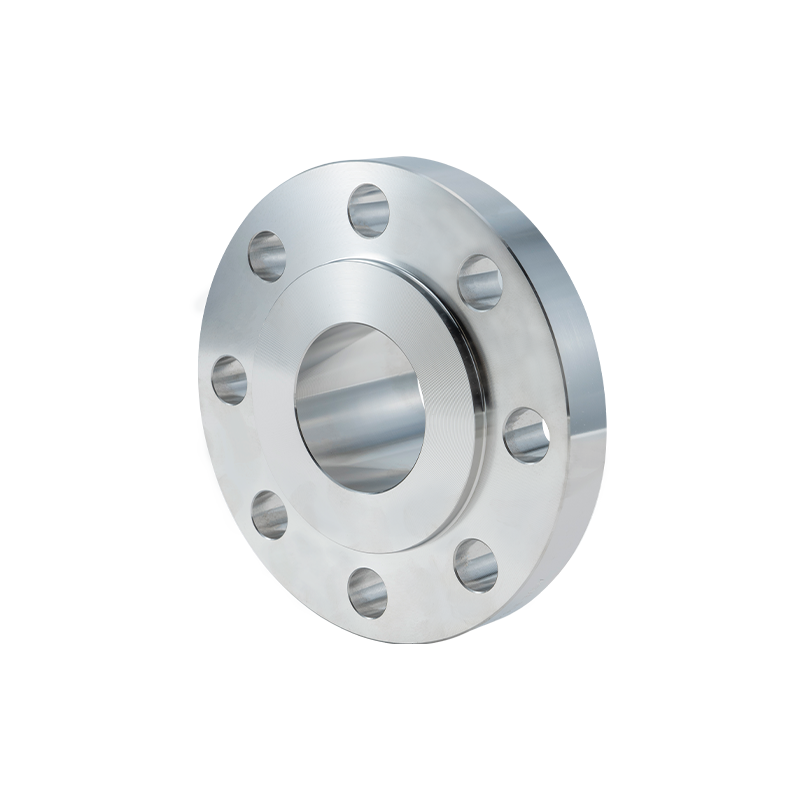
Weld neck flanges incorporate a tapered hub transitioning smoothly to pipe wall thickness. This geometry distributes bending stresses and provides structural reinforcement at critical junctions.
Schedule 40 pipe dimensions determine bore compatibility:
- 2-inch Schedule 40: 60.3mm OD, 3.91mm wall, 52.5mm ID
- 4-inch Schedule 40: 114.3mm OD, 6.02mm wall, 102.3mm ID
- 6-inch Schedule 40: 168.3mm OD, 7.11mm wall, 154.1mm ID
Flange type performance comparison:
| Characteristic | Slip-On Flange | Weld Neck Flange |
| Stress Concentration Factor | 2.5-3.0 | 1.2-1.5 |
| Fatigue Life Cycles | 10,000-50,000 | 100,000-500,000 |
| Hub Thickness | None (pipe wall only) | Graduated reinforcement |
| Pressure Rating Consistency | Derates with pipe schedule | Maintains rating independent of pipe |
| Typical Application | Static, low-cycle systems | Cyclic, high-stress services |
The ansi standard flanges weld neck schedule 40 combination represents the most common specification for process piping in chemical plants and refineries, balancing pressure capacity with standard material availability.
3. Closure and Isolation Applications: ansi standard flanges blind raised face
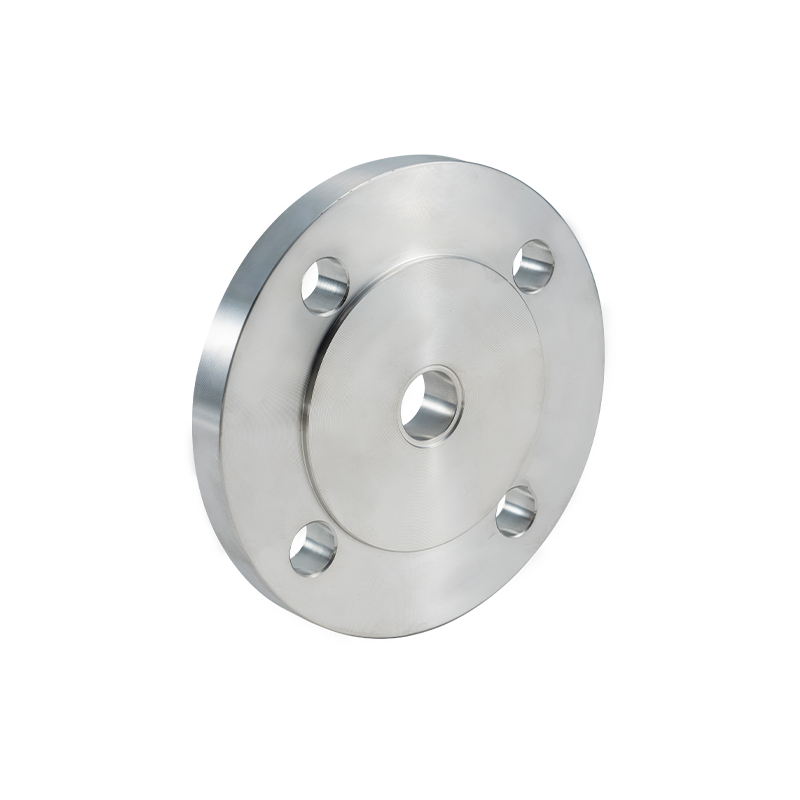
Blind flanges terminate piping systems or isolate equipment during maintenance. The raised face provides a precision-machined sealing surface for gasket compression.
Face finish specifications include:
- 125-250 microinch AARH (Arithmetic Average Roughness Height) for non-metallic gaskets
- 63-125 microinch AARH for spiral-wound gaskets
- 32-63 microinch AARH for ring-type joints
Blind flange functional comparison:
| Function | Blind Flange | Valve Isolation |
| Positive Isolation | Absolute (solid barrier) | Dependent on seat integrity |
| Pressure Testing | Ideal endpoint for hydrotest | Requires bypass or removal |
| Weight | High (solid forging) | Variable (valve type dependent) |
| Operation Speed | Slow (bolting/unbolting) | Rapid (quarter-turn or multi-turn) |
| Cost for Large Sizes | Moderate | Exponential with pressure class |
ANSI standard flanges blind raised face specifications require precise face machining and gasket compatibility verification. The solid construction withstands full system pressure from either direction, providing reliable isolation for vessel entry and pipeline segment maintenance.
4. Carbon Steel Material Grades: ansi standard flanges carbon steel a105
ASTM A105 specifies forged carbon steel piping components for ambient and elevated temperature service. The grade dominates industrial flange applications due to cost-effectiveness and mechanical reliability.
Chemical composition requirements:
- Carbon maximum 0.35% for weldability
- Manganese 0.60-1.05% for strength
- Silicon 0.10-0.35% for deoxidation
- Phosphorus and sulfur maximum 0.040% each
Manufacturing method comparison:
| Property | Forged ASTM A105 | Cast Equivalent |
| Grain Structure | Refined, directional | Random, potentially coarse |
| Internal Defects | Minimal (closed by deformation) | Porosity risk |
| Impact Toughness | High (20J at -29°C typical) | Variable, generally lower |
| Pressure-Temperature Rating | Full ASME B16.5 values | Derated 10-20% |
| Cost Per Pound | Baseline | 30-40% lower (but higher risk) |
ANSI standard flanges carbon steel a105 specifications require material test certificates verifying heat treatment and mechanical testing. Forged construction eliminates the internal porosity risks inherent in cast components, justifying the cost premium for critical services.
5. High-Pressure Socket Weld: ansi standard flanges socket weld 3000 psi
Socket weld flanges accommodate smaller diameter piping (typically 2 inches and below) in high-pressure applications. The socket bore receives the pipe end with fillet welding at the outer joint.
Pressure class equivalency:
- 3000 psi socket weld corresponds approximately to Class 600 and above
- 6000 psi socket weld corresponds to Class 1500
- 9000 psi socket weld corresponds to Class 2500
Small-bore connection comparison:
| Method | Socket Weld Flange | Threaded Flange |
| Pressure Integrity | High (welded barrier) | Moderate (thread seal dependent) |
| Fatigue Resistance | Good (smooth bore) | Poor (stress concentration at threads) |
| Installation Skill | Welding qualification required | Lower (pipe fitter skill) |
| Leak Potential | Weld defects only | Thread damage, sealant degradation |
| Size Range | 1/2 to 2 inches typical | 1/2 to 4 inches available |
The ansi standard flanges socket weld 3000 psi specification addresses instrument connections, sampling ports, and small-dore process lines where threaded connections risk fatigue failure under cyclic pressure or vibration.
Manufacturing Quality and Certification Standards
ISO 9001 and PED Compliance
Quality management systems ensure consistent production through documented procedures:
- Material traceability from mill test reports through final inspection
- Heat treatment records verifying austenitizing and normalizing cycles
- Dimensional inspection per ASME B16.5 tolerance tables
- Pressure testing at 1.5 times rated pressure for critical applications
In-House Manufacturing Capabilities
Jiangyin Zhonghai Precision Machinery maintains complete production integration:
- Forging presses up to 10,000 tons for large-diameter blanks
- Continuous heat treatment furnaces with atmosphere control
- CNC vertical lathes machining diameters to 4 meters
- Drilling centers executing bolt hole patterns with positional tolerance ±0.2mm
Global Standards and Customization Services
Multi-Standard Production Capability
Parallel manufacturing to international standards supports global project requirements:
- GB standards for Chinese domestic projects
- ASME/ASTM for North American and Middle Eastern markets
- JIS specifications for Japanese and Southeast Asian clients
- EN/DIN standards for European Economic Area compliance
Non-Standard and Engineered Solutions
Drawing-based manufacturing accommodates special requirements:
- Orifice flanges with meter run sections
- Long weld necks for vessel shell connections
- Compact flanges reducing weight and bolt load
Frequently Asked Questions
What bolt circle diameter differences exist between Class 150 and Class 300 flanges?
For a 6-inch nominal flange, Class 150 specifies 241.3mm bolt circle diameter with 8 bolts at 22.2mm diameter. Class 300 specifies 269.9mm bolt circle with 12 bolts at 25.4mm diameter. The larger bolt circle and increased bolt count accommodate higher gasket compression requirements for elevated pressure ratings. Existing Class 150 flanges cannot be upgraded to Class 300 by drilling additional holes due to insufficient outside diameter and thickness.
How do A105 and A350 LF2 materials compare for low-temperature applications?
ASTM A105 Charpy V-notch impact testing qualifies at -29°C minimum. ASTM A350 Grade LF2 specifies impact requirements at -46°C or -59°C depending on class. The LF2 grade costs 15-25% more but provides necessary toughness for refrigerated services and northern climate exposure. A105 ansi standard flanges carbon steel a105 specifications risk brittle fracture below -29°C.
What maximum pressure can slip-on flanges safely handle?
Class 150 slip-on flanges rate to 285 psi at ambient temperature but experience stress concentration factors 2.5 times higher than weld neck designs. Practical application limits often derate slip-on flanges to 150-200 psi in cyclic services. The ansi standard flanges 150 lb slip on configuration suits static, non-shock applications only.
How do raised face and ring-type joint sealing performances differ?
Raised face flanges compress flat or spiral-wound gaskets across broad contact areas, tolerating moderate surface finish variation. Ring-type joints require precision groove machining (±0.05mm) and metal-to-metal contact achieving seal through plastic deformation. RTJ connections withstand pressures exceeding 10,000 psi and temperatures above 500°C where conventional gaskets fail. Raised face connections dominate general process piping due to lower machining costs and gasket replacement simplicity.
What are minimum order quantities and sample policies?
Standard catalog flanges support orders from single pieces for maintenance requirements. Custom forgings require 500kg minimum material quantities for heat lot traceability. Sample flanges for qualification testing require purchase; dimensional reports and material certificates accompany standard deliveries at no additional cost. Jiangyin Zhonghai Precision Machinery maintains inventory of common sizes for rapid shipment.
Conclusion
Selecting appropriate ANSI standard flanges requires analysis of pressure-temperature conditions, piping dynamics, and material environments. Whether specifying ansi standard flanges 150 lb slip on for economy, ansi standard flanges weld neck schedule 40 for fatigue resistance, ansi standard flanges blind raised face for isolation, ansi standard flanges carbon steel a105 for standard service, or ansi standard flanges socket weld 3000 psi for high-pressure small bore, technical specifications determine system integrity.
Jiangyin Zhonghai Precision Machinery Co., Ltd. provides integrated manufacturing from forging through final inspection, supporting global energy and process industries with certified quality and dimensional capability to 4 meters diameter.
References
- American Society of Mechanical Engineers, ASME B16.5-2020, Pipe Flanges and Flanged Fittings: NPS 1/2 Through NPS 24 Metric/Inch Standard
- American Society of Mechanical Engineers, ASME B16.47-2017, Large Diameter Steel Flanges: NPS 26 Through NPS 60 Metric/Inch Standard
- American Society for Testing and Materials, ASTM A105/A105M-21, Standard Specification for Carbon Steel Forgings for Piping Applications
- American Society for Testing and Materials, ASTM A350/A350M-18, Standard Specification for Carbon and Low-Alloy Steel Forgings, Requiring Notch Toughness Testing for Piping Components
- European Committee for Standardization, EN 1092-1:2018, Flanges and their joints - Circular flanges for pipes, valves, fittings and accessories, PN designated - Part 1: Steel flanges
- International Organization for Standardization, ISO 9001:2015, Quality management systems - Requirements
 Previous