English
 中文简体
中文简体 Deutsch





Content
Industrial Piping Components
Carbon steel flanges are forged or cast metal components used to connect pipes, valves, pumps, and other equipment in piping systems. They provide a reliable, leak-proof joint that can be easily assembled and disassembled for maintenance, inspection, or system modification. Carbon steel flanges are widely used in industries such as oil and gas, petrochemical, power generation, shipbuilding, and water treatment.
Available in various types, pressure ratings, and face finishes, carbon steel flanges are designed to meet stringent industry standards including ASME, ANSI, DIN, and JIS specifications. Their strength, durability, and cost-effectiveness make them the preferred choice for high-pressure and high-temperature piping applications.
150# - 2500# Pressure ratings
1/2" - 48" Size range
ASME / ANSI / DIN / JIS Industry standards
What Are Carbon Steel Flanges
Carbon steel flanges are mechanical components used to connect sections of pipe or to attach pipe to other equipment such as valves, pumps, or pressure vessels. They are manufactured from carbon steel materials including A105, A350 LF2, and A694 F52 through forging or casting processes.
Carbon steel flanges provide a bolted connection that allows for easy assembly and disassembly. They are used in a wide range of industries, including oil and gas, chemical processing, power generation, shipbuilding, and water treatment. Their mechanical properties and cost-effectiveness make them the most commonly used flange material in industrial piping systems.
Material Grades A105, A350 LF2, A694 F52 Common carbon steel materials
Pressure Ratings 150# to 2500# Class designations per ASME B16.5
Size Range 1/2" to 48" Nominal pipe sizes
Flange Types Weld Neck, Slip-On, Blind, Socket Weld, Threaded Common configurations
Face Finishes Raised Face (RF), Flat Face (FF), Ring Type Joint (RTJ) Gasket sealing surfaces
Standards ASME B16.5, ASME B16.47, ANSI, DIN, JIS Industry specifications
Types of Carbon Steel Flanges
Carbon steel flanges are available in several configurations, each designed for specific applications and installation requirements:
01
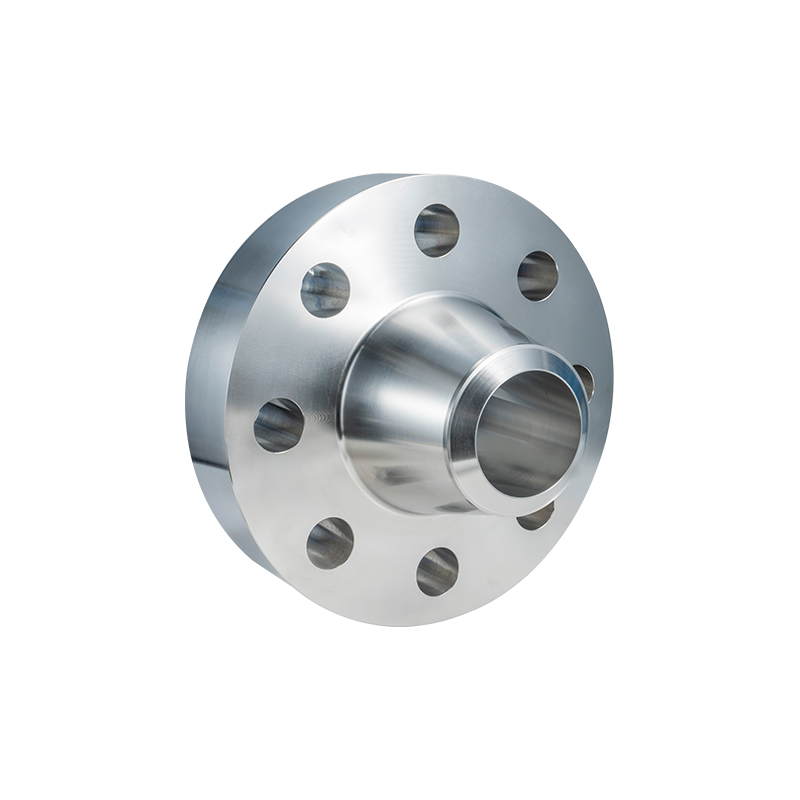
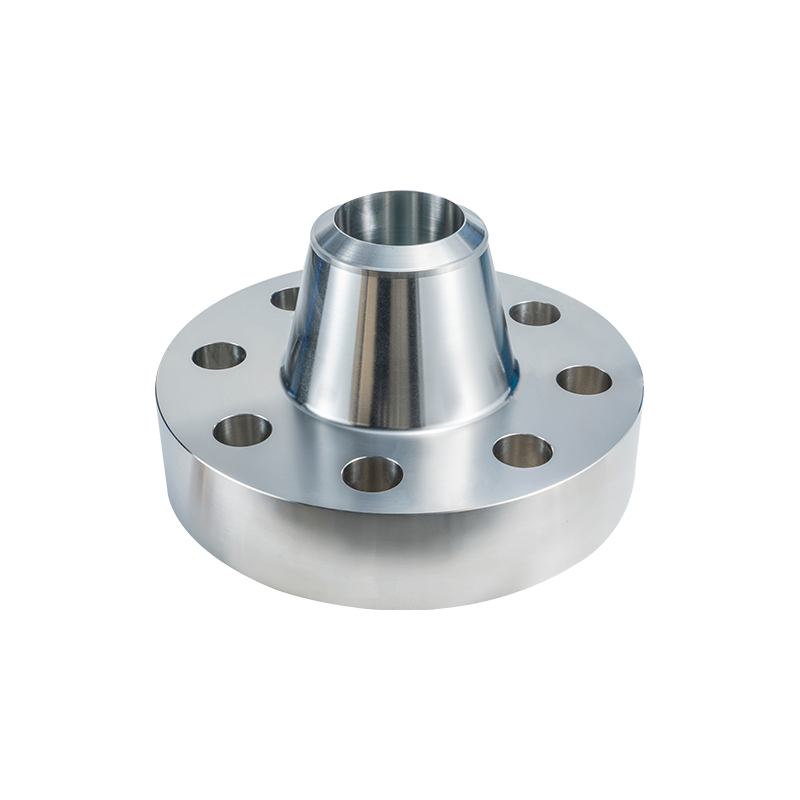
Weld Neck Flange
The weld neck flange features a long tapered hub that provides reinforcement and reduces stress concentration at the weld joint. Ideal for high-pressure and high-temperature applications where joint integrity is critical.
02
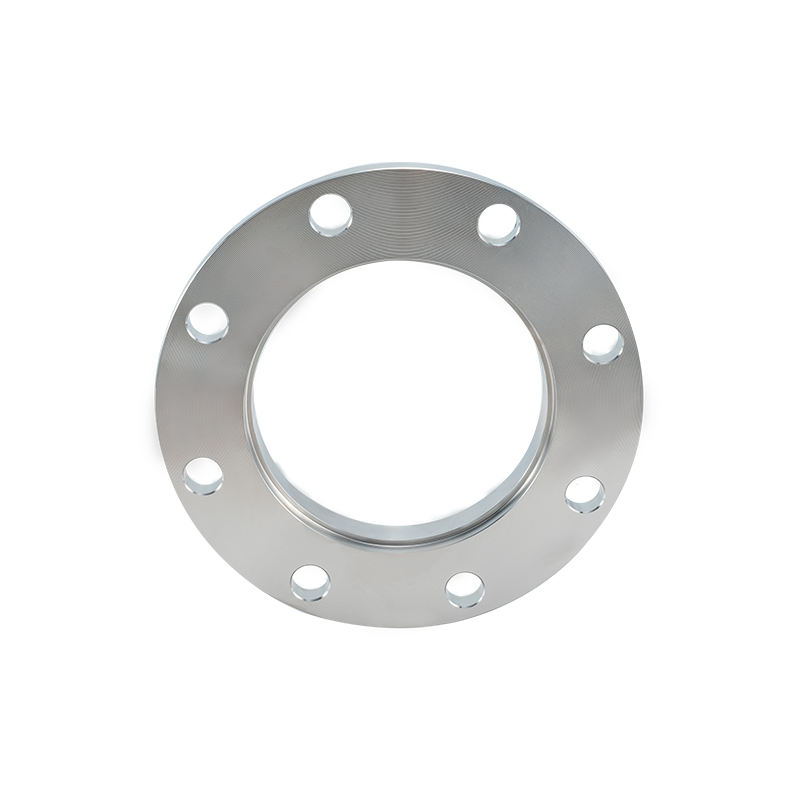
Slip-On Flange
Slip-on flanges slide over the pipe and are welded both inside and outside. They offer a simple, low-cost connection suitable for lower pressure applications and systems where alignment flexibility is needed.
03
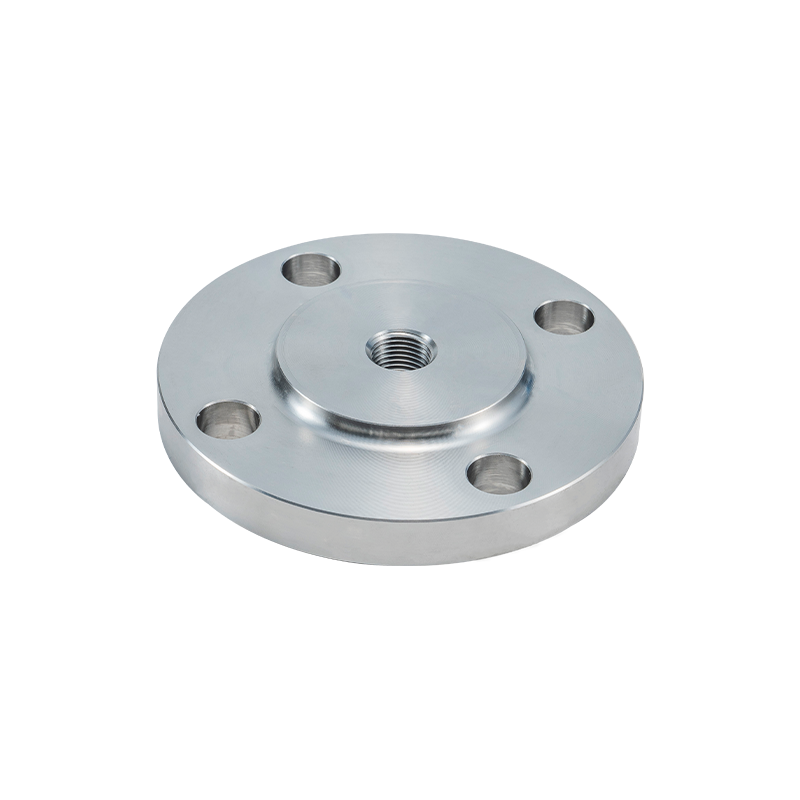
Blind Flange
Blind flanges are solid discs used to close the end of a piping system or pressure vessel opening. They provide access for inspection or maintenance and can withstand high pressures.
04
Socket Weld Flange
Socket weld flanges feature a socket recess that accepts the pipe, with a single fillet weld around the outside. They are suitable for small diameter, high-pressure piping systems.
05
Threaded Flange
Threaded flanges connect to pipe using tapered threads, eliminating the need for welding. They are used in applications where welding is not permitted or practical.
06
Lap Joint Flange
Lap joint flanges consist of two components: a stub end and a backing flange. They are used in systems where frequent disassembly is required and where alignment of bolt holes is critical.
Key Features and Benefits
Carbon steel flanges offer several advantages for industrial piping systems:
Strength High mechanical strength
Carbon steel flanges provide excellent tensile and yield strength, making them suitable for high-pressure applications up to 2500# ratings.
Strength Temperature resistance
Carbon steel flanges maintain their mechanical properties at elevated temperatures up to 450°C, making them suitable for high-temperature piping systems.
Installation Ease of assembly
Flanged connections allow for easy assembly and disassembly, simplifying maintenance, inspection, and system modifications without cutting or welding.
Installation Leak-proof sealing
Precision-machined sealing surfaces combined with appropriate gaskets provide reliable, leak-proof joints that meet industry standards.
Versatility Wide application range
Suitable for a broad range of industrial applications including oil and gas, chemical, power generation, shipbuilding, and water treatment.
Versatility Standardization
Manufactured to internationally recognized standards ensuring interchangeability, quality, and compatibility across different manufacturers and systems.
Flange Face Types
Raised Face (RF)
- Most common face type
- Features a raised sealing surface
- Compatible with most gaskets
- Suitable for 150# to 2500# ratings
Flat Face (FF)
- Flat sealing surface across the full flange
- Requires full-face gaskets
- Used with cast iron or non-metallic flanges
- Lower pressure applications
Ring Type Joint (RTJ)
- Features a machined groove for a metal ring gasket
- Provides a metal-to-metal seal
- Suitable for high-pressure, high-temperature
- Common in oil and gas, chemical plants
Applications and Industries
Carbon steel flanges are essential components in numerous industrial applications:
Oil and Gas
Pipeline connections, wellhead equipment, processing facilities, and offshore platforms requiring high-strength, reliable joints.
Chemical and Petrochemical
Process piping, reactor connections, heat exchanger systems, and storage tank piping requiring corrosion resistance and leak-proof seals.
Power Generation
Boiler connections, steam piping, turbine systems, and cooling water circuits requiring high-temperature and high-pressure performance.
Shipbuilding
Marine piping systems, ballast water systems, fuel transfer lines, and cooling systems on commercial and naval vessels.
Water and Wastewater
Pump connections, valve connections, treatment plant piping, and distribution network joints requiring durability and corrosion resistance.
HVAC and Utilities
Large-diameter piping connections, chiller systems, boiler room piping, and utility distribution networks.
Frequently Asked Questions
What is the difference between a weld neck and slip-on flange?
Weld neck flanges have a long tapered hub that provides reinforcement and reduces stress at the weld joint, making them suitable for high-pressure applications. Slip-on flanges slide over the pipe and are welded both inside and outside, offering a simpler and more cost-effective solution for lower pressure applications.
What do the pressure ratings (150#, 300#, 600#) mean?
The pressure ratings, also known as Class designations, indicate the maximum allowable working pressure at a specified temperature. Higher ratings (e.g., 2500#) correspond to higher pressure and temperature capabilities.
What is the difference between a raised face and a flat face flange?
A raised face flange has a raised sealing surface that concentrates pressure on the gasket, providing a more effective seal. A flat face flange has a flat sealing surface and is typically used with cast iron or non-metallic flanges.
Can carbon steel flanges be used in corrosive environments?
For corrosive environments, carbon steel flanges should be protected with coatings, linings, or cathodic protection. In highly corrosive applications, stainless steel or alloy flanges may be more suitable.
What is the difference between ASME B16.5 and ASME B16.47?
ASME B16.5 covers flanges up to 24" in diameter. ASME B16.47 covers larger flanges from 26" to 60" and is divided into two series: Series A and Series B.
What gasket materials are compatible with carbon steel flanges?
Common gasket materials include spiral wound, flexible graphite, PTFE, compressed fiber, and metallic gaskets. The selection depends on the service conditions and the specific application requirements.
Selecting the right carbon steel flanges requires careful consideration of pressure rating, flange type, and face finish.
Understanding the application requirements, industry standards, and material specifications ensures reliable and safe piping system performance.
 Previous