English
 中文简体
 Deutsch






Content
Industrial Piping Components
A bleed ring is a solid metal spacer with a tapped port, installed between two flanges to vent, drain, or sample a line. It is a small part with an outsized effect on maintenance access: a 2 in Class 150 ring with a 1/2 in NPT port turns a blind flange joint into a drain point without hot work or a new nozzle.
Procurement starts with four checks: port size, pressure class, material, and gasket face. The ring must match the flange interface: ASME B16.5 Class 150 through 2500, EN 1092-1, or JIS B2220. The tapped hole normally follows ASME B1.20.1 NPT. A ring that fits the bolt circle but has the wrong port orientation is still a rework item.
1/2 inCommon NPT port for drains and gauges
2500Highest ASME B16.5 class to match
2Gaskets required, one per ring face
Because bleed rings are often non-standard, confirm whether the supplier forges the ring or machines it from plate. A forged ring with continuous grain flow is preferred for high-pressure and cyclic service; a plate ring can be acceptable for low-pressure water and utility lines. Jiangyin Zhonghai Precision Machinery Co., Ltd., an ISO 9001 manufacturer with PED/TUV/TS qualifications, lists a 1/2 to 60 in size range and 10 t single-piece capacity, which covers standard and custom bleed ring work.
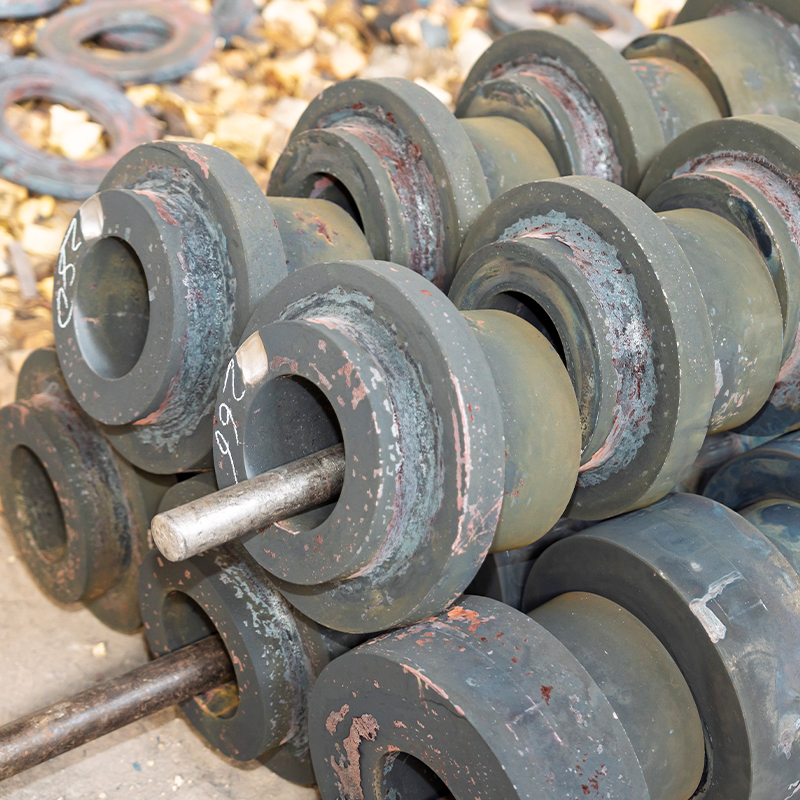 Non-Standard Forged Flanges and Custom Forged RingsCustom flanges and forged rings made to drawings, covering 1/2–60 in sizes and up to 10 t single pieces for non-standard bleed ring work.View Product →
Definition
A bleed ring is a flange-facing spacer with a radial tapped port. It is not a filter, an orifice plate, or a spectacle blind.
What a Bleed Ring Does in a Piping System
A bleed ring provides a controlled opening at a flange joint for venting, draining, sampling, or pressure indication.
At a high point, the port releases air or gas before hydrotest and during commissioning. At a low point, it drains condensate, cleaning fluid, or product before maintenance. On a sample point, a small valve and a closure plug turn the ring into a repeatable tap that does not disturb the main pipe run.
Because the ring sits between existing flanges, it adds only the gasket thickness, typically 1.5 mm to 3 mm per gasket, plus the ring thickness. The ring bore must match the pipe inside diameter. A stepped bore or protruding gasket can create a crevice and a corrosion point.
- High-point vent before hydrotest and start-up
- Low-point drain before maintenance or winter shutdown
- Sampling point with a small valve and closure plug
- Pressure gauge or transmitter tap on a process line
Ports are usually 1/4 in to 1 in NPT. A 1/2 in port is the practical default for drains and gauges because it passes common rod-out tools and accepts standard plugs. Smaller 1/4 in ports suit vents and gauges on small lines; 3/4 in and 1 in ports suit viscous fluids and faster sampling.
A bleed ring is a maintenance access point. If the port faces the wrong way, the ring has no value even when every dimension is correct.
Bleed Ring, Drip Ring, and Spectacle Blind: What Is the Difference?
A bleed ring is a tapped spacer, a drip ring is a similar tapped spacer used mainly for drainage, and a spectacle blind is a positive isolation device with a solid and an open leaf.
Bleed ring
Function: vent, drain, sample, or gauge. Port: 1/4 in to 1 in NPT. Operation: plug or small valve. Isolation: not a positive isolation device.
Spectacle blind
Function: full-bore isolation. Port: none. Operation: swing leaf. Isolation: yes, with a visible solid leaf in the line.
A drip ring and a bleed ring often look identical in a workshop. The difference is the service intent and the port detail: a drip ring is positioned at a low point to remove liquid; a bleed ring can be at a high point to remove gas. Neither replaces a spectacle blind or a blind flange for positive isolation.
Watch the port projection. A 1/2 in NPT plug plus a coupling can add 40 mm to 70 mm to the outside diameter. On a line with insulation or a nearby structural member, that projection becomes a clash. Check it on the general arrangement drawing before fabrication.
Positive isolation requires a blind flange, spectacle blind, or line blind. A bleed ring with a plug is not a lockout point.
Port Sizing, Pressure Class, and Material Selection
Match the ring pressure class and gasket face to the mating flanges, then choose the port and material from the service.
Pressure class follows the flange: ASME B16.5 Class 150, 300, 600, 900, 1500, or 2500. A Class 150 ring is not interchangeable with a Class 300 ring even when the bolt holes line up, because flange thickness and raised-face height differ. EN 1092-1 PN and JIS B2220 K ratings follow the same rule.
Typical bleed port by line size
NPS 1/2 to 1 1/21/4 in
NPS 2 to 61/2 in
NPS 8 to 123/4 in
NPS 14 and larger1 in
Typical practice for carbon steel and stainless lines; project specifications override.
Material selection follows the fluid, temperature, and external environment:
- Carbon steel A105 for utility steam, water, and non-corrosive hydrocarbon service
- Stainless steel F316/316L for chemical, coastal, and low-temperature service
- Duplex F55/F60 for chloride-bearing water and offshore atmospheres
- Nickel alloy for aggressive acids and high-temperature service
Choose gasket faces to match the mating flange: raised face, flat face, or ring joint. A ring joint bleed ring needs the correct groove and a matching gasket; a raised-face ring needs a soft gasket on both sides. For custom profiles, review the non-standard forged flange design checks before releasing the drawing.
| Material | Common grade | Typical service | Procurement note |
| Carbon steel | ASTM A105 | Utility steam, water, non-corrosive hydrocarbon | Confirm impact test for low temperature |
| Stainless steel | ASTM A182 F316L | Chemical, coastal, food processing | Specify low-carbon grade for welds |
| Duplex | ASTM A182 F55/F60 | Chloride water, offshore atmosphere | Confirm PREN and ferrite control |
| Nickel alloy | ASTM B564 | Aggressive acids, high temperature | Check lead time and mill certificate |
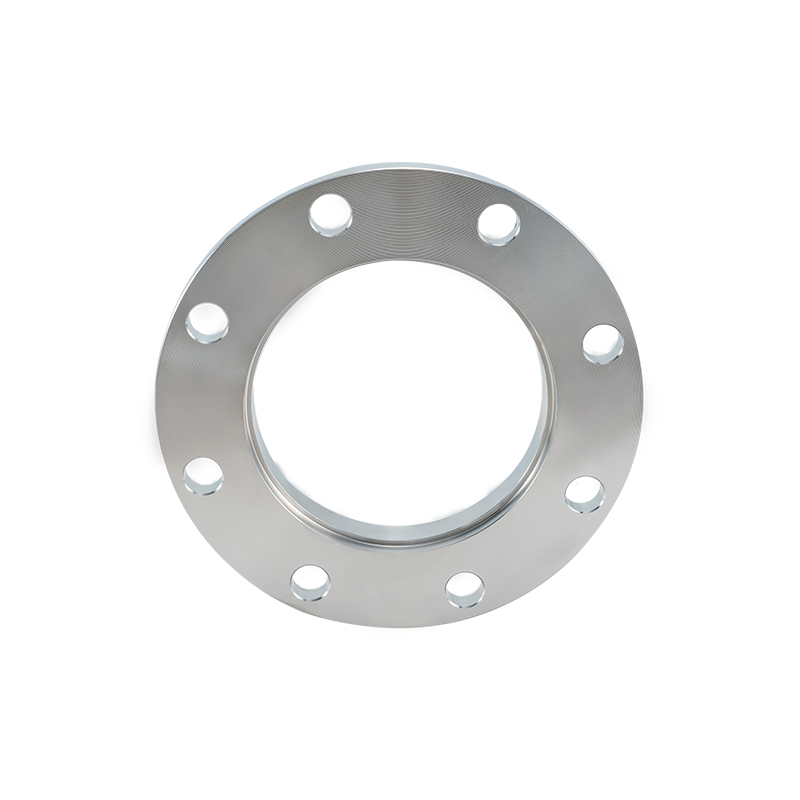 Custom A105 Carbon Steel Forged FlangesASTM A105 forged flanges in 1/2–60 in and Class 150–2500, with custom sizes and machining for pressure-system connection requirements.View Product →
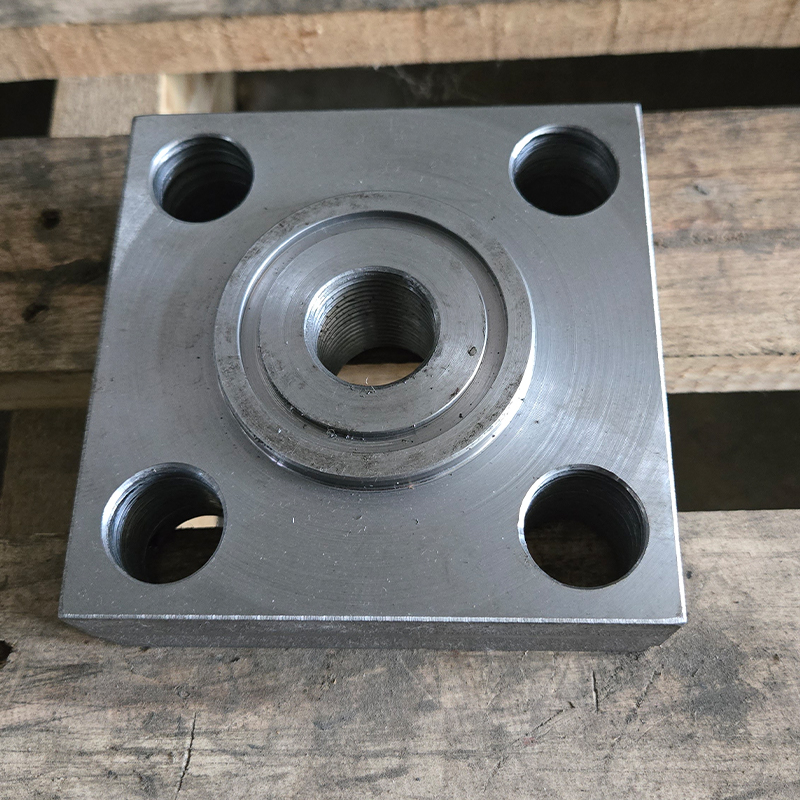 F316, 316L and 316Ti Stainless Steel FlangesForged stainless flanges in F316, F316L and F316Ti, 1/2–60 in and Class 150–2500, for corrosive and high-temperature piping connections.View Product →
A Class 150 ring and a Class 300 ring can share a bolt circle. They do not share a pressure rating or a gasket face.
Installation and Tightening Sequence
Install the bleed ring between two new gaskets, align the port to the required orientation, and tighten the joint in a cross pattern to ASME PCC-1.
Verify the tag and ring data
Confirm class, bore, port size, thread, and material against the line list and the mating flange drawing.
Set the port orientation
Point the port down at a low point for drain and up at a high point for vent. Keep it accessible for a plug or small valve.
Fit two gaskets
Use one gasket on each ring face. Match the gasket inside diameter to the bore and do not reuse a compressed gasket.
Lubricate and torque
Follow ASME PCC-1 for the bolt grade and lubricant. Tighten in a cross pattern at 30 percent, 60 percent, and 100 percent of target torque.
Fit the plug or valve
Use a rated plug or small valve. A 1/2 in NPT plug is not a pressure boundary until it is tightened to the plug manufacturer value and leak checked.
Pressure test the joint
Include the port in the ASME B31.3 hydrotest at 1.5 times design pressure, then check the plug and gasket faces for leaks.
The first common installation error is a ring installed with the port facing the pipe rack. The second is a single gasket. Use two.
Inspection, Testing, and Procurement Checks
A bleed ring must pass the same pressure test as the line and carry traceable material and port details.
Inspection should cover:
- Material certificate EN 10204 3.1 and heat number
- Dimensional check of bore, face-to-face, bolt circle, port size, and port position
- NDE if specified, such as PT or UT on the ring and port weld
- Hydrotest at 1.5 times design pressure per ASME B31.3
- Plug or valve leak check before shipment
Procurement should state the mating flange standard and class, the port size and thread standard, the gasket face and surface finish, and the required mill certificate. Confirm whether the ring is forged or plate, and check the grain flow direction on a forged ring. For petrochemical piping service, a 316L ring with a 1/2 in NPT port and a raised face is a common specification. On utility steam, A105 with a 3/4 in port may be preferred for drain capacity.
Do not accept a ring with a drilled port that breaks into the gasket face. The port must enter the bore, not the sealing surface.
Ordering Details That Decide Fit
A correct bleed ring order is a flange order plus a port specification: standard, class, size, face, material, port, thread, and orientation.
What is the standard port size for a bleed ring?
A 1/2 in NPT port is the practical default for drains and gauges on line sizes from NPS 2 to NPS 12. Use 1/4 in NPT for small vents and 3/4 to 1 in NPT for viscous fluids. Confirm the thread against ASME B1.20.1 and the project specification.
Can a bleed ring be used for positive isolation?
No. A bleed ring with a plug is a maintenance access point, not a positive isolation device. Use a blind flange, spectacle blind, or line blind for isolation, and follow lockout procedures.
What pressure class should a bleed ring have?
Use the same ASME B16.5 or EN 1092-1 class as the mating flanges. A Class 150 ring is rated for Class 150 service only. A Class 300 ring has different thickness and face dimensions even when the bolt circle is the same.
How many gaskets does a bleed ring need?
Two. One gasket fits between the ring and each mating flange. Reusing a gasket or installing a single gasket creates a leak path and is a common cause of joint failure.
Write the order as a line item, not a sketch: standard, class, size, face, material, port, thread, and orientation.
 Previous