English
 中文简体
中文简体 Deutsch





Content
- 1 Understanding Carbon Steel Flange Fundamentals
- 2 Material Specifications and Grades
- 3 Flange Types and Design Configurations
- 4 Dimensional Standards and Classifications
- 5 Pressure-Temperature Ratings
- 6 Selection Methodology for B2B Procurement
- 7 Installation and Quality Considerations
- 8 Frequently Asked Questions
- 8.1 What is the difference between ASTM A105 and A105N carbon steel flanges?
- 8.2 How do I convert between ANSI B16.5 flange dimensions and DIN/EN standards?
- 8.3 What carbon steel flange pressure rating do I need for 20 bar steam service at 300°C?
- 8.4 When should I specify carbon steel weld neck flanges versus slip-on flanges?
- 9 References
Engineers and procurement specialists face critical decisions when specifying carbon steel flanges for industrial piping systems. These mechanical components connect pipes, valves, pumps, and equipment while maintaining pressure integrity and enabling maintenance access. Understanding material specifications, dimensional standards, and pressure-temperature ratings ensures safe and compliant system design across oil and gas, petrochemical, power generation, and water treatment applications.
Understanding Carbon Steel Flange Fundamentals
Carbon steel flanges serve as connection points in piping infrastructure, manufactured primarily through forging processes to achieve grain structure alignment and mechanical strength. The material composition typically includes carbon content up to 0.35%, manganese for strength enhancement, and controlled silicon levels for deoxidation. These flanges accommodate pipe sizes from 15mm (½ inch) nominal diameter to 2000mm (80 inch) in large-diameter applications.
The manufacturing process involves heating carbon steel billets to forging temperatures, then forming them under mechanical pressure to achieve the required geometries. Subsequent machining operations create sealing faces, bolt holes, and hub configurations. Heat treatment—normalising, quenching and tempering, or annealing—optimises mechanical properties for specific service conditions.
Material Specifications and Grades
Material selection directly influences flange performance under pressure and temperature extremes. The most common specification for carbon steel flanges is ASTM A105, which covers forged carbon steel piping components for ambient and high-temperature service. This specification ensures ma inimum tensile strength of 485 MPa (70 ksi) and a yield strength of 250 MPa (36 ksi) with 22% minimum elongation.
The following table compares common carbon steel flange materials and their service characteristics:
<td≥250 MPa
| Material Specification | ASTM Standard | Tensile Strength | Yield Strength | Temperature Range | Primary Applications |
| A105 | ASTM A105 | ≥485 MPa | ≥250 MPa | -29°C to 425°C | General industrial, oil and gas |
| A105N (NNormalised | ASTM A105 | ≥485 MPa | ≥250 MPa | -29°C to 425°C | Improved grain structure |
| A350 LF2 Class 1 | ASTM A350 | ≥485 MPa | -46°C to 343°C | Low temperature service | |
| A350 LF2 Class 2 | ASTM A350 | ≥485 MPa | ≥260 MPa | -46°C to 343°C | Cryogenic applications |
| A694 F52-F70 | ASTM A694 | ≥455-585 MPa | ≥360-485 MPa | -29°C to 260°C | High-yield transmission |
ASTM A105 Forged Carbon Steel
ASTM A105 carbon steel flange material represents the industry standard for general piping applications. The specification permits castings equivalent to ASTM A216 Grade WCB for certain blind flange configurations. Carbon content up to 0.35% provides excellent machinability and weldability while maintaining sufficient strength for pressure classes through Class 2500.
The material exhibits a melting point of approximately 1420°C (2590°F) and Brinell hardness between 137-187 HBW. These properties ensure compatibility with standard cutting, drilling, and welding operations while providing adequate wear resistance for bolted connections
ASTM A350 LF2 Low Temperature
Applications below -29°C require ASTM A350 LF2 material to prevent brittle fracture. This specification mandates impact testing at specified temperatures to verify notch toughness. Class 1 provides standard low-temperature capability, while Class 2 offers enhanced properties for severe cryogenic service .
Heat Treatment Requirements
ASTM A105 flanges require no heat treatment except under specific conditions: flanges above Class 300, special design flanges with unknown pressure or temperature parameters, or flanges exceeding 4 inches NPS in Class 300 and above. When required, heat treatment options include annealing, nonormalisingnormalizing and tempering, or quenching and tempering to achieve specified mechanical properties.
Flange Types and Design Configurations
Flange geometry selection depends on piping system requirements, pressure class, and maintenance considerations. Each type offers distinct advantages for specific applications, from high-pressure weld neck configurations to economical slip-on designs [^74^].
The following comparison table outlines characteristics of major flange types:
| Flange Type | Connection Method | Pressure Capability | Fatigue Resistance | Installation Complexity | Primary Applications |
| Weld Neck | Butt weld | Class 150-2500 | Excellent | High (requires welding) | Critical process, high pressure |
| Slip-On | Fillet weld (inside/outside) | Class 150-2500 | Moderate | Low (easy alignment) | General service, waterworks |
| Blind | Bolted only | Class 150-2500 | N/A (closure) | Low | Line termination, isolation |
| Socket Weld | Socket fillet weld | Class 150-1500 | Good | Moderate | Small diameter, high pressure |
| Threaded | NPT connection | Class 150-600 | Limited | Low (no welding) | Non-welded applications |
| Lap Joint | Butt weld (stub end) | Class 150-2500 | Moderate | Moderate | Frequent dismantling required |
Weld Neck Flanges
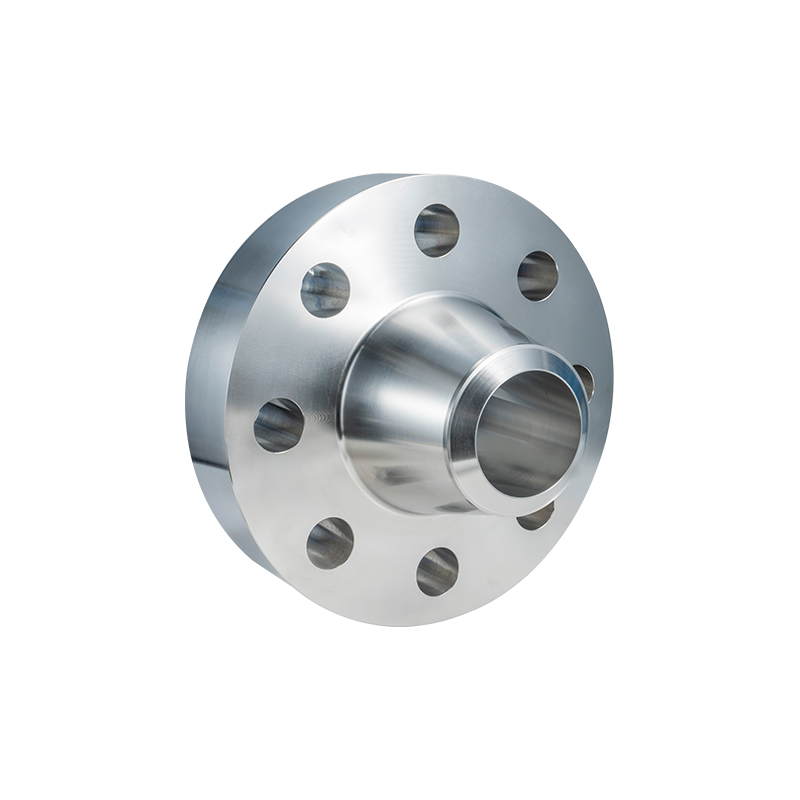
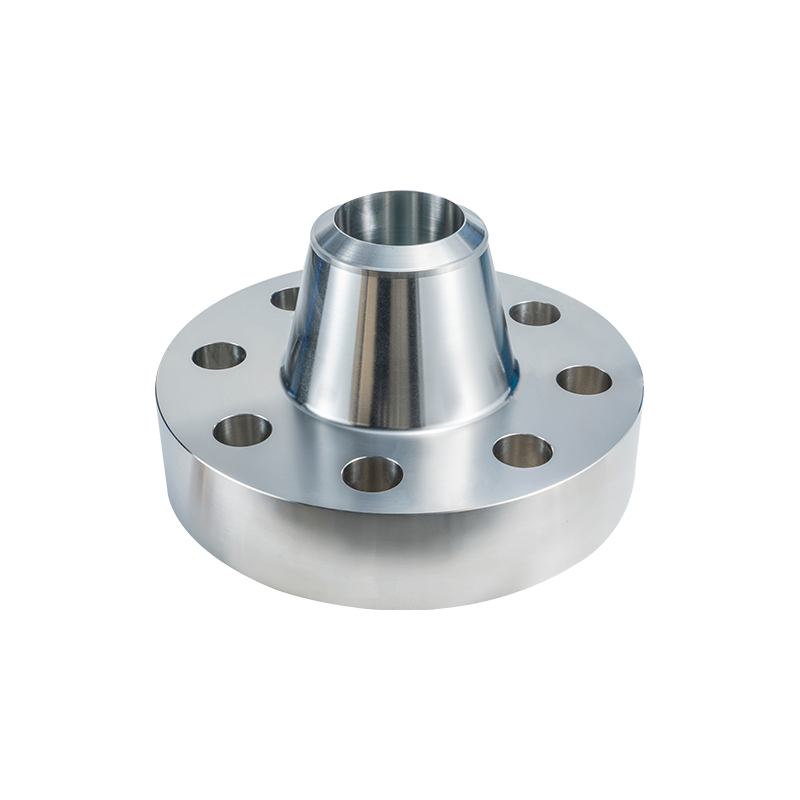
Carbon steel weld neck flange configurations provide the highest structural integrity for demanding applications. The tapered hub design matches pipe wall thickness, distributing stresses gradually and eliminating sharp discontinuities. Butt welding creates full-penetration joints with strength equivalent to the base pipe. These flanges dominate critical process piping, high-pressure steam systems, and hydrocarbon service where reliability is paramount
Slip-On Flanges
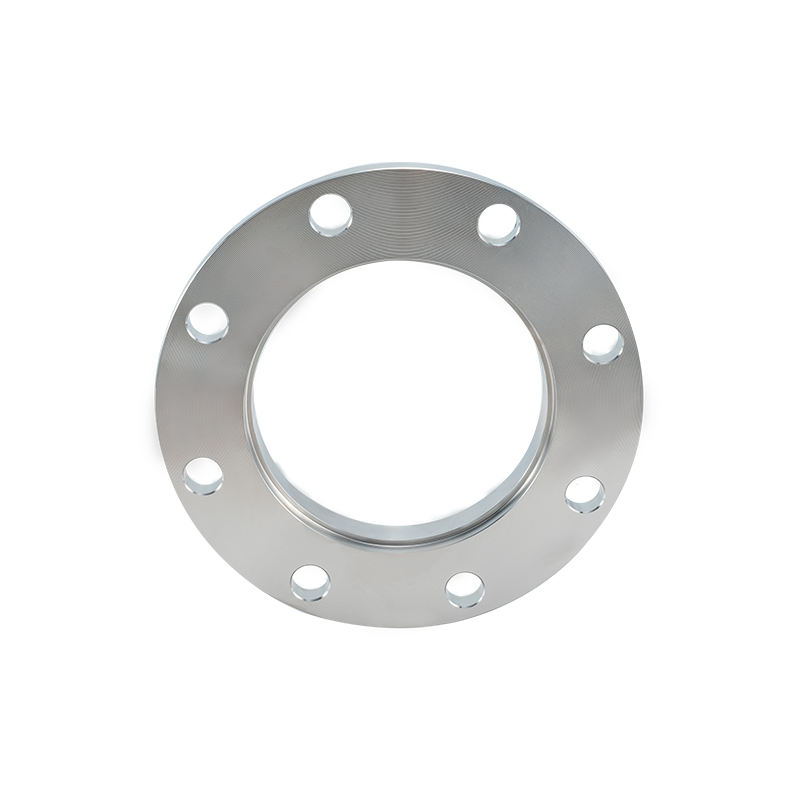
Slip-on flanges slide over the outer diameter of the pit and secure with fillet welds at both inner and outer flange faces. This design simplifies alignment and reduces installation time, making it cost-effective for general industrial and waterworks applications. However, the double-weld requirement and lower fatigue resistance compared to weld neck designs limit suitability for cyclic service or severe pressure fluctuations [^74^].
Blind Flanges
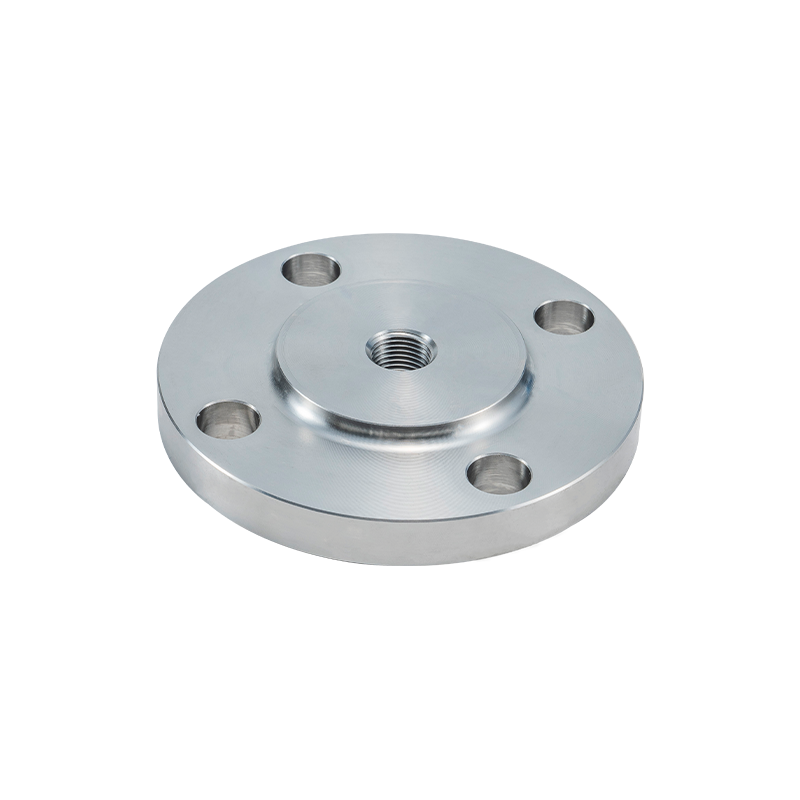
Blind flanges serve as solid closures for piping terminations, vessel nozzles, and isolation points. These disk-shaped components without centre bores withstand full system pressure and facilitate hydrostatic testing. Raised face or ring-type joint configurations ensure proper gasket seating. Blind flanges are easily removed for future line extensions or maintenance access.
Socket Weld and Threaded Flanges
Socket weld flanges accommodate smaller diameter pipes (typically NPS 2 and below) through internal sockets that accept pipe insertion. Fillet welding at the hub outer diameter creates pressure-tight joints suitable for high-pressure, small-bore applications. Threaded flanges feature internal NPT threads for non-welded connections, commonly specified in hazardous locations where welding poses ignition risks
Application Matching
High-pressure hydrocarbon processing demands weld neck configurations for structural integrity. Water treatment and HVAC systems utilise slip-on flanges for economy. Maintenance-intensive operations benefit from lap joint flanges with replaceable stub ends. Specification engineers must evaluate pressure cycling, temperature transients, and inspection requirements when selecting flange types.
Dimensional Standards and Classifications
Global flange standards ensure interchangeability and compliance across international projects. The two predominant systems are ASME/ANSI B16.5 for North American markets and EN 1092-1/DIN for European applications.
The following table compares major dimensional standards:
| Standard | Size Range | Pressure Designation | Flange Types Covered | Geographic Prevalence |
| ASME B16.5 | NPS ½" to 24" | Class 150-2500 | WN, SO, BL, SW, TH, LJ | North America, Global oil/gas |
| ASME B16.47 | NPS 26" to 60" | Class 75-900 | WN, BL | Large diameter pipelines |
| EN 1092-1 | DN 10 to DN 4000 | PN 2.5 to PN 400 | Type 01, 02, 05, 11, 12, 13 | Europe, International projects |
| DIN 2631-2638 | DN 10 to DN 4000 | PN 6 to PN 100 | Welding neck, slip-on, blind | Germany, Legacy systems |
| JIS B2220 | 10A to 1500A | 5K, 10K, 16K, 20K, 30K, 40K | SO, BL, WN | Japan, Asia-Pacific |
ASME/ANSI B16.5 Standards
ANSI B16.5 flange dimensions define the most widely specified flange geometry globally. The standard covers sizes from ½ inch through 24 inches nominal pipe size across pressure classes 150 through 2500. Each class designation represents a specific combination of outside diameter, bolt circle diameter, number of bolts, and flange thickness
Key dimensional parameters include:
- Outside diameter (OD): Total flange outer dimension
- Bolt circle diameter (PCD): Centerline spacing of bolt holes
- Number and diameter of bolt holes
- Flange thickness: Minimum required material thickness
- Hub dimensions: Length and taper for weld neck configurations
- Raised face height: 2mm for Class 150, 7mm for Class 300 and above
EN 1092-1 and DIN Standards
European standards utilise (Pressure Nominal) designations rather than Class ratings. PN16 carbon steel flange specifications represent the most common European pressure class, approximately equivalent to ANSI Class 150. The EN 1092-1 standard consolidates previous DIN, NF, and BS standards into a unified European norm.
Type designations under EN 1092-1 include:
- Type 01: Plate (slip-on) flanges for welding
- Type 11: Weld neck flanges
- Type 12: Hubbed slip-on flanges
- Type 13: Threaded flanges
- Type 05: Blind flanges
PN vs Class Rating Equivalents
While direct equivalence between PN and Class systems is approximate, the following relationships guide specification: PN6 corresponds to Class 75, PN10/16 to Class 150, PN25/40 to Class 300, PN63 to Class 600, and PN100 to Class 900. Engineers should verify exact pressure-temperature ratings rather than relying on nominal equivalencies.
Pressure-Temperature Ratings
Pressure class ratings define maximum allowable working pressures at reference temperatures, with derating required for elevated service conditions. These ratings ensure flange integrity under combined mechanical and thermal loading
The following table presents pressure-temperature ratings for ASTM A105 carbon steel flanges:
| ASME Class | Pressure at 100°F (psig) | Pressure at 400°F (psig) | Pressure at 800°F (psig) | Maximum Temperature |
| 150 | 285 | 200 | 80 | 538°C |
| 300 | 740 | 635 | 410 | 538°C |
| 400 | 985 | 845 | 550 | 538°C |
| 600 | 1480 | 1265 | 825 | 538°C |
| 900 | 2220 | 1900 | 1235 | 538°C |
| 1500 | 3705 | 3170 | 2055 | 538°C |
| 2500 | 6170 | 5280 | 3430 | 538°C |
Class 150 Through Class 2500 Ratings
Carbon steel flange pressure rating selection requires analysis of maximum operating pressure and temperature. Class 150 suits low-pressure water systems and general industrial piping up to 285 psig at ambient conditions. Class 300 accommodates moderate pressures to 740 psig for process piping and compressed air. High-pressure hydrocarbon service requires Class 600 (1480 psig) or higher. Ultra-high-pressure applications i, including reactor nozzles, specify Class 1500 or 2500.
Temperature Derating Factors
Allowable pressure decreases significantly as operating temperature increases. At 800°F (427°C), a Class 300 ASTM A105 flange retains only 55% of its ambient pressure rating. This derating reflects the reduction in material yield strength at elevated temperatures. System designers must specify flanges based on actual operating conditions rather than nominal class ratings.
Material Group Classifications
ASME B16.5 organises materials into groups with specific pressure-temperature tables. Carbon steels, including ASTM A10,5 fall into Material Group 1.1. Low-alloy steels occupGroupsup 1.2 through 1.18, while stainless steels populate Groups 2.1 through 2.12. Each group exhibits distinct strength-temperature relationships requiring specific rating tables
Selection Methodology for B2B Procurement
Calculating System Requirements
Proper flange specification requires the determination of design pressure, design temperature, pipe material, and external loading. The design pressure must exceed the maximum operating pressure by appropriate safety margins. Temperature considerations include both continuous operation and transient conditions during startup or upset scenarios. Corrosion allowances may require thicker flanges than standard dimensions.
Face Type Selection (RF, FF, RTJ)
Sealing face configuration affects gasket selection and pressure capability. Raised Face (RF) is the standard configuration for general service, providing 2-7mm raised seating surfaces. Flat Face (FF) suits low-pressure applications with full-face gaskets. Ring-Type Joint (RTJ) employs precision-machined grooves for metal ring gaskets in high-pressure, high-temperature service where conventional gaskets would fail.
Installation and Quality Considerations
Bolting and Gasket Requirements
Proper bolting procedures ensure flange joint integrity. ASME PCC-1 guidelines specify bolting sequence, torque values, and retightening procedures. Gasket selection must match flange face finish, pressure class, and process fluid compatibility. Spiral-wound gaskets suit RF flanges in most industrial applications, while RTJ grooves require matching oval or octagonal ring gaskets
Inspection and Testing Standards
Quality verification includes dimensional inspection per ASME B16.5, material certification to ASTM specifications, and non-destructive testing for critical applications. Hydrostatic testing at 1.5 times design pressure validates system integrity. Documentation packages should include material test certificates (MTC), heat treatment records, and NDE reports per EN 10204 3.1 or 3.2 .
Frequently Asked Questions
What is the difference between ASTM A105 and A105N carbon steel flanges?
ASTM A105N indicates nonormalisedeat treatment, while standard A105 may be supplied in the as-forged condition. Normalising refines grain structure, improves mechanical properties uniformity, and enhances toughness. A105N is required for flanges above Class 300, special design flanges, or any flange exceeding 4 inches NPS in Class 300 and above. The "N" designation ensures consistent properties throughout the component and is recommended for applications involving temperature cycling or impact loading.
How do I convert between ANSI B16.5 flange dimensions and DIN/EN standards?
Direct dimensional interchangeability between ANSI B16.5 and EN 1092-1 flanges is limited. While PN16 approximates Class 150 and PN40 approximates Class 300, bolt circle diameters, bolt sizes, and flange thicknesses differ. A Class 150 flange cannot be bolted to a PN16 flange even at equivalent pressure ratings. Projects requiring mixed standards must specify transition flanges or complete system sstandardisation For new construction, ANSI B16.5 dominates North American and global oil/gas projects, while EN 1092-1 prevails in European water treatment and general industrial applications.
What carbon steel flange pressure rating do I need for 20 bar steam service at 300°C?
At 300°C (572°F), ASTM A105 flanges require significant derating from ambient ratings. Class 150 is rated for approximately 140 psig (9.7 bar) at this temperature—insufficient for 20 bar service. Class 300 retains approximately 550 psig (38 bar) capability at 300°C, providing adequate margin for 20 bar operating pressure with appropriate safety factors. Class 300 weld neck flanges with raised faces and spiral-wound gaskets represent the minimum specification. For critical steam service, consider Class 600 for additional margin against pressure transients and long-term creep effects
When should I specify carbon steel weld neck flanges versus slip-on flanges?
Weld neck flanges are mandatory for high-pressure, high-temperature, or cyclic service applications. The tapered hub provides stress distribution equivalent to the pipe itself, eliminating the stress concentration inherent in slip-on designs. Specify weld neck for Class 600 and above, steam systems above 10 bar, hydrocarbon service with pressure cycling, and any application requiring fatigue resistance. Slip-on flanges suit general water service, low-pressure air systems, and applications where installation economy outweighs fatigue concerns. The butt weld joint of weld neck flanges also enables full radiographic inspection, while slip-on fillet welds offer limited NDE options.
References
- API International. (2026). ANSI / ASME Flange Pressure Ratings: Class 150 to 2500. API International Technical Documentation.
- API International. (2025). Slip-On vs Blind Flanges: What's the Difference? API International Flange Guide.
- Ramesh Group. (2025). ASTM A105 Flange | SA105 Blind/ Slip On Flanges Pressure Rating. Ramesh Group Technical Specifications.
- Ramesh Group. (2025). DIN Flange Dimensions in PN6, PN10, PN16, PN25,PN400. Ramesh Group Engineering Data.
- Baowi Steel. (2025). ASTM A105 Flange Standard Specification. Baowi Steel Technical Resources.
- HU Steel. (2026). ASTM A105 Pipe Flange. HU Steel Industry News.
- AFLange Manufacturing. (2025). Carbon Steel A105 ANSI B16.5 Flange Specifications. AFLange Manufacturing Product Data.
 Previous