English
 中文简体
中文简体 Deutsch





Content
- 1 What Are Flanges and What Do They Do
- 2 Where Carbon Steel Flanges Are Used
- 3 Low Carbon Steel vs High Carbon Steel: Which Grade for Flanges
- 4 Alloy Steel vs Carbon Steel Flanges: A Direct Comparison
- 5 Carbon Steel vs Stainless Steel Flanges: The Real Trade-Offs
- 6 Key Material Standards and Grades at a Glance
Quick Answer
Carbon steel flanges are mechanical pipe connectors made from iron-carbon alloy, used to join, seal, and control flow in piping systems across oil and gas, petrochemical, water treatment, and structural industries. They are selected for their high tensile strength, pressure tolerance, cost efficiency, and machinability — properties that stainless steel and alloy flanges cannot match at the same price point.
01
What Are Flanges and What Do They Do
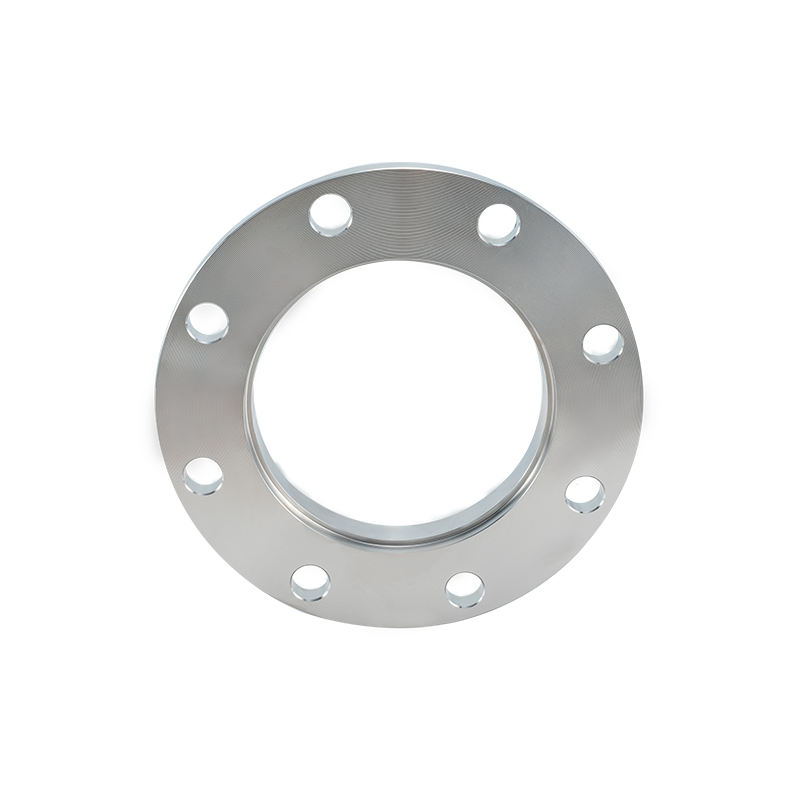
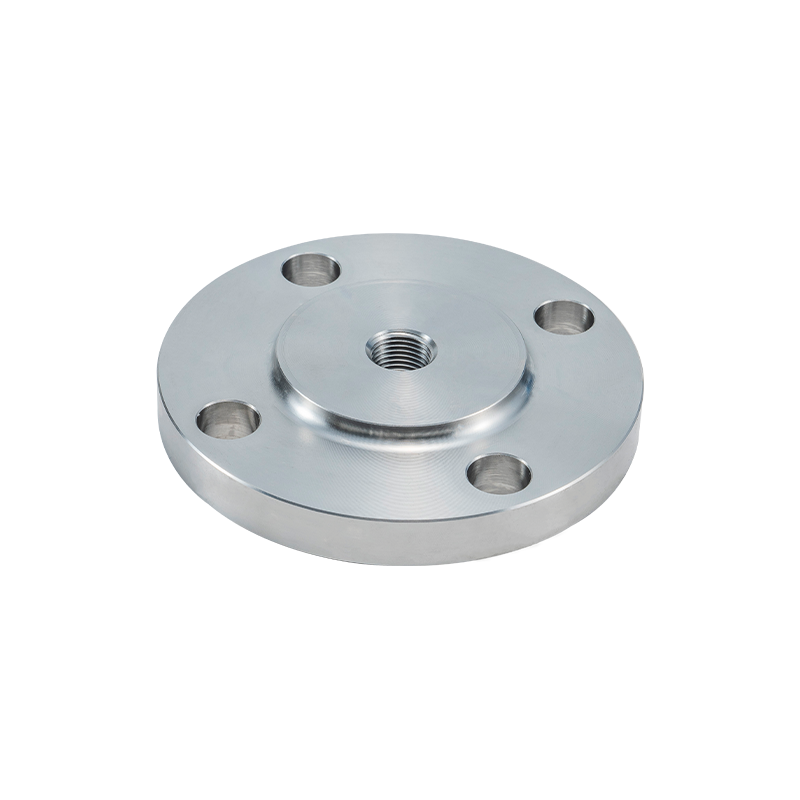
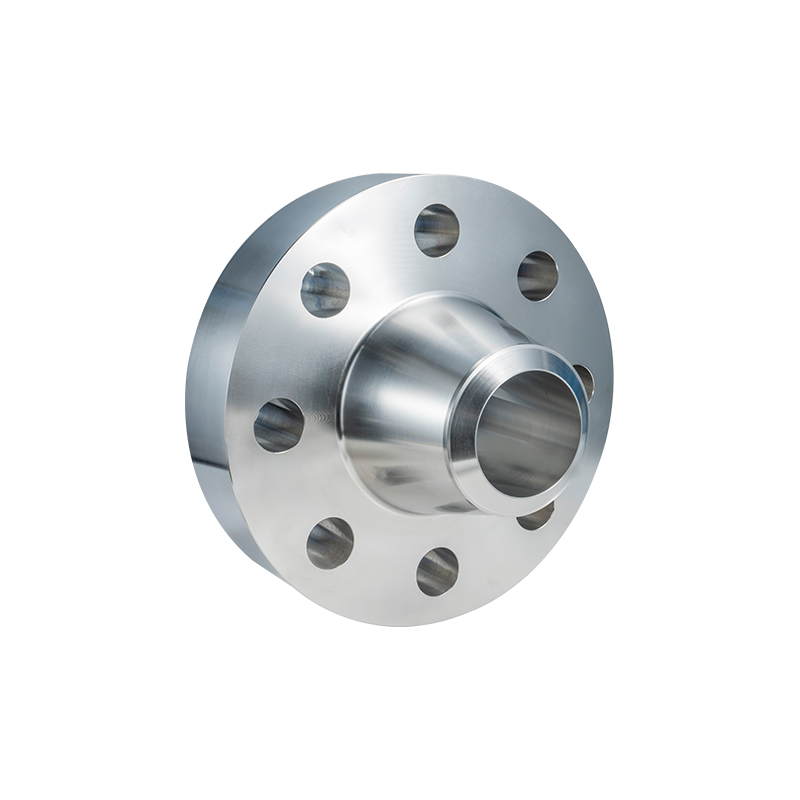
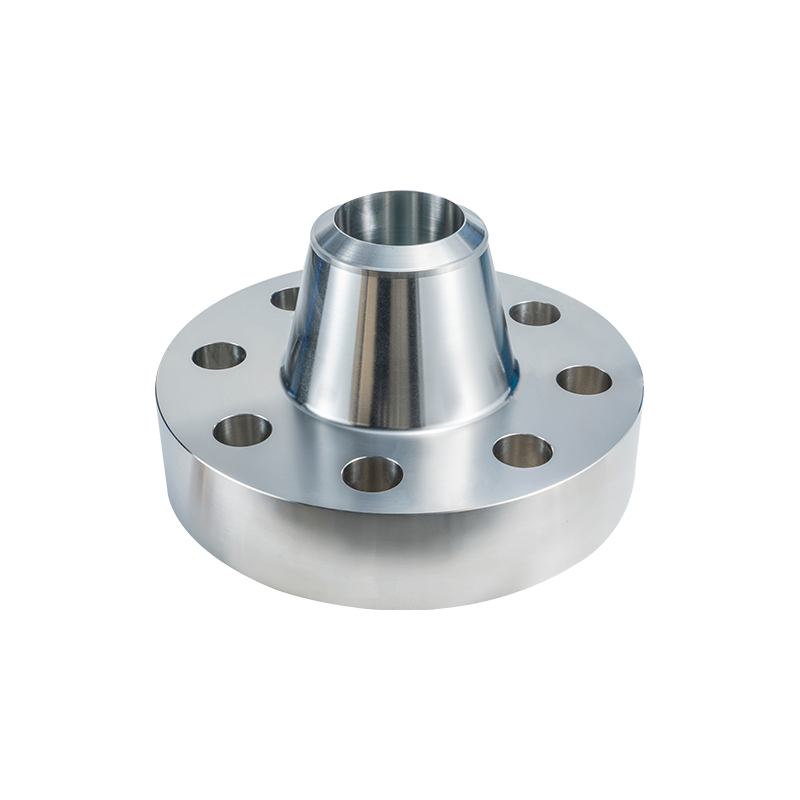
A flange is a flat, disc-shaped mechanical component with bolt holes around its circumference. It is welded, threaded, or slipped onto the end of a pipe, valve, pump, or equipment nozzle, then bolted face-to-face with a mating flange — typically with a gasket seated between them — to form a sealed, pressure-resistant joint.
Flanges serve four core functions in any piping system:
- Joining sections of pipe without permanent welding, allowing disassembly for inspection or replacement
- Connecting pipes to valves, pumps, and instruments at transition points
- Sealing against leaks under high pressure and temperature through bolted gasket compression
- Providing access points for maintenance, cleaning, or modification of pipelines
The most common flange types by geometry are: Weld Neck (WN), Slip-On (SO), Socket Weld (SW), Blind, Lap Joint, and Threaded. Each type is engineered for specific pressure ratings, pipe sizes, and installation requirements defined by standards such as ASME B16.5, ASME B16.47, and EN 1092-1.
02
Where Carbon Steel Flanges Are Used
Carbon steel flanges are specified wherever a piping system requires high mechanical strength without the premium cost of corrosion-resistant alloys. Their operating range typically covers temperatures from -29 degrees C to 425 degrees C and pressure classes from 150 to 2500 LB under ASME B16.5.
| Industry | Typical Application | Common Standard |
|---|---|---|
| Oil and Gas | Wellhead pipelines, refinery process lines | ASME B16.5 / API 6A |
| Petrochemical | Hydrocarbon transfer, reactor feed lines | ASME B16.5 |
| Power Generation | Steam lines, boiler feed water systems | ASME B16.47 |
| Water Treatment | Distribution mains, pump stations | EN 1092-1 / AWWA |
| Structural / Construction | Column base plates, structural beam connections | ASTM A105 / A694 |
| Shipbuilding | Ballast systems, engine room piping | DNV / Lloyd's |
In oil and gas alone, carbon steel accounts for over 70% of all flanges used in onshore pipeline systems, according to industry procurement surveys. The combination of ASTM A105 (forged) and ASTM A234 WPB (fittings-grade) remains the most widely specified carbon steel material designation globally.
03
Low Carbon Steel vs High Carbon Steel: Which Grade for Flanges
Carbon content — expressed as a percentage by weight — is the defining variable in carbon steel performance. Flanges are not made from a single grade; the right carbon level depends on the mechanical demands and fabrication method required.
| Classification | Carbon Content | Tensile Strength | Weldability | Flange Use Case |
|---|---|---|---|---|
| Low Carbon Steel | Less than 0.30% | 400 – 550 MPa | Excellent | Slip-on, socket weld, low-pressure systems |
| Medium Carbon Steel | 0.30% – 0.60% | 550 – 850 MPa | Good (preheat required) | Weld neck, high-pressure forged flanges (ASTM A105) |
| High Carbon Steel | 0.60% – 1.00% | 850 MPa+ | Poor (prone to cracking) | Rarely used for flanges; limited to specialty tooling |
ASTM A105, the dominant forged carbon steel flange material, falls in the medium carbon range with a maximum carbon content of 0.35% and a minimum tensile strength of 485 MPa. This balance between strength and weldability is precisely why it dominates pressure-class flange procurement from Class 150 through Class 2500.
Low carbon grades such as ASTM A516 Gr.70 are preferred where welding is frequent and post-weld heat treatment must be minimized — common in pressure vessel and storage tank flange connections. High carbon steel is virtually absent from standard flange specifications due to its brittleness under impact loading and its high susceptibility to heat-affected zone cracking during welding.
04
Alloy Steel vs Carbon Steel Flanges: A Direct Comparison
Alloy steel flanges incorporate additional alloying elements — chromium, molybdenum, vanadium, nickel — beyond the baseline iron-carbon composition. These additions are not cosmetic; they unlock performance envelopes that carbon steel cannot reach.
Carbon Steel Flanges
- Operating temp up to 425 degrees C (ASTM A105)
- Lower material cost — typically 40% to 60% cheaper than alloy equivalents
- Excellent machinability and weldability
- Susceptible to oxidation and corrosion without protective coatings
- Suitable for most ambient to moderate-temperature services
Alloy Steel Flanges
- Operating temp up to 650 degrees C+ (Cr-Mo grades such as ASTM A182 F11, F22)
- Higher creep resistance under prolonged elevated temperature
- Better resistance to hydrogen embrittlement in refinery service
- Significantly higher cost and longer lead times
- Required for high-temperature boilers, hydrotreaters, catalytic reformers
The practical rule in engineering procurement: use carbon steel flanges up to 425 degrees C and Class 2500; specify alloy steel only when temperature or process chemistry demands it. Substituting alloy steel where carbon steel is sufficient adds cost without engineering benefit and complicates the welding procedure qualification process.
05
Carbon Steel vs Stainless Steel Flanges: The Real Trade-Offs
This is the comparison engineers and procurement teams debate most frequently. Stainless steel flanges command a price premium of 3x to 5x over equivalent carbon steel flanges — a substantial cost driver on large projects. Understanding where that premium is justified prevents both over-specification and costly failures.
| Property | Carbon Steel (A105) | Stainless Steel (316L) |
|---|---|---|
| Corrosion Resistance | Low — requires coating or cathodic protection | High — passive chromium oxide layer is self-healing |
| Tensile Strength | 485 MPa minimum | 485 MPa minimum (similar) |
| Max Service Temp | 425 degrees C | 870 degrees C (intermittent) |
| Relative Cost | Base reference (1x) | 3x to 5x carbon steel cost |
| Weldability | Excellent | Good (requires filler metal matching) |
| Hygienic Suitability | Not suitable | FDA / 3A compliant grades available |
| Chloride Resistance | Very low | Moderate (316L); high (duplex grades) |
| Magnetic Properties | Magnetic | Austenitic grades non-magnetic |
Choose carbon steel flanges when the process fluid is non-corrosive (hydrocarbons, dry gas, steam, neutral water), the environment is controlled or coated, and cost optimization is a project priority. Choose stainless steel flanges when the process involves acids, chlorides, seawater, food-grade or pharmaceutical fluids, or when external atmospheric corrosion is unavoidable and maintenance access is limited.
A common engineering mistake is specifying stainless steel for sea-facing outdoor pipework where the fluid itself is non-corrosive — external insulation with vapor barrier and carbon steel flanges achieves equivalent service life at a fraction of the cost.
06
Key Material Standards and Grades at a Glance
When specifying carbon steel flanges, the material designation on a purchase order is not interchangeable with a general description. Each ASTM grade carries a specific chemical composition window, minimum mechanical property requirement, and permitted heat treatment method.
- ASTM A105 — Forged carbon steel for ambient to 425 degrees C service. The most common grade for weld neck, slip-on, blind, and socket weld flanges. Min yield 250 MPa, min tensile 485 MPa.
- ASTM A350 LF2 — Low-temperature carbon steel, impact-tested to -46 degrees C. Required for cryogenic and arctic service applications.
- ASTM A694 F65 / F70 — High-yield carbon steel for pipeline flanges. Used in high-pressure transmission pipelines where wall thickness reduction is critical.
- ASTM A181 Cl.70 — General-purpose forged carbon steel for lower-pressure, moderate-temperature service. Less commonly specified than A105 in modern projects.
- EN 1092-1 P250GH — European equivalent for pressure vessel-grade carbon steel flanges, common in European process plant design.
 Previous