English
 中文简体
中文简体 Deutsch









 0
0

 0
0

 0
0


How Do Flange Surface Finishes Impact Sealing Performance?
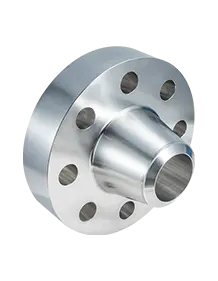
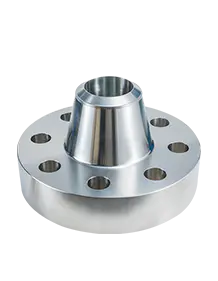
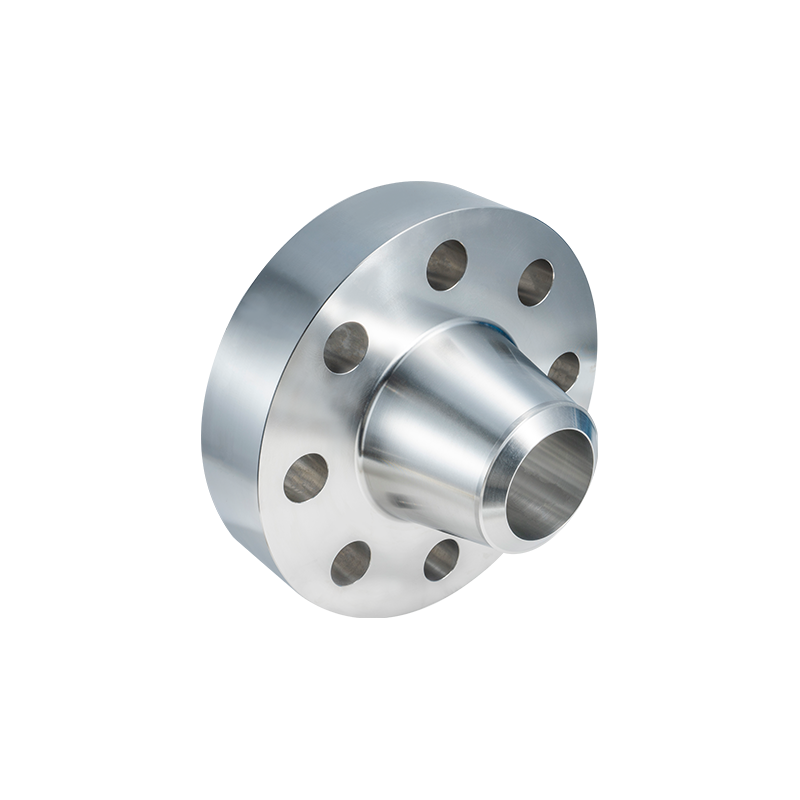
In high integrity piping systems, sealing performance is fundamental to operational safety, leak prevention, and long term reliability. Among the components that influence sealing performance, flange surface finish is a key factor. A weldneck flange or stainless weld neck flange with properly engineered sealing surfaces significantly enhances gasket seating, reduces the risk of leakage under varying temperatures and pressures, and extends the service life of the joint. Surface finish refers to the microscopic texture of a surface after manufacturing processes such as machining, grinding, or polishing. It is often quantified in industry practice through measures of roughness, waviness, and lay pattern. A flange surface that is too rough can fail to deform the gasket evenly, while an overly smooth surface may impede proper mechanical engagement with the gasket material. Understanding these dynamics requires a technical appreciation of flange geometry, gasket behavior, and the interaction of surface topography with sealing mechanisms.
Fundamentals of Surface Finish and Sealing Mechanisms
Surface finish impacts sealing performance because it directly interacts with the gasket interface. Sealing in flange systems depends on creating a uniform compression on the gasket material so that it fills the microscopic irregularities of both flange faces. Gaskets achieve sealing by deforming under load to fill voids, thereby creating a continuous barrier to fluid or gas migration. When flange surface finish is poorly controlled, the gasket may not conform adequately, resulting in micro‑channels that reduce sealing effectiveness. Surface roughness describes the fine irregularities left on a surface after machining. These asymmetries can trap fluid or create high points that prevent uniform compression. Excessive roughness prevents intimate gasket contact at the micro level, and excessive smoothness may reduce friction and encourage gasket slip during assembly, leading to malalignment or uneven compression. Surface lay is the direction of the predominant surface pattern left by the machining process. Surface lay should generally be perpendicular to the gasket sealing surface to support gasket deformation. If the lay is improperly oriented, gasket material may not penetrate surface irregularities effectively. Standard measures such as average roughness (Ra) describe how pronounced these surface variations are. Industry standards specify acceptable ranges of Ra for different flange faces based on the type of gasket used and the service conditions. For example, joint integrity under high temperature and pressure requires tighter surface finish control to maintain sealing over a range of operating conditions. The interaction of flange finish and gasket type is critical. Soft gasket materials like elastomers may require different surface characteristics compared to metallic gaskets. By understanding these sealing fundamentals, engineers can better specify appropriate finishes for the intended service, ensuring performance margins are not compromised.
Common Surface Finish Types for Weldneck Flanges
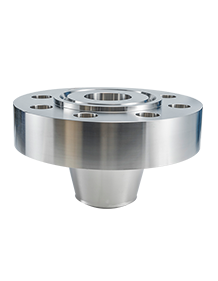
Surface finishes on weldneck flange components vary according to design requirements, gasket types, and installation standards. Two common finish types are raised face (RF) and ring‑type joint (RTJ) finishes. Each has distinct sealing characteristics and surface finish requirements. Raised Face (RF) Finish: Raised face flanges have a slightly elevated sealing surface relative to the bolt circle. This design concentrates the gasket load near the seal area, improving the compression of soft gasket materials. The RF surface finish is typically specified to have a controlled roughness that suits elastomer or compressed fiber gaskets. Ring‑Type Joint (RTJ) Finish: RTJ flanges use a metallic ring gasket that fits into precision machined grooves on each flange face. The RTJ groove and adjacent surface finish must be produced with very tight tolerances because the metallic gasket seals through metal‑to‑metal contact. The surface finish for RTJ applications is typically smoother than RF finishes and must support consistent metal deformation without introducing defects. Surface finish parameters also vary across standards such as ASME B16.5 and EN 1092‑1. For sensitive applications, machining processes such as fine turning, grinding, and polishing are employed to achieve the required surface texture. CNC turning centers with dedicated tooling are commonly used to maintain consistent geometry and finish across batches. Selection between surface finish types should consider media characteristics, operating temperature and pressure, and potential mechanical stressors. For instance, aggressive chemicals or high temperature steam may benefit from finishes that better support metallic gasket performance. Understanding these distinctions allows engineers to specify flange finishes that match operational realities.
Manufacturing Precision and Its Influence on Sealing Performance
Manufacturing precision plays a central role in achieving the desired surface finish and sealing performance of a stainless weld neck flange. Precision in forging, heat treatment, CNC machining, and inspection directly affects the micro‑topography of the flange face. When manufacturing processes are tightly controlled, flange surfaces are consistent and predictable, supporting repeatable sealing behavior in the field. Forging integrity contributes to uniform material properties, which in turn influences machining performance. A well‑forged flange stock exhibits continuous grain flow that resists distortion during machining, enabling more reliable attainment of specified surface finishes. High quality forging also minimizes internal defects, reducing the risk of surface anomalies that could compromise sealing. CNC machining is particularly influential in controlling surface finish. Advanced machining centers with appropriate tooling produce uniform finishes that meet standard roughness specifications. Operators select cutting parameters such as feed rate, tool geometry, and spindle speed to balance efficient material removal with the target roughness range. During machining, control of factors such as tool wear and thermal expansion helps maintain consistency across production. Nondestructive testing (NDT) further ensures quality before flanges are released. Tests such as ultrasonic, magnetic particle, and radiographic inspection verify that internal and near‑surface conditions are free of defects that could adversely impact sealing surfaces. For critical services, these inspections provide assurance that flange components meet stringent quality criteria. An example of a robust manufacturing environment is found at Jiangyin Zhonghai Precision Machinery, where integrated vertical manufacturing ensures complete oversight from raw material to finished product. Surface finishes are controlled within strict tolerances through CNC turning systems dedicated to sealing faces, supporting zero‑leakage performance in demanding applications. The emphasis on precision reflects the understanding that surface topography is a fundamental determinant of sealing behavior.
Material Considerations and Surface Finish Compatibility
The choice of material for a flange influences the achievable surface finish and overall sealing performance. Stainless steels, carbon steels, and alloy steels each have distinct machinability characteristics that must be understood to produce appropriate surface finishes. Stainless steels, for example, require careful handling due to their tendency to work‑harden. Achieving a controlled surface finish on a stainless weld neck flange necessitates optimized machining parameters that prevent surface tearing or built‑up edge formation. Material grade selection also affects surface finish strategies; higher alloy grades with increased strength may necessitate slower machining to maintain finish quality. Soft materials like carbon steel may be more forgiving but require appropriate feed rates to avoid excessive surface roughness from chatter or tool marks. Alloy steels, depending on heat treatment condition, may demand specialized tooling to achieve consistent finishes. Manufacturers must align material selection with surface finish capabilities to ensure sealing performance. This alignment includes anticipating thermal effects during operation. For example, materials that expand significantly at high temperatures may require tighter initial finish control to ensure that expansion does not degrade sealing interfaces over time. Selection of materials should also consider corrosion resistance, mechanical load requirements, and compatibility with gasket materials. A holistic approach to material and surface finish selection ensures that flange systems perform reliably across service conditions.
Installation Practices That Preserve Surface Finish Integrity
Correct installation practices are essential to preserve the engineered surface finish and realize optimal sealing performance. Even a precisely machined sealing surface can be compromised by improper handling during installation. First, flange faces must be protected from contamination such as dirt, oils, and metal shavings. These contaminants can lodge in surface irregularities and prevent the gasket from seating properly. During assembly, technicians should inspect flange faces visually and with appropriate measuring tools to ensure they remain free of damage. Second, alignment during bolt‑up is critical. Uneven bolt torque can distort flange faces and alter the effective surface finish at the gasket interface. Following a controlled, cross‑pattern torque sequence helps achieve uniform compression of the gasket and minimizes distortion of the mating surfaces. Third, the selection of appropriate gaskets and torque values should reflect the specified surface finish. Gasket manufacturers provide guidance on required flange surface characteristics and recommended torque values. Engineers should integrate this information into procurement and installation specifications. Installation personnel must be trained in handling precision machined surfaces. Mishandling during lifting or positioning can introduce scratches or dents that reduce sealing effectiveness. Protective covers and careful fixture usage help maintain surface integrity up to the moment of assembly.
Inspection and Quality Assurance for Surface Finish
Inspection and quality assurance are integral to confirming that flange surface finishes meet design requirements. Industry standards define acceptable roughness ranges and surface conditions that facilitate reliable sealing. Measurement tools such as profilometers quantify surface roughness. These instruments scan the flange face to determine average roughness and identify deviations from the target profile. Periodic verification ensures that machining processes remain within control limits and that operators can make adjustments when necessary. In addition to surface roughness measurements, visual and tactile inspection helps identify anomalies such as gouges, raised burrs, or inconsistencies that might impact sealing. Where appropriate, higher magnification visual inspection can reveal micro‑defects invisible to the naked eye. Quality assurance teams develop inspection plans tailored to service conditions. For severe service applications, sampling and statistical analysis may be employed to monitor trends and detect process drift. Comprehensive inspection supports confidence that each flange delivered performs as intended. At Jiangyin Zhonghai Precision Machinery, inspection protocols are integrated throughout the production workflow. Material verification, process control, and final surface finish measurement ensure that every component leaving the facility conforms to applicable standards. Such rigor underscores that sealing performance is not an afterthought, but a primary dimension of quality assurance.
Balancing Cost and Performance in Surface Finish Specification
Specifying surface finish involves balancing cost and performance. Tighter surface finish tolerances often require more machining time, more advanced tooling, and more rigorous inspection. Designers and engineers must consider whether the service conditions justify the investment in enhanced surface finish quality. For example, low pressure, non‑critical applications may tolerate broader surface roughness ranges without compromising sealing performance. In contrast, high pressure or aggressive media environments require rigorous surface finish control because the consequences of leakage are severe. Cost considerations should be framed in terms of lifecycle performance rather than initial manufacturing expenditure. A flange with an optimized surface finish may reduce field maintenance, mitigate leakage risks, and contribute to greater system uptime. Engineers should conduct holistic assessments of service conditions, gasket compatibility, material behavior, and maintenance implications when specifying surface finish levels.
Conclusion
Flange surface finish is a critical determinant of sealing performance. The interaction between surface topography and gasket compression defines whether a flange joint will maintain integrity under operating stresses. Understanding surface finish fundamentals, selecting appropriate finish types such as raised face or ring‑type joint, and controlling manufacturing and inspection processes all contribute to robust sealing performance. A stainless weld neck flange exemplifies how precision engineering enhances sealing. Factoring in material characteristics, machining precision, installation practices, and quality assurance ensures that flange sealing surfaces fulfill their intended function. Engineering decisions should balance performance needs with practical considerations of manufacturability and lifecycle cost. By doing so, technical managers and system integrators can design and procure flanges that uphold system safety and reliability. In industrial practice, manufacturers like Jiangyin Zhonghai Precision Machinery integrate robust processes from forging through machining and inspection to deliver flange components with controlled surface finishes. Their approach reflects an understanding that sealing performance is not merely a specification but a measurable outcome of engineered surfaces and disciplined quality management.
Frequently Asked Questions
| Question | Answer |
|---|---|
| What is surface finish in the context of flanges? | Surface finish refers to the microscopic texture of a flange sealing face after machining, characterized by roughness, lay, and waviness. It influences how a gasket deforms and seals under compression. |
| Why does surface finish matter for sealing performance? | A proper surface finish supports intimate contact with the gasket, enabling even compression and minimizing leakage paths. Improper finishes can lead to uneven gasket deformation and compromised sealing. |
| What surface finishes are common for weldneck flanges? | Raised face (RF) and ring‑type joint (RTJ) finishes are commonly used, each with specific finish requirements tailored to gasket types and service conditions. |
| How is surface finish measured? | Surface finish is measured with instruments like profilometers that quantify parameters such as average roughness (Ra), helping verify compliance with design standards. |
| Can a flange's surface finish be damaged during installation? | Yes. Mishandling, contamination, and improper torqueing can damage surface finish. Proper installation practices preserve machined surfaces and sealing effectiveness. |