English
 中文简体
中文简体 Deutsch








 0
0

 0
0

 0
0


Understanding ASTM A105 Carbon Steel Flanges: From Specification to Critical Application
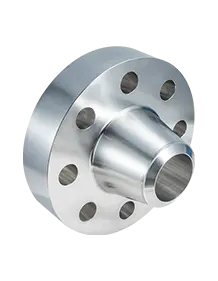
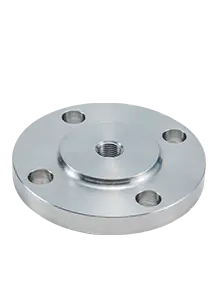
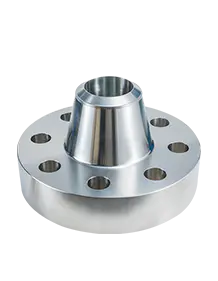
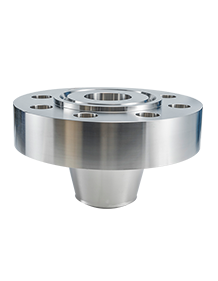
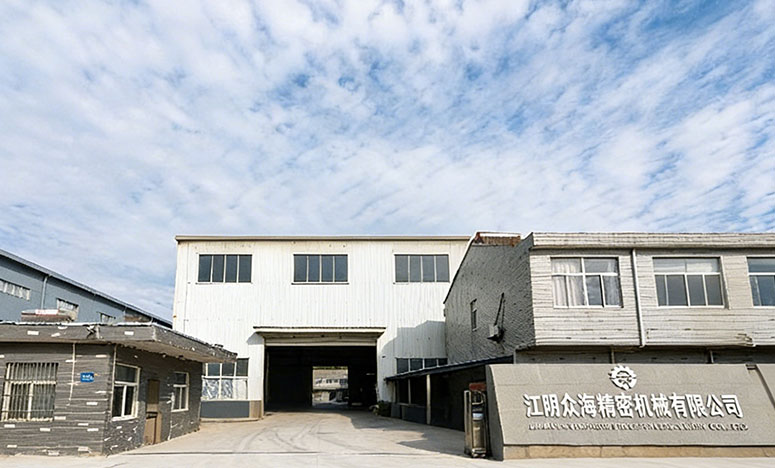
In the world of industrial piping and pressure systems, the reliability of every connection is paramount. ASTM A105 Carbon Steel Flange stands as a foundational component in countless applications, from oil and gas pipelines to power generation plants. This article delves into the technical specifications, manufacturing nuances, and critical selection criteria for A105 flanges, providing a comprehensive guide for engineers, procurement specialists, and industry stakeholders. We will explore why precision manufacturing, as exemplified by certified manufacturers like Jiangyin Zhonghai Precision Machinery Co., Ltd., is not just a value-add but a necessity for safety and performance.
1. The A105 Standard: Material Properties and the Value of Integrated Forging
The ASTM A105 standard specifies the requirements for carbon steel forgings for piping components in ambient and higher-temperature service. Its widespread adoption is due to a well-balanced set of mechanical properties suitable for a vast range of pressure and temperature conditions. The standard mandates specific chemical compositions and mechanical performance benchmarks.
| Key Property | Typical Requirement / Value | Significance in Application |
| Chemical Composition (max %) | C: 0.35, Mn: 0.60-1.05, P: 0.035, S: 0.040 | Ensures weldability, strength, and resistance to segregation. |
| Tensile Strength | Min. 70 ksi (485 MPa) | Determines the load-bearing capacity of the flange under pressure. |
| Yield Strength | Min. 36 ksi (250 MPa) | Indicates the stress point at which permanent deformation begins. |
| Hardness | Max. 187 HB | Affects machinability and resistance to surface deformation. |
However, meeting the standard on paper is only the first step. The true performance of an A105 flange is unlocked through its manufacturing process. Integrated forging, as practiced by manufacturers with complete in-house control over forging and heat treatment, is critical. This process:
- Eliminates internal voids and porosity that can be present in cast alternatives.
- Refines the grain structure of the steel, leading to superior impact toughness, especially important for low-temperature or high-shock environments.
- Provides a more homogeneous and reliable material structure, ensuring consistent performance across the entire component.
2. Forged vs. Cast: The Critical Choice for High-Pressure Systems
When specifying flanges for critical service, the choice between forged and cast is a fundamental safety and engineering decision. Forged A105 flanges offer distinct, non-negotiable advantages in demanding applications.
| Comparison Factor | Forged A105 Flange | Cast Flange (e.g., ASTM A216) |
| Internal Soundness | High; dense, uniform grain flow with no internal cavities. | Potential for shrinkage cavities, sand inclusions, or porosity. |
| Mechanical Strength | Higher tensile and yield strength; better strength-to-weight ratio. | Generally lower mechanical strength compared to forgings. |
| Impact Toughness | Excellent; can withstand sudden loads and lower temperatures. | Lower impact resistance; more prone to brittle fracture. |
| Dimensional Consistency | Superior, especially for complex shapes and precise sealing surfaces. | Can be affected by mold shifts or warping during cooling. |
For pressure systems operating at Class 600 and above, or in cyclic service (frequent pressure swings), forged flanges are almost universally specified. The forging process aligns the steel's grain flow with the shape of the flange, contouring around the bore and bolt holes, which dramatically increases its fatigue resistance and overall structural integrity.
3. Precision Machining and Customization for Large-Scale Projects
The capability to produce flanges beyond standard catalog sizes is what separates specialized manufacturers. Projects in heavy infrastructure—such as offshore platforms, refinery expansions, or main steam lines in power plants—often require custom-engineered solutions.
- Large-Scale Manufacturing: Leading manufacturers possess the press capacity and expertise to produce single flanges with diameters up to 4 meters and unit weights of 10 tons. This requires not just large equipment but sophisticated process control to ensure uniform heating, forging, and cooling of such massive pieces.
- Precision CNC Machining: For a flange to seal perfectly, its facing (RF, FF, RTJ) must be machined to exacting tolerances. Advanced CNC turning centers ensure flatness, surface finish (Ra value), and precise bolt hole alignment (PCD and positional tolerance). This precision is what guarantees a leak-free joint when mated with a gasket and subjected to bolt stress.
- End-to-End Service: A full-service manufacturer provides a one-stop solution: from technical review of customer drawings and mold/tooling development to final machining, non-destructive testing (NDT), and certification. This integrated approach reduces project risk and ensures the final component meets the exact application demands.
4. The Importance of Global Certifications: PED, TUV, and Beyond
Certifications are the language of trust and compliance in the global industrial market. They are not merely plaques on a wall but documented proof of a quality management system and manufacturing capability.
- ISO 9001: The baseline for a systematic quality management process, covering everything from raw material purchase to final inspection.
- PED (Pressure Equipment Directive) 2014/68/EU: This is a mandatory legal requirement for selling pressure equipment in the European Union. It covers design, manufacturing, and conformity assessment, ensuring the equipment's safety.
- TUV/TS Certifications: These are often customer or project-specific certifications. A TUV (Technischer Überwachungsverein) inspector may witness specific production or testing processes, while a TS (Special Equipment Manufacturing License) is crucial for markets like China. Holding these credentials demonstrates a manufacturer's ability to meet the most stringent third-party and regulatory audits.
For an end-user, specifying flanges from a manufacturer with these certifications mitigates risk, ensures regulatory compliance for the entire plant, and simplifies the procurement audit process.
FAQ
What is the main difference between ASTM A105 and ASTM A350 LF2 flanges?
The primary difference lies in their intended service temperature. ASTM A105 is a standard carbon steel forging material for ambient and higher-temperature service (up to about 425°C-475°C, depending on pressure). ASTM A350 LF2 is a carbon steel forging specification required for low-temperature service, designed to retain impact toughness down to -46°C. While their room-temperature strength may be similar, LF2 has stricter requirements on chemical composition (e.g., finer grain control) and mandatory impact testing. For cryogenic applications, LNG facilities, or outdoor pipelines in cold climates, A350 LF2 is the correct specification, not A105.
Can A105 flanges be used in sour service (H2S environments)?
Generally, ASTM A105 "as-is" is not recommended for sour service as defined by NACE MR0175/ISO 15156. Sour environments containing hydrogen sulfide can cause sulfide stress cracking (SSC) in standard carbon steels. For such applications, specific measures are required. These can include:
- Hardness Control: The flange must be heat-treated and verified to have a hardness below 22 HRC (237 HB) throughout.
- Special Heat Treatment: Normalizing or normalizing and tempering is necessary to ensure a uniform, soft microstructure resistant to cracking.
- Documentation: Material Test Reports (MTRs) must explicitly confirm compliance with NACE MR0175. Always consult with the flange manufacturer and specify NACE requirements explicitly.
Why is the bolt hole alignment (PCD) so critical on a flange?
The Pitch Circle Diameter (PCD) is the diameter of the circle that passes through the center of all bolt holes. Its precision is absolutely critical for several reasons:
- Fit-Up: Even a small error in PCD can make it impossible to align and insert bolts through mating flanges during installation, causing massive field rework.
- Load Distribution: Accurate PCD ensures that when bolts are tightened, the compressive load on the gasket is evenly distributed around the sealing face. An uneven load can lead to localized gasket failure and leaks.
- Stress Concentration: Incorrect hole placement can create uneven stress in the flange body and the bolts, potentially leading to premature fatigue failure under cyclic pressure. Precision CNC drilling by qualified manufacturers is essential to hold tight PCD tolerances.
When should I consider a custom-forged flange over a standard one?
You should consider a custom-forged flange in the following scenarios, where off-the-shelf solutions fall short:
- Non-Standard Size or Pressure Rating: Your design requires a diameter, thickness, or pressure class (e.g., a special Class 2500 or a large, thin-walled vent flange) not found in standard ASME B16.5 or B16.47 catalogs.
- Unique Material or Mechanical Requirements: The application demands slight adjustments to chemistry for enhanced corrosion resistance or specialized heat treatment beyond standard normalizing.
- Integration of Special Features: The flange needs to incorporate additional features like extended necks, integrally forged nozzles, unusual tapings, or specific lifting lugs that are not standard.
- Heavy Wall or Massive Design: For applications requiring extreme rigidity or where the flange itself is a major structural component, a custom design optimized for the specific load is necessary.
Partnering with a manufacturer with strong engineering support, like Jiangyin Zhonghai Precision Machinery, is key to successfully executing such custom projects.