English
 中文简体
中文简体 Deutsch








 0
0

 0
0

 0
0


Preventing Galvanic Corrosion in Class 900 Lap Joint Flange Assemblies
In high-pressure systems, the Class 900 Lap Joint Flange is often paired with a stainless steel or alloy Stub End to save costs. However, this pairing of dissimilar metals (typically a carbon steel backing flange and a stainless steel stub end) creates a risk of galvanic corrosion, especially in moist or saline environments. Understanding how to mitigate this electro-chemical reaction is vital for the longevity of the connection.
Strategies for Corrosion Mitigation
Galvanic corrosion occurs when two metals with different electrode potentials are in electrical contact within an electrolyte. For a Class 900 Lap Joint Flange, the following methods are recommended:
- Dielectric Isolation: Using non-conductive coatings or specialized isolation sleeves between the backing flange and the stub end to break the electrical circuit.
- Material Matching: Selecting backing flanges with compatible potentials or utilizing high-quality coatings like hot-dip galvanizing or epoxy.
- Precision Machining: Ensuring a perfect radius match between the flange and the stub end to prevent moisture entrapment.
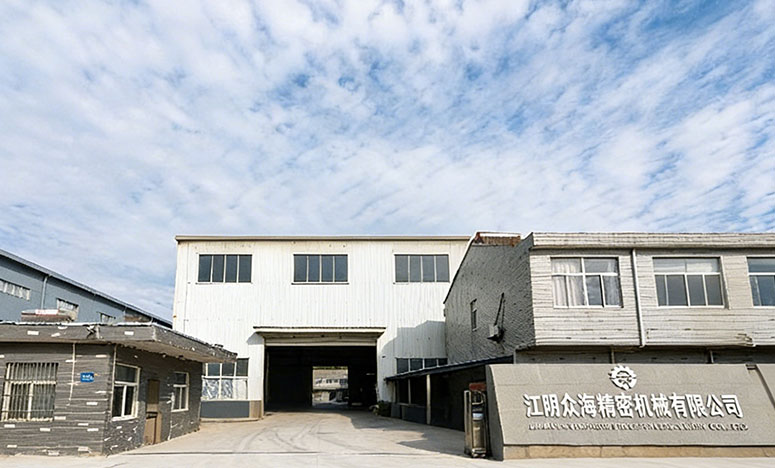
Jiangyin Zhonghai Precision Machinery Co., Ltd., an ISO 9001–certified manufacturer, addresses these risks through superior surface finishing and material control. With our in-house CNC turning and inspection lines, we ensure that the critical radius of the Lap Joint Flange perfectly matches the Stub End, eliminating gaps where electrolytes could collect and trigger corrosion.
Parameter Comparison: Backing Flange vs. Stub End Potentials
The table below illustrates the potential difference between common materials used in Class 900 assemblies:
| Component | Common Material | Galvanic Potential (V) | Corrosion Risk |
| Backing Flange | ASTM A105 (Carbon Steel) | -0.6 to -0.7 | Anodic (Sacrificial) |
| Stub End | ASTM A182 F316L | -0.05 to -0.1 | Cathodic (Protected) |
| Stub End | Duplex F51 | -0.02 to -0.05 | Highest Potential Gap |
Advanced Manufacturing by Jiangyin Zhonghai
Managing high-pressure interfaces requires more than standard dimensions. Jiangyin Zhonghai Precision Machinery Co., Ltd. provides technical reliability through:
- Full Customization: We support drawing-based manufacturing to include specific grooves for isolation gaskets or custom radius requirements.
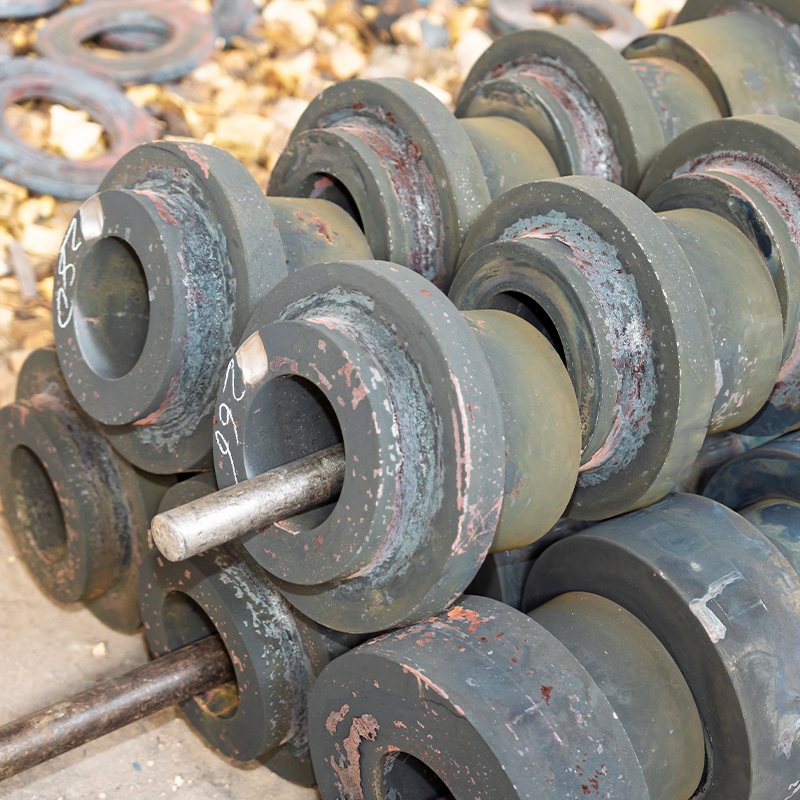
- Certified Forgings: Our PED/TUV/TS qualifications ensure that the raw forgings used for Class 900 service possess the required metallurgical stability.
- Large-Scale Expertise: We can produce backing flanges up to 60" and 4 meters in dimension, handling single-piece weights of up to 10 tons for massive high-pressure headers.
Frequently Asked Questions (FAQ)
1. Does Jiangyin Zhonghai Precision Machinery Co., Ltd. provide coatings for corrosion protection?
Yes. Jiangyin Zhonghai Precision Machinery Co., Ltd. offers various surface treatments for our carbon steel backing flanges used in Lap Joint assemblies. Our complete in-house production line ensures that coatings are applied to precision-machined surfaces, helping to mitigate galvanic corrosion in Class 900 systems.
2. Can Jiangyin Zhonghai Precision Machinery Co., Ltd. produce Lap Joint Flanges for large-diameter high-pressure pipes?
Certainly. Our production range covers 1/2'' to 60'', and we specialize in large-scale components with dimensions up to 4 meters. Jiangyin Zhonghai Precision Machinery Co., Ltd. is uniquely equipped to forge and machine heavy-duty Class 900 flanges weighing up to 10 tons per piece, according to ASME and other international standards.
3. How do you ensure the radius of the Lap Joint Flange fits the Stub End?
Proper fitment is critical to prevent stress cracking in Class 900 service. Jiangyin Zhonghai Precision Machinery Co., Ltd. uses advanced CNC turning and drilling to machine the internal radius of the flange to exact tolerances. Our ISO 9001–certified inspection process verifies the fit against the corresponding Stub End drawings to ensure long-term reliability.