English
 中文简体
中文简体 Deutsch





Content
In the world of industrial piping and pressure systems, where conditions can swing from extreme heat to cryogenic cold and pressures can reach immense levels, not every component is created equal. At the heart of many such demanding applications lies a workhorse of engineering: the Alloy Steel Flange. These are not your standard piping connectors; they are precision-engineered interfaces designed to maintain integrity where carbon steel would fail. For engineers and procurement specialists sourcing reliable solutions, understanding the specifics of alloy steel flanges—from material grades like ASTM A182 F11 to the design superiority of a alloy steel weld neck flange—is crucial. This knowledge becomes even more critical when project requirements call for a custom alloy steel pipe flange or when identifying a qualified alloy steel flange manufacturer capable of delivering high temperature alloy steel flange solutions. This article delves into the technical landscape of alloy steel flanges, exploring their unique properties, key applications, and the essential criteria for selecting a manufacturing partner that can ensure safety, compliance, and performance under the most challenging conditions.
The Core Advantage: Performance Under Extreme Conditions
The fundamental value of an Alloy Steel Flange stems from the intentional addition of elements like chromium, molybdenum, vanadium, and nickel to steel. This alloying process tailors the material's microstructure to deliver properties far beyond those of standard carbon steel. The primary enhancements include dramatically increased tensile and yield strength at both ambient and elevated temperatures, improved toughness and resistance to impact (especially important in low-temperature environments), and superior resistance to creep—the slow, permanent deformation that can occur under constant stress at high temperatures. This makes them indispensable in sectors where failure is not an option. Furthermore, specific alloys grant enhanced corrosion resistance against oxidizing agents, acids, and sulfidic environments, extending the component's service life in aggressive media. When sourcing these critical components, partnering with an expert alloy steel flange manufacturer with rigorous metallurgical control is non-negotiable for guaranteed performance.
- Enhanced Strength: Higher mechanical strength allows for designing thinner or lighter components that can withstand the same pressure, optimizing system design.
- Temperature Mastery: They retain strength and resist oxidation/scaling where carbon steel weakens, making a high temperature alloy steel flange the default choice for boilers, steam lines, and heat exchangers.
- Improved Toughness: Better resistance to brittle fracture, crucial for processes with thermal cycling or pressure shocks.
Withstanding Heat and Pressure: The Role of High Temperature Alloy Steel Flanges
In applications like power generation, petrochemical cracking, and high-temperature process piping, flanges must do more than just connect pipes; they must maintain a perfect seal while their material strength inherently decreases with rising temperature. A dedicated high temperature alloy steel flange is engineered for this battle. The alloying elements, particularly chromium and molybdenum, form stable carbides within the steel matrix. These carbides act like a reinforcing scaffold, preventing the steel from softening rapidly and resisting the damaging effects of oxidation and "scale" formation on the surface. Common grades for these severe services are standardized under specifications like ASTM A182, which defines the chemical and mechanical requirements for forged or rolled alloy-steel pipe flanges.
| Common High-Temp Grade | Key Alloying Elements | Typical Continuous Service Temperature Limit |
| ASTM A182 F11 (1.25Cr-0.5Mo) | Chromium, Molybdenum | Up to ~593°C (1100°F) |
| ASTM A182 F22 (2.25Cr-1Mo) | Chromium, Molybdenum | Up to ~621°C (1150°F) |
| ASTM A182 F91 (9Cr-1Mo-V) | Chromium, Molybdenum, Vanadium | Up to ~649°C (1200°F) |
Focus on a Workhorse: An In-Depth Look at ASTM A182 F11 Alloy Steel Flange
Among the family of alloy steels, ASTM A182 F11 alloy steel flange stands out as a widely specified and reliable grade for medium-high temperature services. It belongs to the chromium-molybdenum (Cr-Mo) family, specifically with a nominal composition of 1.25% chromium and 0.5% molybdenum. This composition offers a balanced compromise between cost, weldability, and elevated temperature performance. The chromium provides improved oxidation resistance and strengthens the alloy, while molybdenum enhances strength at high temperatures and reduces susceptibility to temper embrittlement. Flanges made from F11 are commonly found in applications such as power plant piping, refinery process lines, and any system where operating temperatures consistently fall within the 450°C to 590°C (850°F to 1100°F) range. Its popularity is due to its proven track record and readily available welding and fabrication procedures.
- Excellent Weldability: Compared to higher alloy grades, F11 has good weldability when using matching or overmatching filler metals and proper pre-heat/post-weld heat treatment (PWHT) procedures.
- Cost-Effectiveness: It provides a significant performance boost over carbon steel without the cost premium associated with higher chrome grades like F91 or stainless steels.
- Versatility: Suitable for a broad range of pressure ratings and flange types, from standard slip-ons to critical alloy steel weld neck flange designs.
Selecting the Right Type for Your Piping System
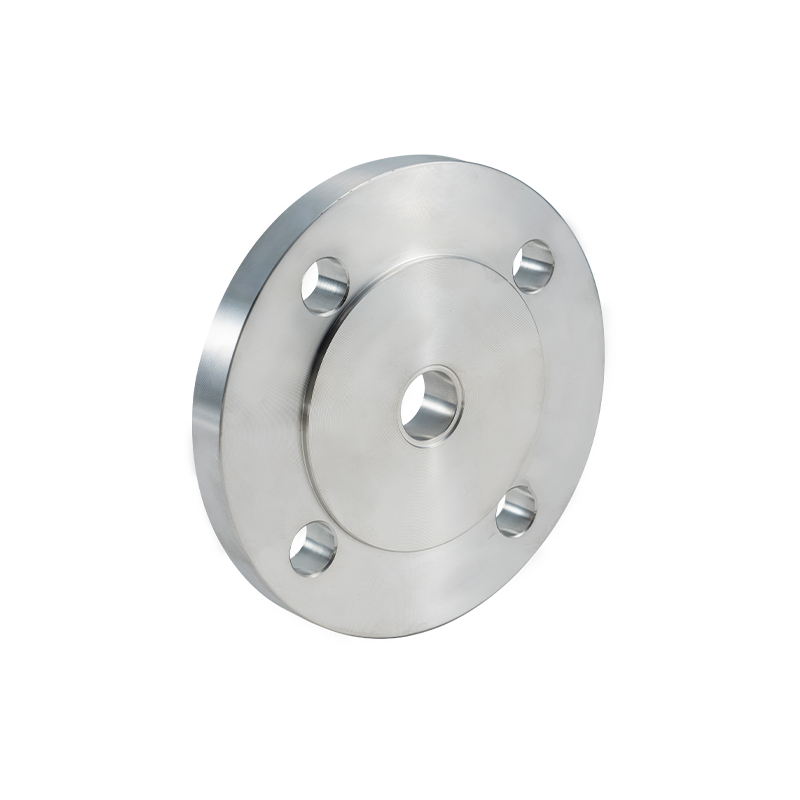
Choosing the correct material grade is only half the battle; selecting the optimal flange type is equally critical for system integrity. The flange design determines how loads are transferred, how it connects to the pipe, and ultimately, how it seals. For standard applications, types like Slip-On or Blind Flanges might be suitable. However, for high-pressure, high-temperature, or cyclic duty systems involving alloy steel, the design philosophy shifts towards maximizing structural integrity and fatigue life. This often leads to the specification of more robust flange types. Moreover, when standard catalog items do not fit unique spatial constraints, nozzle orientations, or specialized equipment interfaces, the need for a custom alloy steel pipe flange arises. This requires a manufacturer with advanced engineering support and full-range machining capabilities to translate custom drawings into a reliable, code-compliant component.
Why the Alloy Steel Weld Neck Flange is the Gold Standard for Critical Connections
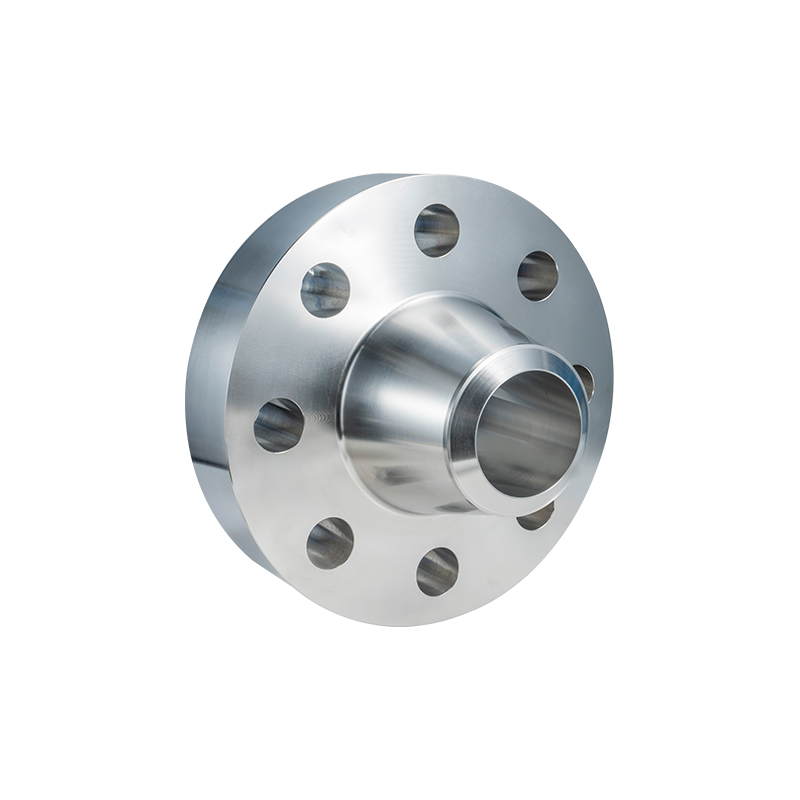
The alloy steel weld neck flange is universally regarded as the best choice for severe service conditions. Its defining feature is a long, tapered hub that is butt-welded to the matching pipe. This design provides unparalleled strength and performance benefits crucial for alloy steel systems operating at their limits. The tapered hub ensures a smooth, gradual transition of stress from the flange ring to the pipe wall, minimizing stress concentration points that could lead to fatigue cracks. The butt-weld connection, which involves full penetration welding, offers a strength equal to or greater than the pipe itself, creating a homogeneous, leak-proof joint. This makes it ideal for handling high pressures, temperature fluctuations, bending moments, and vibration.
| Flange Type | Key Feature | Best Suited For |
| Weld Neck | Tapered hub, butt-weld connection | High-pressure/temperature, cyclic loading, severe service. The premier choice for critical Alloy Steel Flange applications. |
| Slip-On | Bores slightly larger than pipe, fillet welded | Lower pressure, non-cyclic applications. Less costly but not for severe duty. |
| Socket Weld | Pipe inserts into socket, fillet welded | Small-bore, high-pressure piping where butt welding is impractical. |
Beyond Standards: When You Need a Custom Alloy Steel Pipe Flange
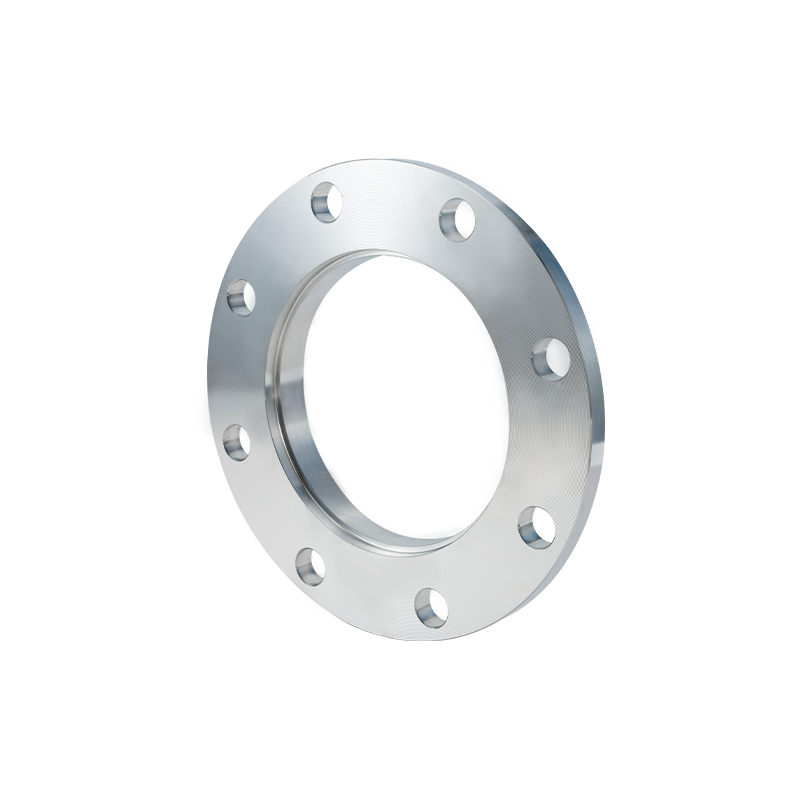
Not every industrial application fits neatly into standard dimensional tables. Engineers may require a custom alloy steel pipe flange for several reasons: to connect to proprietary equipment with unique bolt patterns, to create a reinforcing flange on a large or non-standard vessel nozzle, to meet specific weight or space constraints, or to develop a flange for an extreme pressure rating beyond standard classes. In these scenarios, "custom machining by drawing" services become essential. This process involves a manufacturer with deep engineering capability taking client-supplied detailed drawings (specifying exact dimensions, tolerances, pressures, and material specs) and producing a one-off or small batch of flanges. Key capabilities to look for in a supplier for such work include large-scale machining for components up to 4 meters in diameter, weight handling for single pieces up to 10 tons, and a fully integrated quality assurance process to verify the final part against the custom specification.
FAQ: Your Questions About Alloy Steel Flanges Answered
What is the main difference between ASTM A105 and ASTM A182 F11 flanges?
The core difference is the material composition and resulting service capability. ASTM A105 is a standard carbon steel forging specification for flanges. It is suitable for general service at ambient and moderately elevated temperatures but loses strength rapidly above 425°C (800°F). ASTM A182 F11 is an alloy steel specification containing chromium and molybdenum. This alloying gives F11 flanges significantly higher strength at elevated temperatures, better resistance to oxidation (scaling), and improved creep resistance. Therefore, F11 is specified for sustained high-temperature service, such as in power plant steam lines, where A105 would not be adequate.
How do I choose between F11, F22, and F91 alloy steel flanges?
The choice is primarily driven by your design temperature, pressure, and corrosion requirements. Here’s a simplified guide:
- ASTM A182 F11 (1.25Cr-0.5Mo): The standard choice for many medium-high temperature applications up to about 593°C (1100°F). Offers a good balance of performance, weldability, and cost.
- ASTM A182 F22 (2.25Cr-1Mo): Offers better high-temperature strength and corrosion resistance than F11, suitable up to about 621°C (1150°F). Often used in refinery and petrochemical applications.
- ASTM A182 F91 (9Cr-1Mo-V): A high-strength ferritic steel with superior creep resistance, used in advanced power plants for main steam lines at temperatures up to 649°C (1200°F). It requires more precise welding and heat treatment controls.
Consult the ASME Boiler and Pressure Vessel Code, Section II, Part D for allowable stress values at your design temperature to make the final material selection.
What certifications should I look for when sourcing alloy steel flanges?
Certifications are non-negotiable proof of a manufacturer's quality system and product compliance. For alloy steel flanges, especially for use in pressure equipment, the minimum should be ISO 9001 for quality management. Crucially, for markets like Europe, the flange must carry PED (Pressure Equipment Directive 2014/68/EU) certification, often with a specific Material Category. Other valuable certifications include TÜV (for German/European technical safety oversight) and TS (Special Equipment Manufacturing License) for the Chinese market. A reputable manufacturer will provide a comprehensive test documentation package, including Material Test Reports (MTRs) with full traceability to the melt heat, and results of mechanical and chemical tests.
Can alloy steel flanges be welded to carbon steel pipes?
Yes, it is technically possible but requires careful procedure and is generally not recommended for high-temperature or cyclic service without a detailed engineering assessment. The weld will create a transition joint between two different metallurgies. This can lead to issues like carbon migration from the carbon steel to the alloy steel at high temperatures, potentially creating a brittle zone. If such a weld is necessary, it must be performed using a suitable filler metal (often an overalloyed nickel-based or high-alloy electrode), with strict control of preheat and post-weld heat treatment (PWHT) as per a qualified Welding Procedure Specification (WPS). For critical services, it is always better to use matching materials or a transition piece designed for the purpose.
 Previous